


Bahrain is uniquely positioned to become a regional leader in sustainable finance, leveraging its size and pragmatism to invest quickly and efficiently in green technologies, according to a top executive at Standard Chartered Bank.
Chirag Shah, executive director of sustainable finance for Middle East and Africa at Standard Chartered Bank, stressed that while a strong investor appetite exists on the ground, the development of regional frameworks and clear regulatory direction is essential to unlock full market confidence.
Mr Shah defined sustainable finance as a bank’s role in providing financing for projects that drive environmental, social, and governance (ESG) impact.
For a global bank, this involves integrating solutions across the entire product suite – from loans and bonds to trade finance – to support green or transition-related investments.
The Standard Chartered team, which has been in place for many years, has committed to significant targets: mobilising $300 million by 2030 in sustainable finance issuances and achieving $1 billion in sustainable finance revenue by 2025.
Mr Shah explained that the sustainable finance movement, which started in the West, is now maturing in the Middle East, with issuance volumes growing year-on-year since 2022.
However, he argued that global standards, such as the EU taxonomy, are too “constrictive” and cannot be easily adopted in the Gulf. A Middle East taxonomy, he said, must reflect the reality that oil and gas remains the economic backbone.
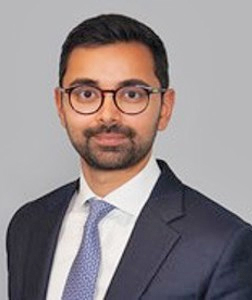
Mr Shah
“We’re not advocating a company suddenly turn off the taps and only invest in green – that doesn’t make any sense,” Mr Shah stated. “Our view is that we should be complementing that investment.”
He highlighted transition finance as the crucial tool, citing Bapco Energies as a leading example. The company, which developed a Transition Finance Framework with Standard Chartered’s help, is actively planning how to switch a percentage of its financing and investments into alternative energies.
A major concern for companies in Bahrain is the risk of “greenwashing accusations” if their financing structures fall short of market principles.
To mitigate the downside risk of greenwashing and encourage broader adoption of sustainable finance, the executive called for two simultaneous, crucial developments.
First is taxonomy and clarity, which requires the government to finalise the rollout of taxonomies and provide clear direction.
Banks, including local lenders like NBB, are awaiting consultation papers that will give them the necessary “clearer direction” on how to embed sustainable finance into their existing product offerings.
Second is improving knowledge and therefore risk mitigation across all local financial institutions to ensure they can structure transactions that meet both local and international market standards.
He added that many corporates are already implementing ESG-linked strategies, such as sustainable sourcing and improving energy efficiency in their warehouses.
They are now keen to embed these key performance indicators (KPIs) into their financing to create an incentive mechanism that adjusts borrowing costs based on ESG performance.
Mr Shah concluded that Bahrain’s structural attributes give it a distinct competitive edge in the sustainable finance race.
“Because of its size, because of its pragmatism,” he explained, “Bahrain has the opportunity to move very quickly and very efficiently to invest in those technologies... they can and they want to move quickly.”
This agility, he said, ensures that the kingdom can meet not only Bahraini business standards but also international market standards, positioning itself uniquely vis-à-vis some of the other countries in the market.
avinash@gdnmedia.bh
&uuid=(email))