

WITH sustainability efforts now central to planning across the Middle East, Bahrain’s construction sector is seeing a significant change.
Developers and contractors are increasingly moving toward materials that support the kingdom’s goals for energy efficiency and climate action.
A key product gaining traction is Autoclaved Aerated Concrete (AAC), a lightweight, high-performance building material that is changing construction standards.
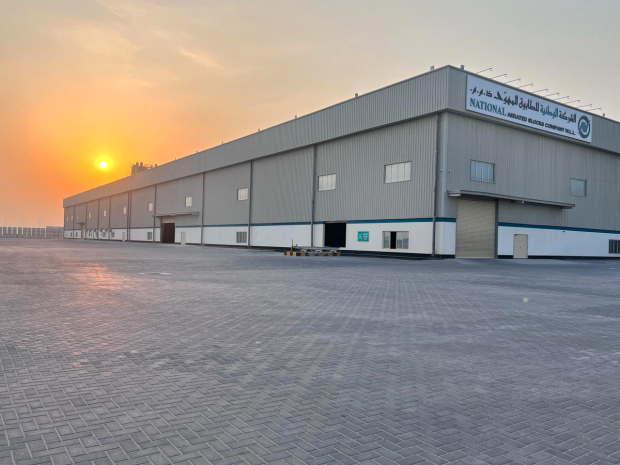
AAC blocks are manufactured locally by the National Concrete Company (NCC) in a facility registered under the National Aerated Blocks Company located in Hidd, using Chinese machinery with German technology.
These blocks are emerging as an alternative to sandwich blocks and hollow blocks.
The manufacturing process is a complete closed cycle with zero waste.
AAC blocks have low thermal conductivity, which allows them to function as effective insulators.
This insulation helps keep interiors cooler in summer and warmer in winter, reducing the energy demand from air-conditioners and heaters.
The material’s aerated structure also provides sound insulation, a feature valued in Bahrain’s urban developments where acoustic comfort is important.
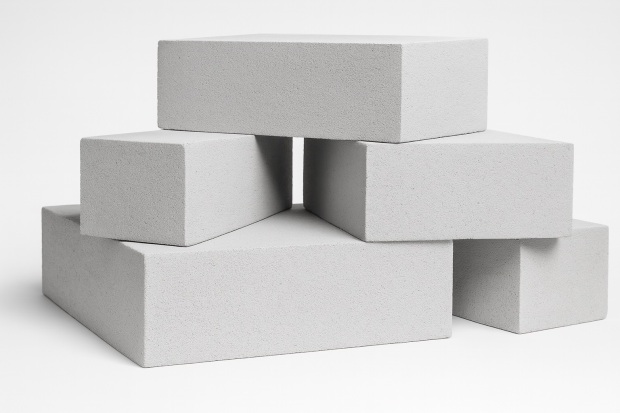
AAC blocks
AAC is non-combustible; it can withstand a four-hour standard fire test without emitting toxic fumes.
Beyond performance, AAC demonstrates sustainability from its base.
It is made from natural raw materials such as cement, lime, sand and water.
The product is cured under high pressure in an autoclave, forming air pores that provide its strength-to-weight ratio.
Its light weight reduces the fuel needed for transportation and handling.
On-site waste is minimised because blocks can be cut precisely with standard tools. Off-cuts can also be reused or recycled, resulting in near-zero-waste installation.
The sustainability starts at the manufacturing stage as national AAC production uses less raw materials and energy than conventional masonry products.
No wastewater, steam or harmful gases are released during the production process, and the material is fully recyclable.
This efficiency positions AAC well within Bahrain’s evolving green building framework, which increasingly favours materials with low embodied energy and long-term operational savings.
With government and private developers prioritising Environmental, Social and Governance (ESG) standards, AAC aligns with the national strategy of Economic Vision 2030.
National Concrete Company’s AAC blocks are currently used in projects across Bahrain, reflecting the company’s support for the nation’s vision for sustainable and energy-efficient construction.
n For more information, email info@nccbahrain.com or call 36055845.
&uuid=(email))