

Twelve locations will be designated for food trucks and street vendors as part of a broader initiative to regulate the sector and create job opportunities for citizens, it has been revealed.
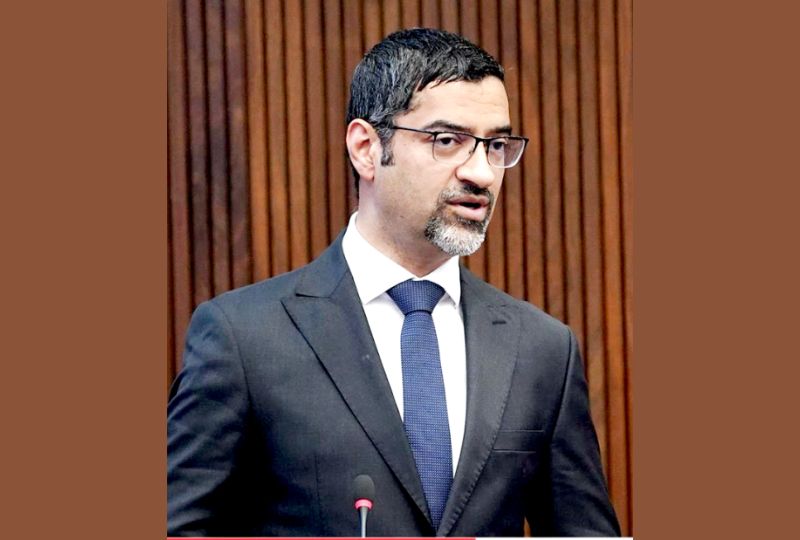
An electronic booking system will also be introduced to ensure fair site allocation and streamline operations, Municipalities Affairs and Agriculture Minister Wael Al Mubarak has said.
He told Parliament yesterday that the primary aim of the initiative was to create sustainable economic opportunities for Bahrainis.
He stressed that human capital remains ‘the cornerstone of development’, while responding to a question by MP Jalal Kadhem Al Mahfoodh.
“The purpose of mobile vending is to give young Bahrainis the opportunity to work,” Mr Al Mubarak said.
“We firmly believe the human element is the most important factor.”
He confirmed that 12 locations would be allocated this year, equipped with essential infrastructure and services, adding that a new electronic booking system would be launched in the first quarter to ensure transparency and fairness in allocating sites.
Mr Al Mubarak revealed that more than 1,100 locations are already available to Bahrainis across popular markets, stalls and designated areas, alongside initiatives to provide kiosks and sites in parks.
“Our goal is to enable Bahrainis to conduct their work in an organised and dignified manner,” he said, noting ongoing support programmes aimed at developing youth-led economic activities.
Mr Al Mahfoodh, however, criticised current policies, alleging that strict regulations have pushed many citizens into unstable, unlicensed work, while foreigners enjoy greater flexibility.
He questioned why Bahrainis are barred from opening mobile vending businesses if employed in the public or private sector, while holders of legal visas can take on multiple jobs daily.
“These policies have forced some citizens to work without permits out of fear of losing government support,” he said.
He called for purpose-built markets for mobile vendors, similar to successful Gulf models, offering electricity and proper facilities that protect consumer safety.
Mr Al Mahfoodh welcomed the electronic licensing system and support from Tamkeen, as well as the introduction of insurance coverage for vendors, describing the steps as vital to motivate youth.
The parliamentary debate soon widened to job policies with MP Dr Hisham Al Asheeri questioning why recruitment was concentrated in the Education Ministry, while other ministries lagged behind.
He argued that cancelling outsourcing contracts could significantly ease unemployment.
Parliament and Shura Council affairs Minister Ghanim Al Buainain, who is politically responsible for the Civil Service Commission, said the government treats unemployment with the same seriousness as Parliament, describing jobs and housing as pillars of social security.
He said 3,884 new government employees had been hired in the recent period, with 2,339 posts concentrated in priority sectors including health and higher education.
Of these, 1,702 were nursing posts, 283 medical jobs, 235 engineering roles, 145 higher education posts, 40 pharmacy positions, and additional laboratory and technical roles.
MP Mohsen Al Asbool claimed that some Bahrainis have been waiting up to 15 years for employment, accusing ministries of using outsourcing firms to bypass Bahrainisation.
Mr Al Buainain said employment figures reveal rising Bahraini recruitment and a decline in non-Bahraini staff, insisting that expatriates are only hired when no qualified national candidates are available.
Meanwhile, Parliament approved an urgent legislation ratifying an agreement to host the International Date Observatory headquarters in the kingdom.
The draft law has been referred to the Shura Council for review.
The agreement will formalise Bahrain as the permanent home of the Observatory, a specialised body operating under the International Date Council, tasked with collecting, analysing and publishing global data on date production, trade and markets.
mohammed@gdnmedia.bh
&uuid=(email))