

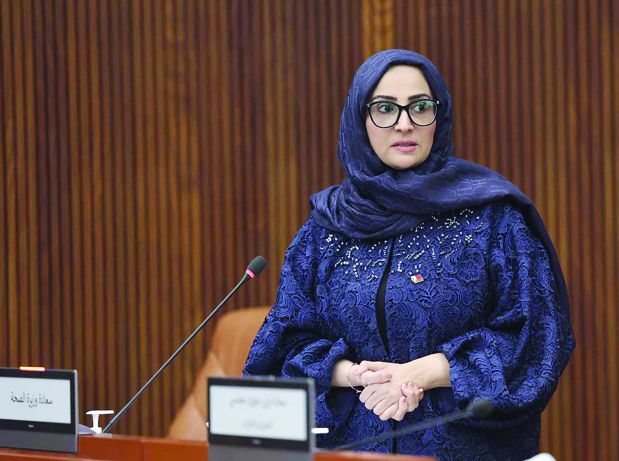
Bahraini doctors now form the backbone of government healthcare services, with nationals accounting for the overwhelming majority of physicians across public hospitals and health centres, it has emerged.
The data was provided in written parliamentary replies by Health Minister Dr Jalila Al Sayyed, who outlined employment policies, Bahrainisation strategies and long-term workforce planning, alongside updated statistics on patient volumes and disease trends.
Government hospitals currently employ 726 doctors – 637 Bahrainis and 89 expats – distributed across grades P5 to P10, including consultants, specialists and trainees. Of these, 207 were promoted during 2024-2025, reflecting what the ministry described as a ‘dynamic and merit-based’ career progression system.
Foreign doctors are employed only in limited specialties where qualified Bahrainis are not yet available.
Primary healthcare centres (27 centres) have achieved a 100 per cent Bahrainisation rate across all medical specialties with 584 doctors – a milestone the ministry said reflects years of structured training and workforce planning.
To maintain this level, the centres are continuously expanding board and residency programmes, while new health facility projects are being designed to create further job opportunities aligned with service needs.
Dr Al Sayyed stressed that employing and developing Bahraini medical professionals remain a ‘strategic national priority’ to safeguard health security and ensure sustainable services.
“Qualified Bahraini doctors are the first and best choice within our healthcare system,” she said, noting that national capacity-building begins with medical education and continues through advanced training and fellowship programmes inside and outside Bahrain.
She confirmed that a phased Bahrainisation plan, spanning three to five years, is being implemented to gradually replace foreign doctors with trained national talent.
“Replacement is carried out carefully to ensure continuity and quality of care,” she noted, explaining that the pace of localisation depends on each speciality’s requirements, available training capacity, approved staffing ceilings and financial resources.
To address gaps in specialised fields, Bahraini doctors are being sent abroad for advanced fellowship training, with appointments and promotions aligned directly with workforce needs across individual hospitals.
The scale of healthcare demand was underscored by recent patient data – with more than 538,000 outpatient visits recorded at government hospitals in 2025. High-volume specialties included orthopaedics, ophthalmology, dermatology, cardiology, obstetrics and general surgery.
Primary healthcare centres across all four governorates collectively recorded more than 707,000 patient visits between January and November 2025, underlining the central role of frontline services in the national health system.
The minister also revealed that the Supreme Council of Health – in co-ordination with Tamkeen – is rolling out incentives to encourage Bahraini doctors to work in the private sector. These include support for board certification, fellowship training abroad, educational loans of up to BD30,000, and salary subsidies covering 70pc in the first year, 50pc in the second and 30pc in the third – provided salaries do not fall below BD800.
“Private hospitals that prioritise Bahraini doctors are also eligible for additional incentives,” said Dr Al Sayyed.
While workforce development dominated the minister’s responses, Dr Al Sayyed also presented updated health indicators, including 1,401 new cancer cases and 4,547 dialysis patients recorded in 2024. More than 50pc of cancer cases were detected at a localised stage, which the minister described as a positive sign of improved early screening. Only 163 cancer patients required treatment abroad last year.
Dr Al Sayyed reaffirmed the ministry’s commitment to working closely with MPs to align workforce planning, training capacity and service delivery.
She was responding to questions by Parliament’s first deputy speaker MP Abdulnabi Salman and MPs Jalila Al Sayed and Jalal Kadhem Al Mahfoodh.
mohammed@gdnmedia.bh
&uuid=(email))