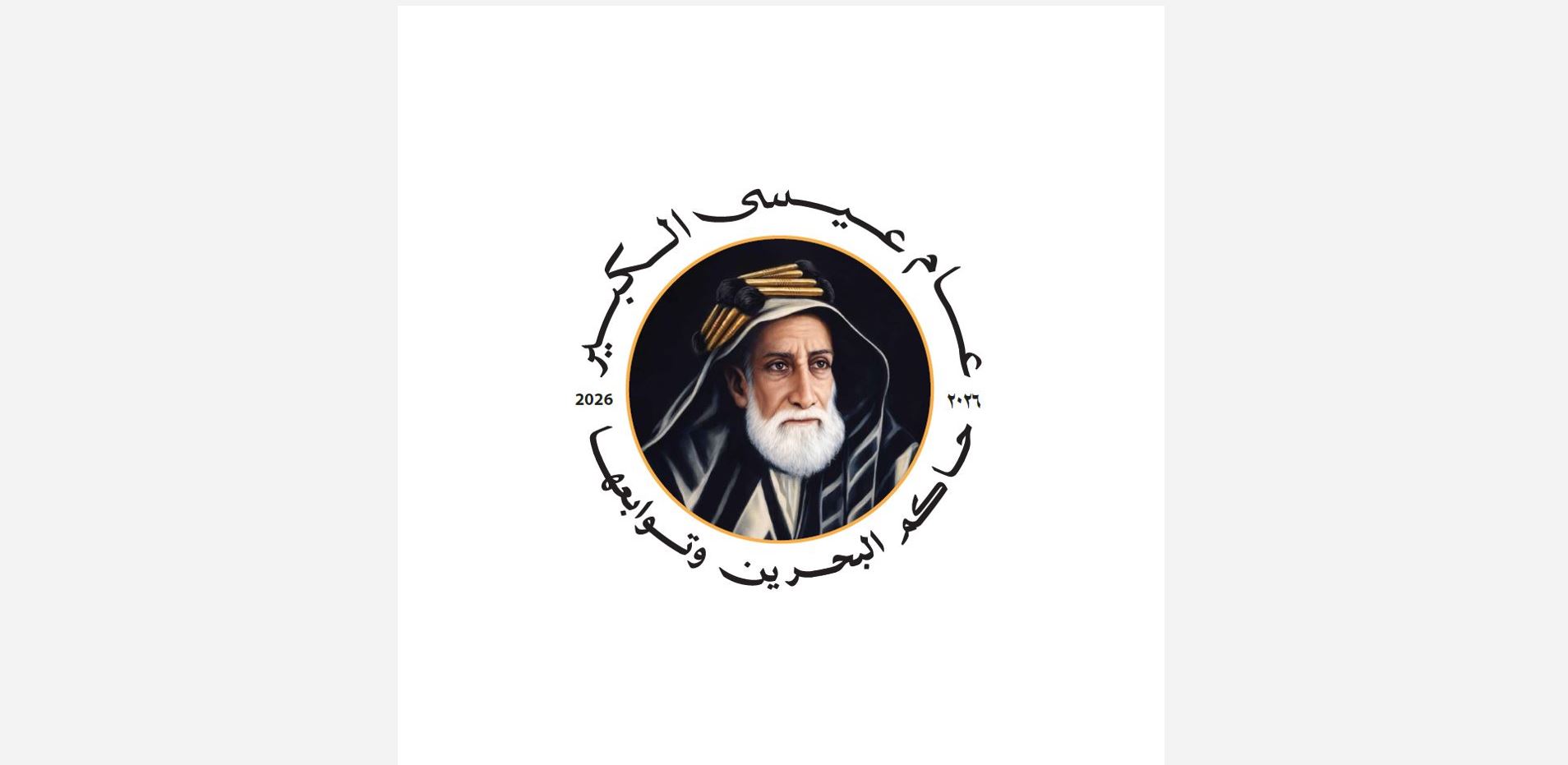
2026 has been designated the ‘Year of Isa Al Kabeer’ by His Majesty King Hamad to celebrate the founder of the modern state of Bahrain. Deputy News Editor Naman Arora looks at his notable achievements.

HH Shaikh Isa, pictured here during the visit of iconic jeweller Jacques Cartier
Modernisation under His Highness Isa Al Kabeer, Ruler of Bahrain and its Dependencies from 1869 to 1932, developed steadily, driven by the needs of a developing economy, beginning with the opening of Bahrain’s first post office in 1884.
As the earliest postal service in the Gulf, it linked Bahrain to regional and global communication networks and introduced regularised record-keeping, revenue collection and correspondence handling.

Bahrain in the 1870s – one of the first images taken of Bahrain showing a general view of the Manama seafront
The bureau, managed by a superintendent and a postman, was housed in the residence of the assistant to the British political agent in Bahrain.
At the time, letters sometimes took up to a year to arrive and yet, despite these delays, the system represented a crucial step in integrating Bahrain into global flows of correspondence and commerce.
Telegraphic communication developed with the establishment of a telegraph station in 1919. Prior to this, merchants were forced to route messages through Bushire in Iran.
Wireless telegraphy was preceded by radio services in 1916 and followed by the arrival of cable and wireless in 1931, which began telephone operations. Bahrain also launched its first electrification project in 1931, and by 1932, 200 homes had power.
The establishment of Bahrain’s first meteorological station in 1901 also supported navigation, trade, and planning with weather data, reinforcing the country’s importance within maritime and commercial networks.
The establishment of the British Agency building in 1900 and the appointment of Bahrain’s first Assistant Political Agent paved the way for broader reforms after the First World War, when Manama Municipality was established in 1919. As the first such body in the Arab world, it introduced budgeting, urban management and collective decision-making into governance.
Its first budget amounted to the equivalent of BD604 at the time.
Judicial and regulatory reforms followed. Regular courts of law were formed in 1921, civil courts in 1923 and the Land Registration Department in 1924, transforming how property, disputes and rights were managed. Municipal elections held in 1924 introduced a participatory element to governance.
In 1928, the passports department was set up. Prior to this there was no passport and people had to obtain a travel permit, signed by HH Shaikh Isa and then certified.

One of the earliest passports issued by Bahrain
The Passports Directorate was one of the earliest bodies of its kind in the region and in 1929, started issuing passports valid for two years.
Together, these developments marked the transition to a rule-based administrative system that could support a modernising state.
Infrastructure
Infrastructure development under HH Shaikh Isa extended beyond physical construction to include new forms of state capacity.
Early limitations were evident in port infrastructure, with ships anchoring offshore and goods transferred by small boats well into the 20th century.
Over time, however, public works expanded in scale and ambition, reflecting a growing ability to manage complex projects.
Electricity generation began in 1931, initially serving a small number of households.
The Electricity Department quickly became a multifunctional institution, responsible not only for power supply but also for traffic regulation, vehicle registration, and driving tests.
Water infrastructure developed through artesian well drilling, improving access to fresh water in an arid environment.

Necessary reforms and services, like a reliable water distribution system, were introduced during HH Shaikh Isa’s rule
Road regulation and the introduction of driving licences further reshaped mobility and urban life.
Construction of the Manama-Muharraq causeway began in 1930, symbolising the integration of Bahrain’s urban centres. The swing bridge opened in 1941.
During HH Shaikh Isa’s rule, aviation and transport infrastructure began to highlight Bahrain’s strategic importance, as the ‘Gateway to the Gulf’.
RAF aircraft landed in Bahrain from Iraq in 1924, welcomed by HH Shaikh Isa’s son His Highness Shaikh Hamad bin Isa Al Khalifa, who became the Ruler in 1932 after HH Shaikh Isa died.
The first commercial aircraft – Hanno, a Hannibal-class aeroplane – landed in Bahrain on October 6, 1932, en route from London to India.

One of the early commercial flights to land in Bahrain. At the time, the aerodrome was located in Manama, and when trying to take off, the airplane got stuck due to a collapsed water channel, and had to be pulled out with ropes
This marked the beginning of the establishment of the Gulf’s first international airport in Bahrain, soon being heralded as the ‘Suez Canal of the Air’ because of its strategic location.
Public Health
Public health crises were the most destabilising forces during HH Shaikh Isa’s reign, with epidemics of plague, cholera and smallpox between 1903 and 1907 causing widespread mortality.
However, HH Shaikh Isa responded, bringing in new forms of intervention, regulation and institutional response.
The establishment of the Mason Memorial Hospital, later named American Mission Hospital, in 1903 and Victoria Memorial Hospital in 1905 introduced modern medical practices and provided treatment, quarantine facilities and medical reporting.

The Mason Memorial Hospital, later named American Mission Hospital, was the first hospital to be opened in Bahrain in 1903 near the Old Manama Suq
Government involvement expanded with the opening of a state-run medical clinic in 1925, reflecting a growing recognition of health as a public responsibility rather than a charitable concern.
Education
During HH Shaikh Isa’s reign, education became a focal point and was identified as critical to the country’s future.
While private tutoring and overseas study had long existed, the establishment of Al Hidaya Al Khalifia Boys School in 1919 marked the beginning of formal public education.

Al Hidaya Al Khalifia Boys School, established in Muharraq in 1919, was Bahrain’s first public school, opening with a roster of 140 students and 19 teachers
It aimed to provide modern instruction suited to administrative, commercial and social needs.
The expansion of education continued through government scholarships, which sent students to Beirut and India from 1928 onwards.
The creation of the Education Department in 1931 institutionalised policy and oversight, and these initiatives produced a new class of educated Bahrainis capable of staffing government departments and engaging with modern bureaucratic systems.
Intellectual life developed alongside with the founding of the Literature Club in 1920. Together, education and cultural initiatives reshaped social expectations and laid the groundwork for political and administrative participation in the decades that followed.
Heritage
Bahrain’s past became an object of international attention during HH Shaikh Isa’s reign through archaeological exploration.
In 1889, Theodore and Mabel Bent conducted excavations of the island’s burial mounds, proposing links between Bahrain and ancient Phoenician civilisations.
Their work brought Bahrain into global scholarly discourse and framed the islands as a site of ancient historical significance.
This archaeological interest was shaped by excavations, artefacts and reports circulated through British scholarly and administrative networks, producing interpretations of Bahrain’s past.
The international circulation of images and theories transformed Bahrain’s global image.
The country was increasingly seen not only as a strategic commercial location but also as a place of deep heritage.
Economy
For most of HH Isa Al Kabeer’s reign, Bahrain’s economy was dominated by pearling, which structured labour, seasonal rhythms and state revenue.

Pearling was the primary driver of the economy during most of HH Shaikh Isa’s rule
Customs duties derived from pearling exports formed the backbone of government finances, making economic stability highly dependent on a single industry.
However, this economic model was threatened in the late 1920s when the global pearling market collapsed after the introduction of Japanese cultured pearls.
The collapse devastated incomes, displaced labour and undermined merchant networks that had sustained Bahrain’s economy for generations.
However, HH Shaikh Isa and HH Shaikh Hamad deftly navigated this challenging time, diversifying the economy and exploring a resource on which the world was just starting to become increasingly reliant: oil.
The decisions taken under HH Isa Al Kabeer’s rule laid the foundations for Bahrain’s post-pearling economy and its future as an energy-producing state.

An engineer tries to control the oil flow during Bahrain’s early oil years
Oil exploration began with the granting of exploration licences in 1925, followed by the incorporation of Bahrain Petroleum Company (Bapco) in 1929, and the discovery of oil in 1932, a few months before HH Shaikh Isa passed away.

Bahrain’s first oil well, ‘spudded in’ in October 1931, leading to the discovery of oil on June 2, 1932
Legacy
HH Isa Al Kabeer guided Bahrain through a decisive era of change, safeguarding its stability while patiently laying the foundations of modern administration, education and infrastructure. His long reign enabled the country to enter the 20th century, prepared for transformation, and when he died in 1932, his son HH Shaikh Hamad, who had been appointed as Deputy Ruler in 1923, led the country into a new era of progress and modernisation.
naman@gdnmedia.bh
https://www.gdnonline.com/gdnimages///20260118\20260117_214205_0.jpg