

I had begun drafting this article before Israel announced the killing of Ali Larijani, the former Secretary of the Iranian Supreme National Security Council. My objective was to analyse Iranian strategic thought amidst the events currently ravaging the region – particularly as Larijani was a ‘strongman’ within the corridors of the Iranian regime post-Ali Khamenei, and notably the sole prominent opponent to the installation of Mojtaba Khamenei as his father’s successor.
It is evident that Israel’s insistence on targeting Larijani stemmed from the fact that he was the only figure capable of navigating a diplomatic dialogue with the United States. This is the hallmark of Israeli intelligence: blocking any path towards diplomacy, much as they did with Yitzhak Rabin on November 5, 1995, when he was on the verge of finalising a peace process with the Palestinians.
I return here to review the core themes of Larijani’s final letter, which surfaced only days after a message attributed to Mojtaba Khamenei, the new Iranian leader. Together, these two letters summarise the state of a staggering regime – one that continues to suffer from a profound failure in conflict management, consistently directing its aggression towards the wrong parties and arenas.
Larijani addressed his words to Muslims in a desperate attempt to market an Iranian narrative of the unfolding regional scene. A careful reading of his message shows that it is not merely a political statement but an effort to reframe the regional narrative of the war by deploying a religious and political rhetoric built on claims of victimhood and an appeal for Islamic sympathy, at a time when Tehran faces growing regional isolation and mounting internal and external challenges.
Larijani, who over the years oscillated between being a ‘dove’ and a ‘hawk’ within the Iranian regime, sought in his letter to portray an image of Iran as the victim of a conspiracy. This premise ignores the broader context of regional tensions over the past years – tensions largely linked to Iran’s expansionist policies, its reliance on building cross-border networks of influence, and its support for armed groups across several Arab countries.
Tehran continues to repeat the same fallacies in its attempt to justify targeting the territories of the GCC States, claiming it targets American bases. This argument is fundamentally devoid of fact. The Arab Gulf states have repeatedly affirmed that their territories have not been used for any military operations targeting Iran. Furthermore, they have pursued a clear policy aimed at preventing the region from sliding into a comprehensive military confrontation.
More troubling, Tehran’s hostile attacks have struck civilian facilities and vital infrastructure in Gulf countries, causing civilian fatalities and casualties. This raises compounded legal and moral issues: not only violations of state sovereignty but also the targeting of civil properties and endangering civilian lives.
It is strikingly ironic that both Larijani and Mojtaba Khamenei reverted to using the rhetoric of labelling the United States as the ‘Great Satan’. While this description has been a staple of Iranian political discourse for decades, it ignores a glaring paradox: the relationship between Tehran and Washington has always been cordial since the era of Shah Mohammad Reza Pahlavi. Furthermore, the US supported Iran during the Iran-Iraq war and later co-operated with it in Afghanistan and Iraq. Such contradictions define much of Iran’s political rhetoric.
The most telling aspect of Larijani’s letter is the use of religious discourse to solicit Islamic sympathy, while ignoring a political reality shaped over years: many Arab and Muslim states view Iran’s regional role as involving deep interference in their internal affairs, support for armed groups, and contribution to bloody conflicts in several Arab capitals.
It appears that Iran’s losses from the war are so great that its leadership has resorted to political supplication and attempts to break its regional isolation, rather than issuing a genuine call for unity across the Muslim world.
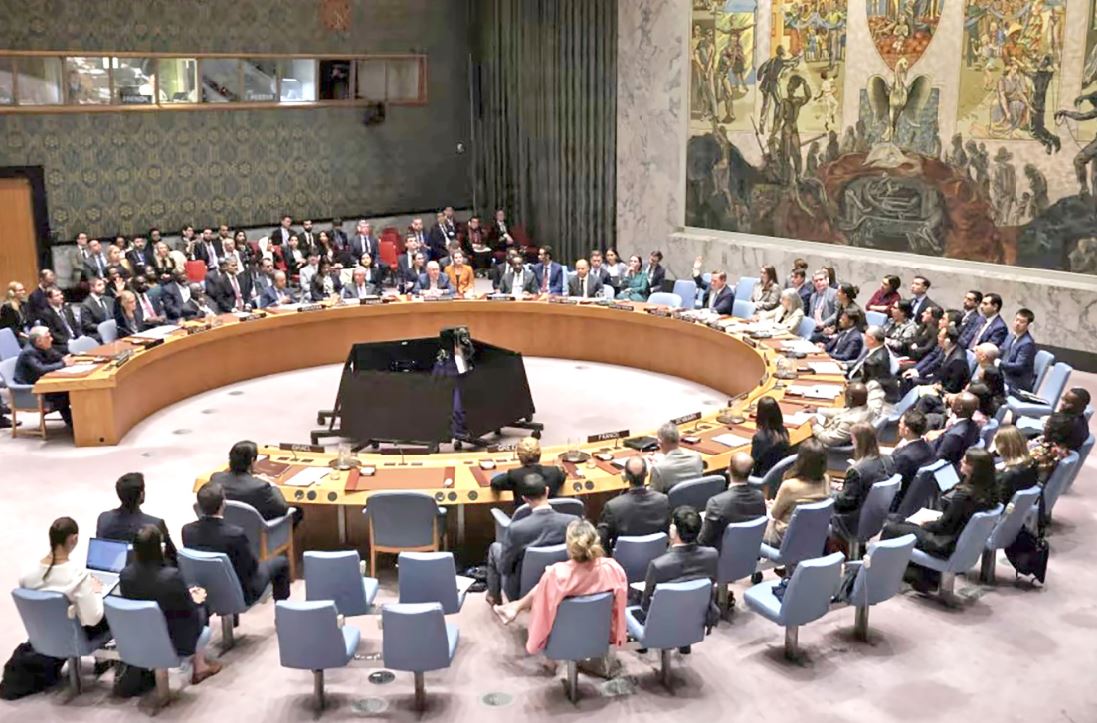
Larijani’s final message cannot be read in isolation from recent international developments, foremost among them the Security Council resolution condemning Iranian aggression, which garnered the support of 136 nations. This clearly reflects the scale of political isolation Tehran faces globally and frames Larijani’s letter as a calculated move to mitigate this isolation by invoking the language of Islamic solidarity.
In the end, political messages written in the language of victimhood and supplication may sometimes stir sympathy, but they cannot change realities on the ground. States are judged by their policies and regional conduct, not by propagandistic rhetoric.
Facts speak for themselves. When Tehran expelled the Shah, Iran was among the most advanced countries financially and industrially. The Islamic Revolution arrived and, in its name, executed nearly 48,000 men of thought, industry and culture, a figure acknowledged by Asadollah Lajevardi, the warden of Evin Prison, in an interview with a British newspaper in the early 1980s.
The remaining Iranian leadership must look at the industrial and urban progress that they attempt to target with their reckless strikes. They should compare the job opportunities available on the Arab side of the Gulf to the economic desolation and lack of prospects on the Persian shore.
Perhaps such a comparison will help them grasp the harm they have inflicted on their people and how they halted their country’s progress, except for exporting the revolution’s slogan that led young people in Iraq, Yemen, Lebanon and Syria to death.
We are countries that call for peace, construction and development; you call for death and annihilation.
Iran’s appeals that beg Islamic peoples to rally behind it under the guise of confronting America and Israel ignore its own fallacies and attempt to reduce the scene to only two choices: either stand with Iran or line up with the ‘enemies’, while ignoring the independent positions of states that seek stability away from polarisation.
Taken together, these falsehoods are Tehran’s attempt to repeat a specific narrative even when it contradicts the facts. But the truth will remain in our minds, and we will not forget the crimes of Iran’s hostile attacks.
&uuid=(email))