

Iran’s huge Pars gas field was hit yesterday in a major escalation in the US-Israeli war that sent oil prices shooting higher.
Tehran struck Qatar and fired missiles at Saudi Arabia.
Qatar’s state oil giant QatarEnergy reported ‘damage’ after the Ras Laffan Industrial City, an energy-industry hub, was hit by Iranian missiles.
Qatar declared the security and military attache in Iran’s embassy as ‘persona non grata’, asking them to leave the country within a period of maximum 24 hours, the foreign ministry said yesterday.
Doha attributed the decision to Iran’s repeated attacks on the country.
BNA reported that Saudi Arabia intercepted and destroyed five hostile drones that attempted to approach an energy plant in the Eastern Region, confirming the armed forces’ success in protecting vital facilities and countering all threats.
The attacks came just ahead of a meeting of regional and Islamic foreign ministers in the Saudi capital.
The escalation threatens to worsen an unprecedented disruption to global energy supplies that has raised the political stakes for US President Donald Trump.
Diesel prices in the US have already risen above $5 a gallon for the first time since the 2022 inflation surge that eroded support for his predecessor Joe Biden.
The conflict that has already halted shipping from the world’s most important energy-producing region and could now bring lasting damage to its infrastructure.
Benchmark Brent crude prices rose around five per cent to above $108.
Stock markets veered lower.
US Vice President JD Vance said the Trump administration would announce a ‘couple of things’ in the next 24 to 48 hours to tackle rising gas prices.
Pars is the Iranian sector of the world’s largest natural gas deposit, which Iran shares with Qatar across the Gulf.
The attack was widely reported in Israeli media to have been carried out by Israel with US consent, though neither country acknowledged immediate responsibility.
Iran’s Fars news agency reported that gas tanks and parts of a refinery had been hit.
It said workers had been evacuated and state media later said the fire there was under control.
Qatar, a close US ally which hosts the largest US airbase in the region, blamed the attack on Israel, without mentioning any US role, and called it ‘dangerous and irresponsible’ that put global energy security at risk. The UAE also denounced the attack.
Iran has already shut the Strait of Hormuz, which handles 20pc of global oil and liquefied natural gas supply, but consuming nations have hoped the disruption would prove short-lived as long as production infrastructure was spared.
Israel killed Iran’s intelligence minister Esmail Khatib yesterday, a day after killing powerful security chief Ali Larijani, and Israeli Defence Minister Israel Katz said “no one in Iran has immunity and everyone is in the crosshairs.”
He and Prime Minister Benjamin Netanyahu had authorised the Israeli military “to target any senior Iranian official for whom an intelligence and operational opportunity arises, without the need for additional approval.”
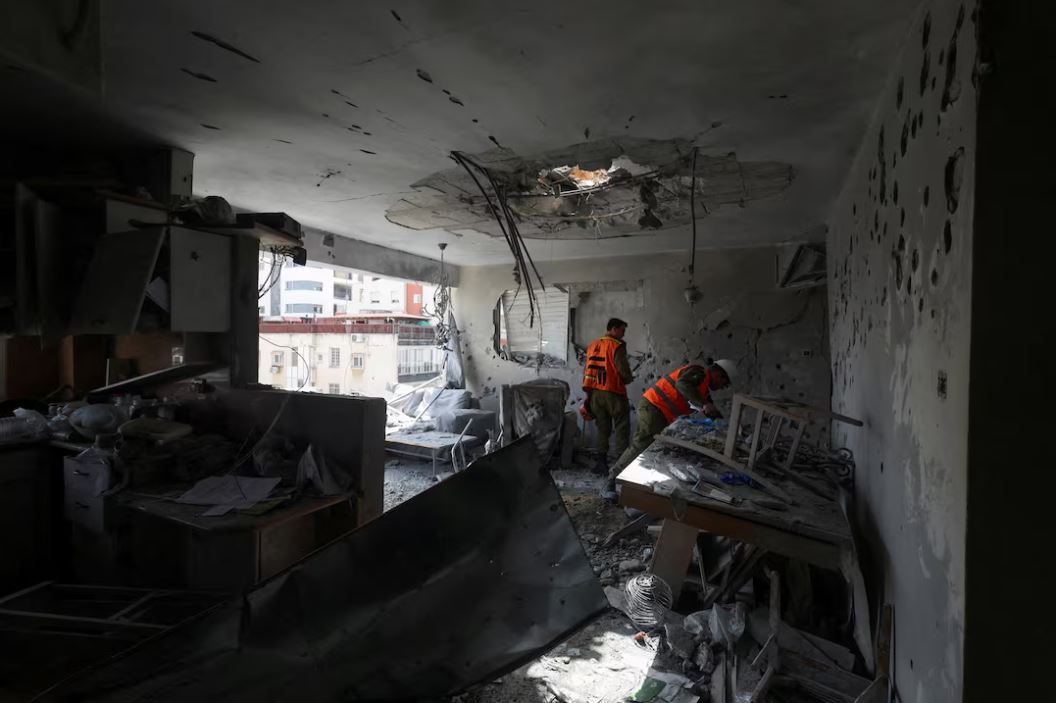
Iran retaliated for the killing of Larijani by firing missiles at Israel, which Israeli authorities said killed two people near Tel Aviv.
&uuid=(email))