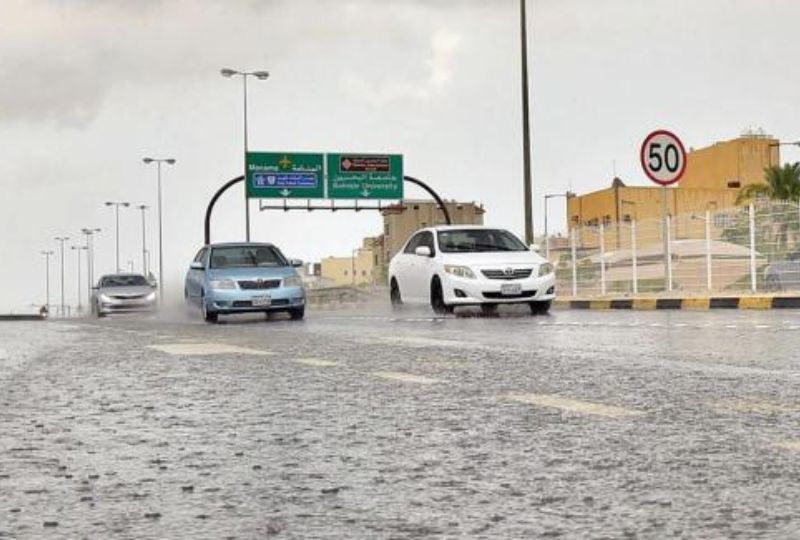
MPs are calling for a transformative shift in mindset to ensure the kingdom captures every possible drop of its limited rainfall before it flows into the sea.
When heavy rains lash Bahrain, roads flood, drains overflow and within hours, millions of cubic metres of precious water are gone – swept into the sea in a country that receives barely 10cm of rainfall a year, they claim.
Now, Bahrain’s legislators are calling for a change in mindset – from treating rain as a ‘seasonal inconvenience’ to harnessing it as a strategic national resource.
The proposal is being spearheaded by the Strategic Thinking Bloc, led by financial and economic affairs committee chairman MP Ahmed Al Salloom.

Mr Al Salloom
He said rainwater harvesting was no longer an environmental option, but an economic and strategic necessity.
“Every rainy season we see the same scene: water overwhelming streets and then disappearing into the sea,” he said.
“In one of the driest regions in the world, that is water we simply cannot afford to waste.”
He stressed that practical and cost-effective systems – from rooftop collection to underground storage tanks – could transform how Bahrain manages its limited natural resources.
“Simple infrastructure can allow us to capture runoff from homes, buildings and public spaces. This water can then be reused for irrigation, landscaping and other non-potable purposes, reducing pressure on treated municipal supplies and lowering long-term costs,” he added.
The Works Ministry has already established a pilot water storage system in Hunainyah Valley to assess its feasibility. If successful, similar systems could be integrated into parks and green areas across the country.
Southern Municipal Council chairman Abdulla Abdullatif had earlier told the GDN that the council had received a proposal by Bahrain University students that outlined plans for a massive underground storage tank with a capacity of 73,500 cubic metres and a depth of 15 metres to capture rainwater that would otherwise be lost. He also added later that government officials had approved the plan, without confirming the implementation procedures.
“Every drop that reaches our shores is a missed opportunity. If we are serious about sustainability and economic efficiency, we must start treating rainwater as the asset it truly is,” said Mr Al Salloom.
Bloc spokesman MP Khalid Bu Onk said Bahrain could draw inspiration from best practices globally.

Mr Bu Onk
“Rainwater harvesting does not require excessive funding or highly complex technology,” he said.
“International experience, including projects supported by UN agencies, shows that basic systems can support irrigation and contribute to food security. We can implement smart, scalable models suited to Bahrain’s urban landscape.”
Collected rainwater – while not suitable for drinking without treatment – can be safely used for watering gardens, washing cars, flushing toilets and other domestic purposes.
Mr Bu Onk added that improved rain drainage networks and soakaways would also help prevent waterlogging during heavy downpours. Soakaways are pits into which waste water is piped so that it drains slowly out into the surrounding soil.
Bloc member MP Dr Mariam Al Dhaen highlighted the broader sustainability benefits of rainwater harvesting.

Dr Al Dhaen
“Water security is directly linked to national resilience and environmental responsibility,” she said.
“Encouraging buildings and households to install storage tanks and collection systems will embed sustainability into everyday life.”
She called for awareness campaigns and incentives to encourage wider adoption of harvesting systems in new developments.
“We must change our perspective. Rain should not be seen as a temporary disruption, it is an opportunity,” she said.
The proposal has been referred by Parliament Speaker Ahmed Al Musallam to the public utilities and environment affairs committee for review.
mohammed@gdnmedia.bh