

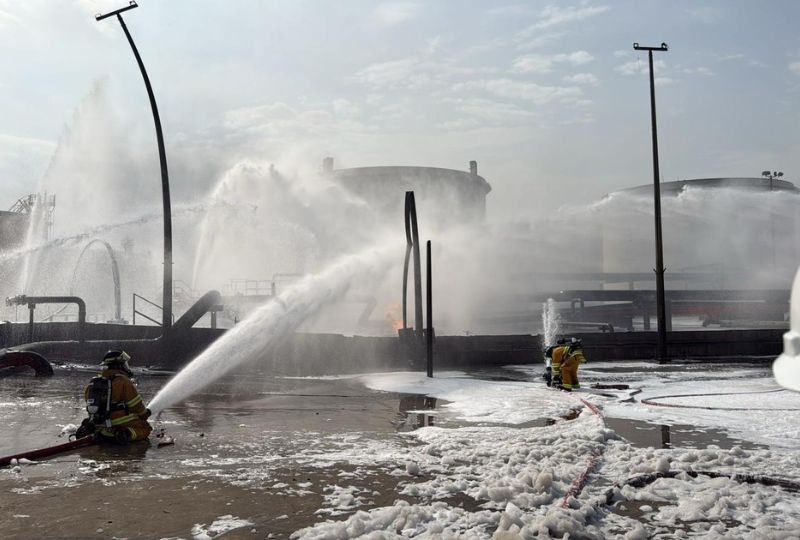
When the fires tore through the fuel storage facility in Muharraq, no one stopped to ask the Civil Defence teams about their family names or their sect. The firemen didn’t hesitate. They went in, did their jobs, and contained the blaze while the rest of us watched from a distance, hoping for the best.
That is what a crisis lays bare – not who people say they are, but what they do when it matters.
In the past two weeks, Bahrain has seen both the best and the worst of its own people. Emergency responders worked under extreme pressure to protect lives and infrastructure. Police officers maintained order. Teachers steadied classrooms. Medical teams prepared. Ordinary citizens checked on neighbours, shared verified information, and stayed calm.
At the same time, authorities arrested Bahrainis for allegedly photographing vital locations and transmitting their co-ordinates to the Iranian Revolutionary Guard Corps. Others were detained for filming military sites and posting footage online. Dozens of cases have been filed against individuals accused of glorifying Iranian attacks on their own country through social media, cheering on strikes that injured their own neighbours.
The Anti-Cybercrime Directorate has filed more than 50 legal cases related to unauthorised filming and the misuse of social media since the crisis began. Defendants have appeared before the High Criminal Court in expedited proceedings.
The fireman who ran towards the Muharraq blaze and the person who allegedly transmitted co-ordinates of sensitive sites to a hostile power both call themselves Bahraini. But citizenship is not just a document. It is a decision you make, repeatedly, about where your loyalty lies when it is tested.
A country under attack does not have the luxury of treating this as a philosophical question.
Every society under pressure discovers that patriotism is not what people post online. It is not a flag in a profile picture or a slogan shared for approval. It is the quiet, unglamorous work of holding things together – the nurse on a double shift, the police officer directing traffic away from a danger zone, the teacher who keeps a classroom calm when children are frightened.
It is also the restraint of not filming what should not be filmed. The discipline of following official channels. The basic act of not spreading panic when panic is exactly what an adversary wants.
What has been striking about Bahrain’s response during this crisis is how many people understood this instinctively. The co-operation with authorities, the calm on the streets, the trust in official communication, none of this happened by accident. It reflects something real about the character of this country.
When citizens photograph strategic locations for a hostile state, that is not a difference of opinion. When people use social media to celebrate attacks that wound their own neighbours, that is not free expression. These are choices, made deliberately, and they carry consequences that no court needs to explain.
The question of what makes a real Bahraini is not answered by birth alone. It is answered in moments like this. It is answered by what you do when the sirens sound.
Most Bahrainis answered that question these past two weeks and they answered it well.
Dr Ali Mohamed
&uuid=(email))