

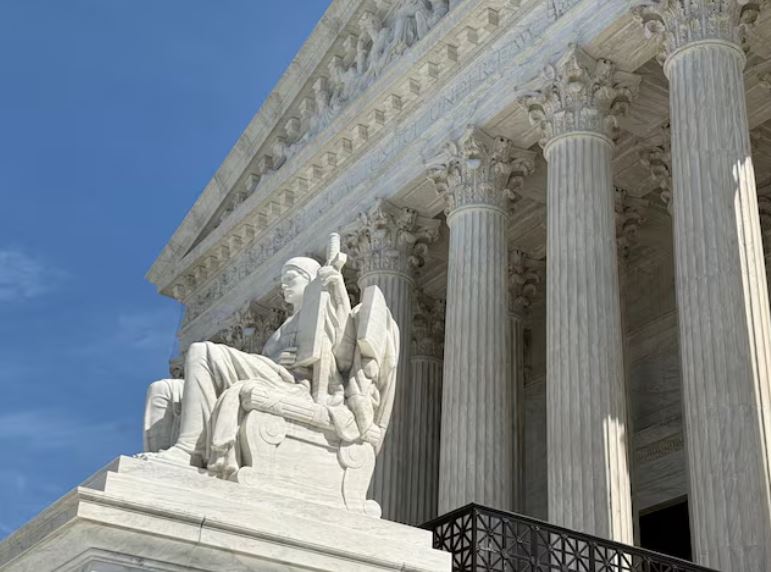
The US Supreme Court heard arguments yesterday in Mississippi’s defence of a state law challenged by Republicans that allows a five-day grace period for mail-in ballots received after Election Day to be counted in a case that could lead to stricter voting rules around the country.
Republican President Donald Trump’s administration is backing the challenge to Mississippi’s law, which permits mail-in ballots sent by certain voters to be counted if they were postmarked on or before Election Day but received up to five business days after a federal election.
Absentee voting by mail is limited to a few categories of voters under the law including elderly people, the disabled and those living away from home.
Mississippi appealed after a lower court deemed its mail-in ballot law illegal. The dispute centred on whether federal laws setting Election Day for federal elections pre-empt state laws in various states that allow ballots to be received after that day.
The Supreme Court has a 6-3 conservative majority. Questions posed by some of the conservative justices during the arguments appeared to express concern over mail-in ballot practices more broadly, beyond grace periods, including who can receive a ballot, whether it must be postmarked and even whether states may allow mailed-in ballots to be recalled by the voter.
Trump last year vowed to end the use of mail-in ballots nationwide before the 2026 US midterm elections, a move that likely would disproportionately benefit his party given that Democratic voters traditionally have been more likely to use mail-in ballots than Republican voters.
Legislation now being considered by Congress would put new restrictions on mail-in ballots involving requirements for certain government-issued photo identification. Trump, however, has urged Senate Republicans to expand the proposal to include a sweeping ban on mail-in voting, with limited exceptions for military personnel and certain others.
Republicans have taken a sceptical view towards mail-in ballots. Trump has sought to cast doubt on the security of these ballots, although evidence of voter fraud is rare. Trump has continued to make claims of widespread voting fraud in the 2020 presidential election that he lost to Democrat Joe Biden.
&uuid=(email))