

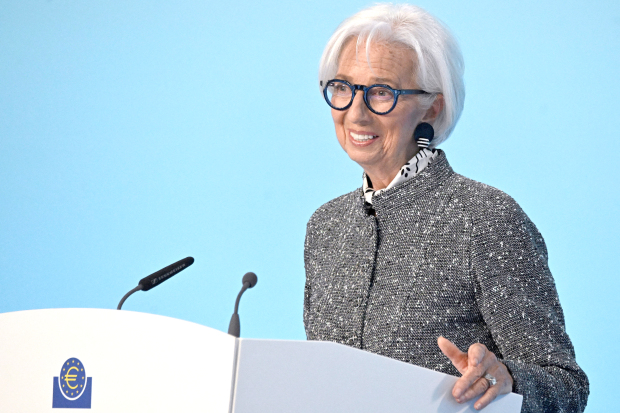
European Central Bank (ECB) President Christine Lagarde opened the door yesterday to raising interest rates in the euro zone if war in the Middle East pushes up euro zone inflation for some time.
The ECB left rates unchanged last week but warned about a looming surge in prices, and policymakers are now debating the conditions that could force them to raise borrowing costs to stop rapid price growth from getting entrenched.
Lagarde said the ECB would have to respond in a forceful or persistent way if inflation looked set to sit well above its 2 per cent target for an extended period, but said even a more modest overshoot could call for a “measured” rate move.
“If the shock gives rise to a large though not-too-persistent overshoot of our target, some measured adjustment of policy could be warranted,” Lagarde said in Frankfurt.
“To leave such an overshoot entirely unaddressed could pose a communication risk: the public may find it difficult to understand a reaction function that does not react,” she argued.
Her warning came as the impact of a widening war in Iran made itself felt in the euro zone economy, sapping German business morale and leading economists around the euro zone, most recently in Portugal and Italy, to warn of slower growth or even recession.
Bank of Finland governor Olli Rehn said at the same event that the ECB should look beyond swings in oil prices and focus on the overall state of the economy.
“Monetary policy must respond, from the standpoint of medium-term price stability, to the overall macroeconomic environment, not to oil prices alone,” the Finnish member of the ECB’s Governing Council said.
Lagarde did not explicitly equate her criteria with any of the economic scenarios outlined by the ECB last week. However, they are not too different from the inflation trajectory in the bank’s “adverse” scenario.
In the ECB’s most benign “baseline” case, inflation will average 2.6pc this year, rising from around 2pc in the past year.
&uuid=(email))