

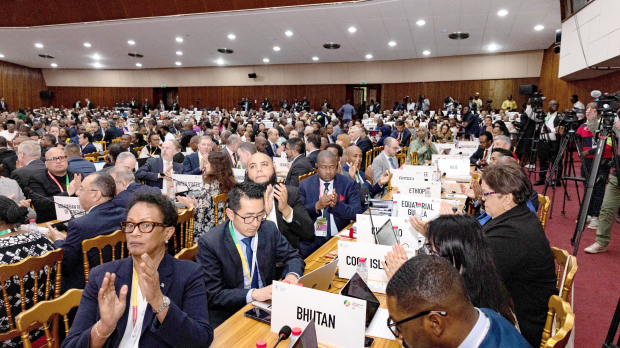
The World Trade Organisation is at a “critical juncture” and needs deep reform, the European Union and parties to the Comprehensive and Progressive Agreement for Trans-Pacific Partnership said yesterday.
The EU and the CPTPP – which comprises 12 countries, including Australia, Japan, Canada, Mexico, Malaysia and Britain – met on the sidelines of the WTO ministerial conference in Cameroon yesterday.
“The WTO is at a critical juncture amid heightened tensions in the global trading system,” they said in the joint statement.
Representatives from both groups recognised the need for “urgent, deep, comprehensive and inclusive reform of the WTO.”
They said they seek to “enhance co-operation” among like-minded WTO members in order to drive improvements to the global trading system, while also working together to co-operate on areas of mutual interest such as trade diversification and supply chain resilience.
Both shared concerns about what they described as “market-distorting practices” and oversupply, as well as “economic coercion”.
The EU and CPTPP member countries have been hit with tariffs imposed by the United States in the last year.
The EU has recently called for a rethink of the WTO’s Most Favoured Nation principle, where trading countries have to treat each other equally, on concerns about China.
EU Trade Commissioner Maros Sefcovic recently said the bloc should make low-tariff access to its markets for Chinese companies conditional on the openness of the Chinese economy to European businesses.
Failure to chart a viable reform path for the WTO may lead the EU-CPTPP and other like-minded economies to deepen their cooperation and look to forge deals among willing members as a ‘plan B’ if the WTO talks in Yaounde do not make progress, Sweden’s Trade Minister Benjamin Dousa minister earlier told Reuters.
Meanwhile, large differences remain between most countries and the US and India as trade ministers meet to discuss reforms at the WTO, two diplomats told Reuters yesterday.
“There is a real commitment among ministers to reach an agreement on reforms, but there is a big elephant in the room blocking: India and the US,” a senior diplomat told Reuters.
Another diplomat from an African country said India so far has not shown signs of a change in position. Some flexibility, however, might be possible, the person added. The diplomats declined to be named due to the sensitivity of the negotiations.
While the US and India acknowledge the need to reform the global trading system, they have resisted proposals of a substantive workplan on reforms.
“Unfortunately on reform I don’t see much room for manoeuvre between the US and India’s positions,” said the senior diplomat.
India has also opposed an agreement to aid investment into developing countries and the US desire to permanently extend an e-commerce moratorium on customs duties on electronic transmissions like digital downloads, which expires this month.
“The US, China, EU and UK positions are reasonable, but there is one party that we need to see compromise from to make progress - India,” said Chris Southworth, the secretary general of the UK International Chamber of Commerce
“I think frustration among members will start to spillover here in Yaounde if we see no progress.”
&uuid=(email))