

A recent letter in the GDN, under the title ‘An Unsettling Experience’, observed that the medical profession has increasingly become a business. There is little doubt in this. It has become a lucrative industry, especially in many third‑world countries. Anyone with sufficient funds – regardless of their background in medicine or education – can simply purchase or rent a building, hire newly graduated practitioners on minimal salaries, and soon turn the venture into a gold mine.
Bahrain, to its credit, provides free medicines to its citizens and, to some extent, even to residents. Yet it remains difficult to understand how the number of private pharmacies continues to grow so rapidly. If someone opens a pharmacy today, they often seem able to establish a branch the very next day, clearly funded by business profits.
Here, I feel compelled to share the experience of a person who visited a dentist for a toothache. An X-ray was taken, and the doctor diagnosed a simple issue. When the condition worsened, he sought a second opinion. Another dentist performed a new X-ray, which revealed an infection. The poor quality of the first X-ray became evident only then.
As someone from the older ‘date‑milk‑bread’ generation, I believe that a true professional would have detected the problem even from a poor‑quality image. In the 1950s and 1960s, we did not have widespread access to X-rays, ECGs, or MRIs, yet genuine professionalism flourished. The medical profession was largely held by individuals who were God-fearing and committed to humanity.
Today, unfortunately in many developing countries, true professionalism appears to be diminishing.
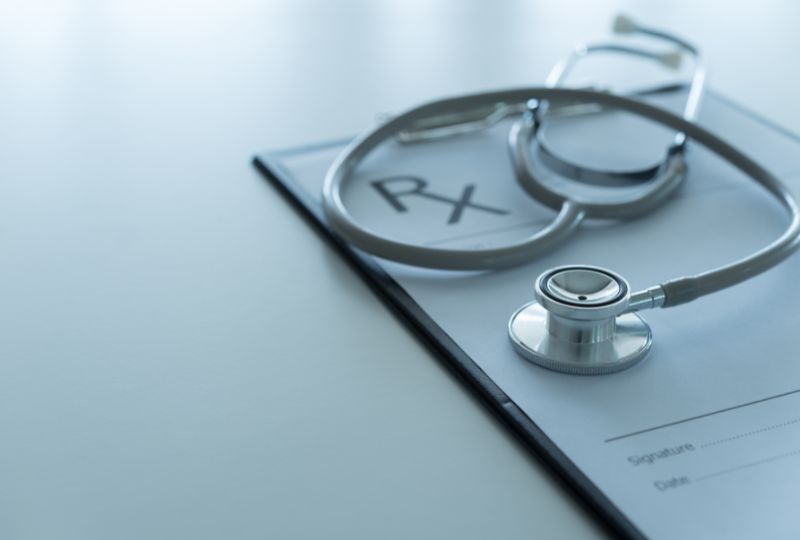
In my childhood, a doctor would always use a stethoscope, check pulse and vital signs, examine the abdomen, and prescribe medicine along with dietary instructions – often resolving the illness within a few days. Until the age of 25, I do not recall undergoing a single medical test. Yet today, even my four- and six‑year‑old grandchildren have undergone countless X-rays and laboratory tests. When was the last time anyone saw a doctor rely primarily on a stethoscope?
A recent incident with my two‑year‑old grandchild further illustrates this concern. While drawing with crayons, she broke a piece and accidentally inhaled it. My daughter, who saw it happen, immediately took her to a child specialist at a private hospital. The doctor examined her briefly and insisted that nothing was inside, suggesting instead that the piece must have fallen unnoticed. Despite my daughter repeatedly asserting that she had seen it enter the nostril, the doctor dismissed her concerns.
Being naturally cautious and sensing that a foreign object might still be present, we chose not to go home. Instead, within 10 minutes we visited another private hospital. Although it was Friday, they promptly called an ENT specialist from home. He arrived within 15 minutes, examined the child, and immediately confirmed the presence of the object. Within two minutes, he successfully removed it.
Muhammad
&uuid=(email))