

Families whose homes were damaged in fires – and who are grappling with unresolved building violations – may soon be able to rebuild their properties, following the approval in principle of a humanitarian proposal by the authorities.
The Municipalities Affairs and Agriculture Ministry has given initial approval to a plan put forward by Northern Municipal Council member Abdulla Al Qobaisi, allowing exceptional building licences for fire-affected homes with existing violations under the Towns and Villages Development Scheme.
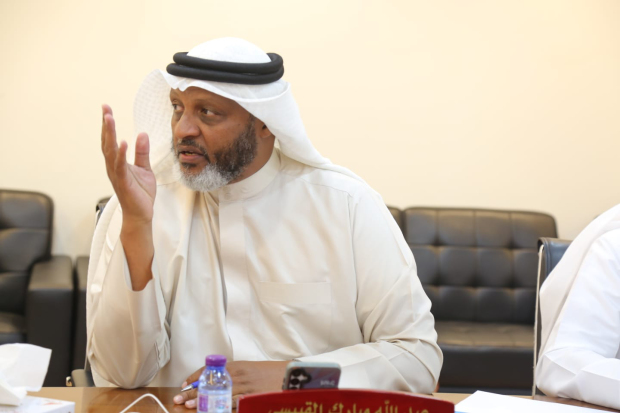
Abdulla Al Qobaisi
The initiative aims to support vulnerable families, including widows, orphans and residents of shared properties, by enabling reconstruction without lengthy administrative delays linked to long-standing violations.
In its formal response to the council’s recommendation, the ministry confirmed it has begun procedures to incorporate the proposal into its official guideline manual, taking into account municipal council’s observations and established regulatory processes.
Municipal Affairs Under-Secretary Shaikh Mohammed bin Ahmed Al Khalifa said the ministry was keen to balance humanitarian considerations with urban planning regulations.
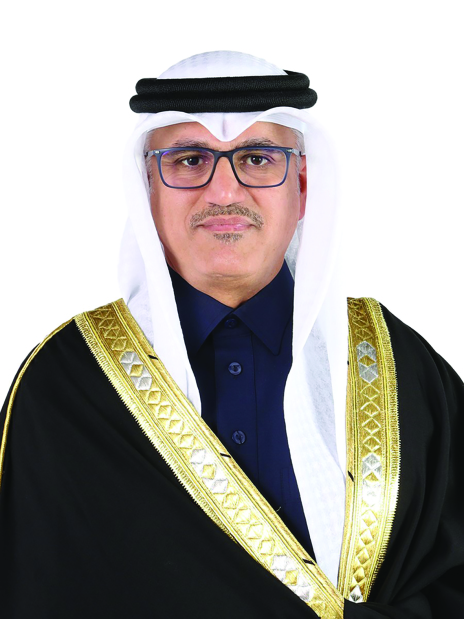
Shaikh Mohammed bin Ahmed Al Khalifa
“We have agreed to the proposal, in principle, and have started the necessary steps to include it within the guiding framework used for the Towns and Villages Development Scheme,” he said. “This will be done in line with the applicable procedures while addressing practical obstacles faced by affected families. Our priority is to ensure safety, compliance and humane handling of exceptional cases.”
Mr Al Qobaisi said the idea emerged from repeated incidents in which families who lost their homes to fires were unable to rebuild because of pre-existing violations that were largely unrelated to the disaster itself.
“The goal is to empower families – especially widows and orphans – to reconstruct their homes swiftly and without unnecessary complications,” he said. “These are humanitarian situations that require a flexible and compassionate response.”
He pointed out that many violations found in older homes stemmed largely from limited plot sizes, which had led residents over the years to carry out unregulated extensions to meet their needs.
However, he noted that recently-adopted urban planning regulations had already led to the removal or reclassification of some earlier violations, helping to ease the integration of such homes into development schemes while maintaining technical and structural safety standards. “The new building regulations have resolved part of the old problem,” Mr Al Qobaisi added. “This allows us to regularise many of these homes within development projects, provided all engineering and safety standards are met to protect residents from future risks.”
He praised the ministry for considering the humanitarian circumstances while adhering to urban rules.
“The proposal also supports broader goals of sustainable development by preventing vulnerable families from being left in limbo, unable to repair or rebuild their primary shelter due to technicalities,” he added.
Mr Al Qobaisi said the initiative highlights how co-ordination between municipal councils and the ministry can produce practical solutions that serve the public interest.
“This proposal supports humanitarian cases including widows, orphans and residents of shared homes, while ensuring that we do not compromise on safety or planning standards,” he said. “It reflects a real commitment to balancing regulatory compliance with exceptional human circumstances, promoting family stability and serving some of the most vulnerable segments of society.”
He added that once formally integrated into the guideline manual, the measure would streamline licensing procedures for eligible cases under the development project, offering hope to families seeking to rebuild after tragedy.
mohammed@gdnmedia.bh
&uuid=(email))