

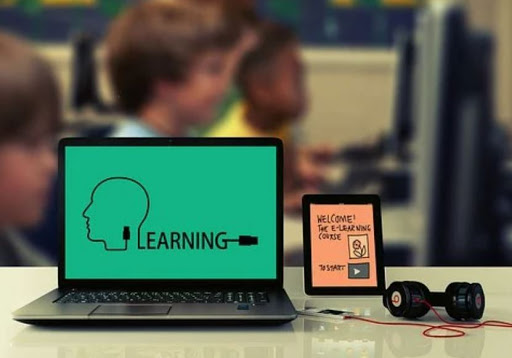
As online learning has become a feature of education in the current scenario, many students and teachers face a familiar frustration: long video lectures, minimal interaction, and a lingering question if the real learning happens at all!
The problem is not that students are unmotivated or teachers are unprepared — it is that many online courses are designed to deliver content, not to create learning. This is especially true in higher education, where instructors are often overwhelmed by large volumes of content compared to school-level teaching. The University of Bahrain’s Unit for Teaching Excellence and Leadership, under the remarkable leadership of its director Dr Amal Mohamed Ahmed Alrayes, has lined up a series of workshops to support online teaching and learning open to faculty and outside guests.
I was honoured to present a workshop and the topic I chose was, ‘Making Learning Happen Online’.
I share the gist of my workshop content here for a wider audience who may find it beneficial as they teach online.
The workshop was founded on Phil Race’s seven factors that underpin successful learning – namely, wanting to learn, need to learn, learning by doing, making sense of learning, feedback, verbalising, and assessing or making judgements about learning (Race, 2014). These factors are largely aligned with Chickering and Gamson’s (1987) 7 Principles of good practice namely, faculty/student contact, collaborative learning, active learning, prompt feedback, time on task, high expectations, and diverse learners. The factors and principles are furthermore aligned with the Universal Design for Learning (UDL) matrix by CAST (2018) namely, engagement, representation, and action or expression. The three mentioned resources are well grounded in learning theories and scholarship based on profound studies. Designing learning by triangulating these three resources can profoundly impact online engagement and interaction.
Wanting to know what made my students learn best in my class online, I asked them a question on each of Race’s 7 factors. My findings confirmed that students learn best when they are motivated (wanting), understand why learning matters (needing), actively practise ideas (doing), make connection between ideas taught (making sense), get to know soon enough how they are doing (feedback), and discover the strengths and gaps in their learning (assessing: making judgements). Yet online courses often ignore these principles. Uploading recorded lectures, assigning quizzes, and requiring discussion posts may look productive, but without purposeful design, these activities rarely lead to deep learning.
Effective online learning begins with a simple shift in thinking: instead of asking ‘What content should I cover?’, educators should ask ‘What should students be able to do with this knowledge?’
Short, focused videos combined with practical tasks, discussion with clear roles and follow up, and frequent low-stakes activities help students stay engaged without feeling overwhelmed.
Equally important is feedback. Students benefit most when feedback is quick, specific, and shows them how to improve — not just the grade they earned. Clear instructions, step-by-step explanations, and well-designed rubrics also help learners make sense of complex ideas in an online environment where confusion can quickly grow.
The takeaway is clear: online learning succeeds not because of best tools and technology alone, but because of intentional design and strong instructor presence. When learning activities are aligned with clear goals, opportunities for practice, and meaningful interaction with frequent inputs from the instructor, students feel supported, confident, and motivated.
Online learning fails not because students don’t try, but because learning was never designed to happen.
Neesha Khan Malik
&uuid=(email))