

US consumer prices increased by the most in nearly four years in March as the war with Iran led to a record surge in the cost of petrol and diesel, dealing a blow to President Donald Trump whose approval ratings have been falling because of unhappiness over his handling of the economy.
Though the Consumer Price Index report from the Labour Department yesterday showed an underlying measure of inflation that excludes the volatile food and energy components rising moderately last month, economists said that was because March’s data only captured the immediate effects of the oil price shock. As such, the benign so-called core CPI readings would offer no comfort to officials at the Federal Reserve and did not change economists’ expectations that the US central bank would most likely not cut interest rates this year. The report followed in the wake of a sharp rebound in job growth last month, which suggested the labour market remained stable.
“The economy has just taken a direct inflation hit as a result of the war in the Middle East,” said Christopher Rupkey, chief economist at FWDBONDS.
“Every recession since the 70s has been preceded by an energy price shock and if consumers thought there was a cost of living crisis before, get ready, as you haven’t seen nothing yet.”
The Consumer Price Index jumped 0.9 per cent last month, the Labour Department’s Bureau of Labour Statistics said, the largest increase since June 2022 when prices soared in response to the Russia-Ukraine war. Consumer prices rose 0.3pc in February.
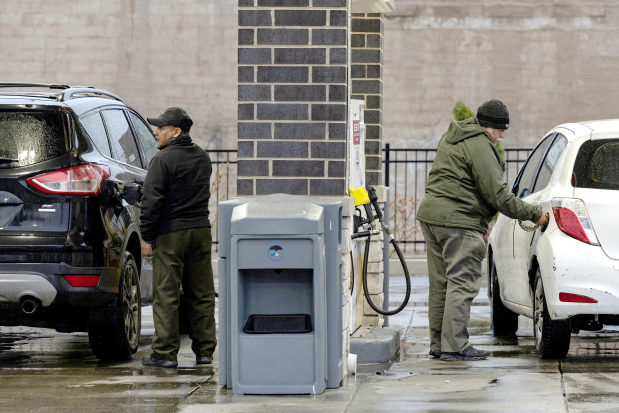
A record 21.2pc jump in petrol prices accounted for nearly three quarters of the monthly increase in the CPI. Other motor fuels, which include diesel, soared 30.8pc, the largest rise since the government started tracking the series. The US-Israeli war with Iran has sent global crude oil prices surging more than 30pc, with the national average retail petrol price breaking above $4 a gallon for the first time in more than three years. Though Trump on Tuesday announced a two-week ceasefire on the condition that Tehran reopen the Strait of Hormuz, the truce appeared fragile.
In the 12 months through March, the CPI advanced 3.3pc after rising 2.4pc in February.
Economists polled by Reuters had forecast the CPI accelerating 0.9pc and increasing 3.3pc year-on-year. There are, however, concerns that a prolonged conflict in the Middle East could undercut the labour market, especially if households respond to high prices by pulling back spending.
&uuid=(email))