

When John Jacob Astor IV – the richest man on the planet – stepped onto the deck of the Royal Mail Ship (RMS) Titanic in April 1912, he was the personification of the Gilded Age. This era, spanning the final decades of the 19th century until the outbreak of the Great War, was a time of glittering excess and rapid economic growth in the United States, where the ‘New Money’ elite built marble palaces and industrial empires.
Now, more than a century after he was swallowed by the icy abyss of the North Atlantic, the gold pocket watch found on his recovered body is set to cross the auction block, carrying with it a story of sacrifice that still chills the blood.
The 18-carat gold Patek Philippe timepiece, a masterpiece of Swiss horology retailed by Tiffany & Co. and engraved with the initials ‘JJA’, is expected to fetch as much as £400,000 (Approximately BD191,000) when it goes under the hammer at Freeman’s in Chicago this month. While a Waltham watch associated with the tycoon sold for a record sum of $1.5 million previously, this Patek Philippe – purchased by Astor in 1904 – is being hailed as the ‘real deal,’ having remained within the Astor family for four generations.
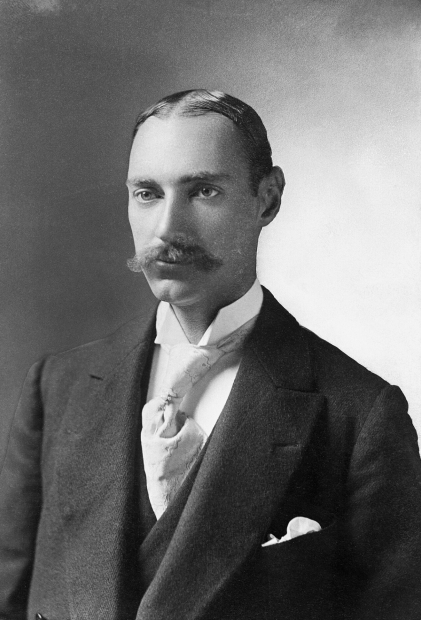
Mr Astor
Mr Astor, 47, was an American titan who moved the world’s markets. Born into the legendary Astor dynasty in New York, he was a prolific inventor and real estate mogul whose family had practically built the skyline of Manhattan. Most notably, he was the visionary behind the world-famous Waldorf-Astoria Hotel. With a net worth of some $87 million, staggeringly equivalent to several billion pounds today, he was the ‘crown jewel’ of the Titanic’s first-class passenger list.
He had been travelling with his 18-year-old wife, Madeleine, who was five months pregnant. They were returning to America from an extended honeymoon in Egypt and Europe, a trip intended to escape the wagging tongues of New York society scandalised by their 29-year age gap.
When the ‘Ship of Dreams’ struck the iceberg at 11.40pm on that fateful Sunday, Astor initially remained the calm, detached aristocrat. He reportedly scoffed at the danger, telling his wife that the damage was not serious. But as the slant of the deck grew steeper and the roar of the rushing water rose from the bowels of the ship, the reality of their peril became undeniable.
In an act of chivalry that has become the stuff of maritime legend, Astor escorted Madeleine to Lifeboat 4. He asked the officer in charge, Second Officer Charles Lightoller, if he could join her to protect her in her ‘delicate condition.’ The reply was a blunt, “No, sir. No men are allowed in these boats until the women and children are loaded first.”
Without a word of protest, the richest man in the world accepted his fate. He was last seen by survivors standing on the starboard wing of the bridge, impeccable as ever, calmly smoking a cigarette while chatting with a fellow passenger. He had chosen the dignity of a gentleman over the desperation of a billionaire.
“At first, Astor did not believe the ship was in any serious danger but later it was apparent she was sinking and the captain had started an evacuation after midnight, so he helped his wife into lifeboat four,” says auction expert Reginald Brack. “Mrs Astor survived. Her husband’s body was recovered not far from the sinking.”
The watch was there, tucked into the pocket of his suit, as the great ship broke apart and the Atlantic claimed him. When the recovery vessel ‘Mackay-Bennett’ pulled his body from the water seven days later, they found a man still carrying the trappings of his station: £225 (Approx. BD107) in English notes, $2,440 in American currency, a gold pencil and this very Patek Philippe watch.
The timepiece was later returned to his son, Vincent Astor, who wore it throughout his life, a constant ticking reminder of the father who stayed behind so his unborn son might live. That son, John Jacob ‘Jakey’ Astor VI, would eventually be known as the ‘Titanic Baby.’
“The thing with the Titanic story, it’s effectively a large ship hitting an iceberg with a tragic loss of life, but more importantly is 2,200 stories,” the auction house adds. “2,200 subplots, every man, woman and child had a story to tell and then the memorabilia tells those stories today.”
Indeed, the fascination with the Titanic remains undimmed by the passage of 114 years. Earlier items, such as the violin played by bandmaster Wallace Hartley, have sold for staggering sums like £1.1 million (Approx. BD524,400).
“They reflect not only the importance of the artefacts themselves and their rarity, but they also show the enduring appeal and fascination with the Titanic story,” says the team at Freeman’s. “Over a century later, we are still talking about the ship and the passengers and the crew.”
&uuid=(email))