

Before the fragile truce currently unfolding between the United States and Iran came to dominate the discourse, some turned their attention to remarks by US President Donald Trump about the elimination of Persian civilisation when he said ‘a whole civilisation will die tonight’.
This statement reflects a mindset that fails to grasp a fundamental truth: civilisations cannot be erased by military force, nor do they end with a missile strike or a campaign of war. Rather, they fade when they cease to contribute and lose their ability to enrich the march of humanity.
What appears to have escaped the mind of Trump and many others is that modern-day Iran is not a continuation of a great civilisation that once thrived not in isolation, but on the contrary, was an active partner in shaping one of humanity’s greatest experiences – the Islamic civilisation.
Facts suggest that the Persian civilisation effectively stalled and withered 47 years ago, when it retreated into a narrow-minded ideology and exchanged its role in building for one of destruction.
This transformation has defined Iran since 1979, with the export of a doctrine of perpetual revolution. Since then, the world has heard far less about meaningful Iranian contributions to human civilisation and far more about crises, conflicts and interventions.
What those currently in power in Iran fail to recognise is that the Persian legacy was never meant to serve as a cover for expansionist ambitions, nor to be reduced to political slogans used to justify interference in the affairs of others.
Since the clerical establishment seized power, development has ceased to be a priority, replaced instead by the pursuit of influence. From that point on, Iran gradually lost its civilisational standing, transforming into a source of regional anxiety rather than a partner in progress.
What we see today in Lebanon, Syria, Iraq and Yemen stands as evidence of Iran’s destabilising role – fuelling conflicts and deepening divisions. Iran is no longer defined by what it offers humanity, but by the crises it generates in the neighbouring countries. Herein lies the essence of Iran’s civilisational decline: a shift from contribution to disruption and destruction.
The Iranian regime has not only exported its crises abroad but has also exercised repression at home, undermining the foundations of its own society. Iranian women, once active participants in cultural and social life, have become subject to strict constraints, with dissent met by force. The case of Mahsa Amini stands as a stark example of the deep divide between the state and its people.
As for the ‘grand’ slogans raised by the Iranian leadership – foremost among them ‘defending the Arab and Islamic causes’ – they have become tools of propaganda. The Palestinian cause, frequently invoked in Iranian rhetoric, has long been subject to political instrumentalisation, as Tehran’s policies on the ground have contributed to the fragmentation of Arab states rather than their strengthening.
The recent storming of the Kuwaiti consulate in Iraq by militias aligned with Tehran, raising Iranian flags, is further evidence of the regime’s troubling conduct towards its neighbours.
What makes the picture even clearer is that Iran no longer hides its increasing reliance on unconventional tools of influence – from armed groups to geopolitical pressure tactics, such as threatening to close vital maritime corridors.
These are not the behaviours of a state seeking a civilisational role, but of a regime in search of bargaining chips, a pattern it has repeated many times throughout its history.
For decades, the Arab region has been hindered by silence or hesitation in confronting Iranian policies with clarity, often responding to violations of good neighbourliness with patience.
Today, however, Iranian aggression has revealed its true face and expansionist ambitions towards the Gulf states – demonstrated by missile and drone attacks targeting symbols of development and modernity, including vital infrastructure and civilian sites, under flimsy pretexts.
This betrayal will not pass without consequence, and it recalls hundreds of prior negative Iranian stances towards our countries – instances we have repeatedly chosen to overlook. Yet today’s reality demands a frank reassessment: there is a difference between a state that contributes to civilisation and one that invokes history to justify present claims.
Civilisation is not built by militias, preserved through slogans, or imposed by force. It is built on knowledge, openness and the human spirit.
Until Iran returns to this path, one conclusion remains: Iranian civilisation has stalled 47 years ago – since ideology triumphed over reason, revolution over the state, and conflict over construction.
In light of the current situation, it must be stated clearly: the ongoing negotiations cannot be separated from regional security. Any arrangements or agreements between the United States and Iran that fail to guarantee security and stability for the Gulf states are unacceptable.
All global powers, East and West alike, must recognise that the GCC states are a decisive factor in the equation of regional security and stability. Their losses, caused by Iranian aggression, cannot be treated as marginal, nor will we accept that any party to the conflict be appeased at our expense.
To those inclined to be swayed by Iranian media propaganda: do not be misled by the falsehoods propagated to influence minds. Time will reveal the truth – even if it remains hidden in the depths of Iran’s mountains.
Gulf Arabs – governments and peoples alike – must remain vigilant because of uncertainty in Iran. There is no single figure in Iran today widely recognised by its people as a statesman capable of leading the next phase.
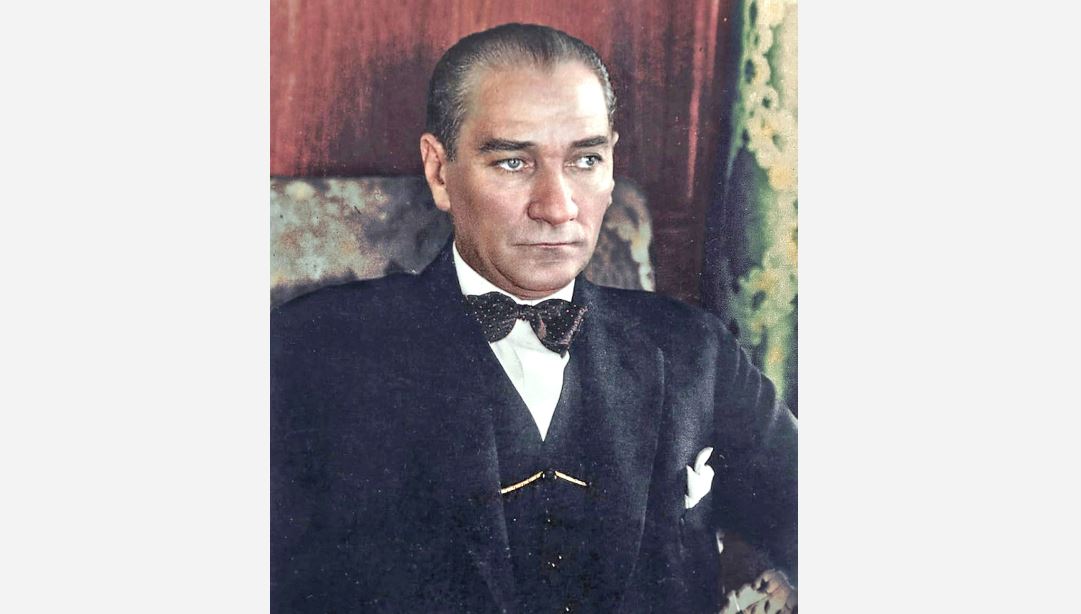
One might ask, as a thoughtful observer once did: could a figure emerge in Iran akin to Mustafa Kemal Atatürk in the aftermath of the First World War and the fall of the Ottoman Empire?
All indications suggest that Iran’s next phase may bring intensified internal power struggles – particularly as the influence of the clerical establishment wanes and the dominance of the Islamic Revolutionary Guard Corps grows.
The system, long constructed like a mosaic to preserve the regime, may well collapse in its entirety if even one piece gives way under the weight of internal conflict.
&uuid=(email))