

Parliament is set to debate a new social protection law that aims to bring together Bahrain’s main subsidies and allowances under one system, despite government warnings about the financial impact.
The proposed legislation, known as the ‘social protection support basket’, would combine various forms of government aid – including cost‑of‑living support, food and fuel subsidies, housing and education assistance, and electricity and water support – into a single legal framework.
While MPs say the move would strengthen social stability and ensure a decent standard of living for citizens, the government has raised concerns that it could place added strain on the national budget and the fiscal balance programme.
According to Parliament’s services committee report, the legislation is intended to ‘organise social protection elements provided to Bahraini citizens within an integrated legal framework in line with the Constitution and the National Action Charter’.
However, the government has cautioned that the draft could significantly increase the budget deficit, arguing that support mechanisms are already in place and regularly reviewed.
Officials also raised constitutional concerns over subsidies for electricity and water, noting previous court rulings that classify them as economically managed services where pricing is determined by supply, demand and operational cost, rather than legislative intervention.
The Finance and National Economy Ministry stressed that introducing fixed statutory obligations could ‘disrupt fiscal balance programmes and hinder the government’s ability to manage public finances efficiently’.
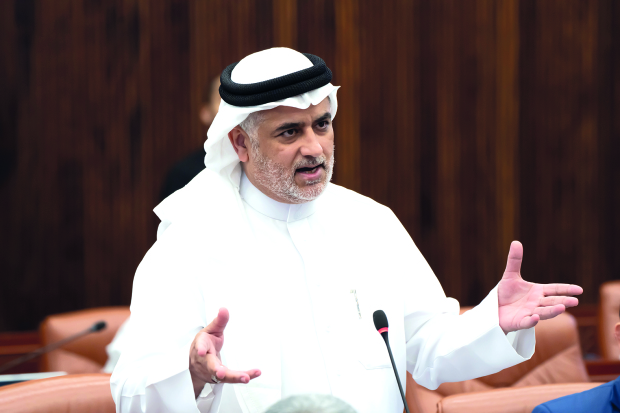
Despite this, Parliament’s services committee, chaired by MP Mamdooh Al Saleh, backed the bill, describing it as a structured attempt to protect vulnerable groups and enhance long-term social security.
Mr Al Saleh said the draft law aims to ‘bring clarity and stability to Bahrain’s social support system’.
“Citizens must have certainty about their entitlements, and the state must have an organised framework that ensures fairness, transparency and sustainability in distribution,” he added.
He added that the committee had worked closely with government representatives to adjust several provisions and ensure financial realism, noting: “We were careful to refine the tables and eligibility thresholds, and to strengthen co-ordination mechanisms between the Social Development Ministry and other relevant authorities.”
The committee introduced amendments to the draft, including adjustments to subsidy categories, restructuring of cash compensation for food support, and revisions to electricity and water tariff bands. It also recommended adding new income brackets for beneficiaries and increasing some allocations, including support for universities and fuel subsidies.
One of the key amendments was the introduction of a new provision empowering the Cabinet to establish additional social protection schemes in the future, allowing the system to remain flexible in response to economic conditions.
Despite the government’s reservations, the legislative and legal affairs committee confirmed the draft law is constitutionally sound, while the financial and economic affairs committee highlighted the need for a clearer funding strategy.
Mr Al Saleh acknowledged these concerns but maintained that the bill addresses a social necessity.
“We are not creating new burdens in isolation. We are reorganising existing support in a way that guarantees fairness and improves delivery efficiency,” he said.
The committee ultimately recommended approval of the draft law, setting the stage for a parliamentary debate on Tuesday.
mohammed@gdnmedia.bh
&uuid=(email))