

Bahrain’s urban resilience framework has been praised following recent regional attacks, with an expert highlighting how smart cities are becoming the frontline in responding to modern crises.
Bahrain Smart City Society President Dr Shaikha Fay bint Abdulla bin Mohammed Al Khalifa noted that in a world undergoing rapid geopolitical transformations, cities have become the arena in which nations’ resilience is tested – not only militarily, but also economically, environmentally, and socially.
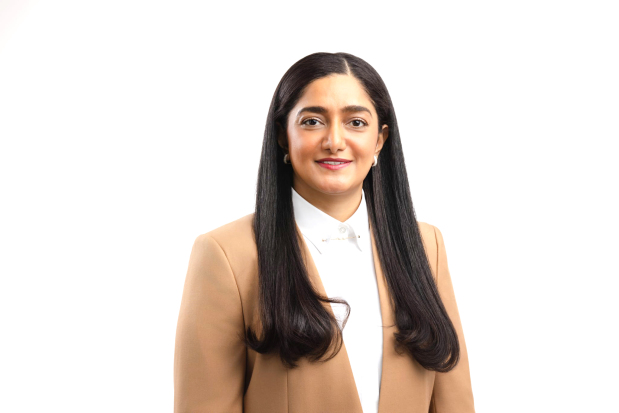
Dr Shaikha Fay
The continuity of daily life – from essential services to infrastructure – has become the first line of defence in facing crises.
She said Bahrain can leverage AI in mobility and environmental monitoring to shift towards more proactive urban management, which is essential for long-term resilience.
The remarks follows close on the heels of the regional Iranian attacks, which led to many urban facilities, including residential buildings and industrial areas in Bahrain being targeted. Many civilians had to temporarily move out of their homes and seek refuge at government provided shelters. A ceasefire was announced on April 8 and has since been extended to allow for further negotiations.
Amid the uncertainty of the war, Bahrain’s defence and civic framework, under the leadership of His Majesty King Hamad and with the support of His Royal Highness Prince Salman bin Hamad Al Khalifa, Crown Prince and Prime Minister, stood out as a model striving to balance digital transformation with urban sustainability.
“Bahrain demonstrates a relatively strong level of urban resilience, particularly when viewed through the lens of continuity rather than disruption,” Dr Shaikha Fay told the GDN.
“The compact nature of the island, combined with integrated infrastructure systems, allows for efficient co-ordination and rapid response when needed,” she added.
“The road network and spatial organisation of the island provides a level of flexibility in mobility, allowing movement to continue even under constrained conditions.
“What is particularly notable is that resilience in Bahrain is not only technical, but also institutional. The co-ordination between different entities plays a significant role in ensuring that urban systems continue to function smoothly.”
Global data indicate that nearly half of the world’s population now lives in cities, a proportion expected to rise to around 68 per cent by 2050. Moreover, around 70 to 80pc of the damage in modern conflicts is concentrated in urban environments, including infrastructure and essential services, redefining how urban planning is approached in times of crisis.
“One of the key strengths lies in the ability to maintain essential services without major interruption. This is supported by well-established digital platforms that enable access to government services remotely, reducing dependency on physical locations,” she said.
“In Bahrain, there is strong potential to build on existing digital infrastructure by integrating AI into mobility systems and environmental monitoring, enabling a shift from reactive to proactive urban management, which is essential for long-term resilience.
“AI can support predictive analytics, such as forecasting traffic, building patterns or infrastructure stress, real-time decision-making in managing energy, water, and mobility, and urban simulations to test different scenarios before implementation,” added the expert, who currently supervises postgraduate research examining the role of AI in advancing urban sustainability in Bahrain.
Dr Shaikha Fay highlighted that institutional and social cohesion remains a fundamental element with official and community efforts working together to enhance cities’ capacity to respond effectively to challenges. She added that this extends beyond regulatory aspects to include strengthening community sustainability, mental well-being, and social ties that form the foundation of stability during crises.
This includes the educational sector’s role in further refining academic approach to urban planning.
“Several key modules have already been introduced,” said the Bahrain University associate professor, emphasising on scenario-based learning and simulation exercises.
Bahrain Smart City Society continues to support initiatives that combine innovation with sustainable planning and encourage the development of urban solutions that enhance resilience and future readiness.
“Moving forward, one important direction is the deliberate development of more integrated, mixed-use and walkable urban environments that minimise dependence on long-distance travel while strengthening local self-sufficiency.
“Equally important is reinforcing the network of neighbourhood centres and what are often referred to as ‘third places’, everyday social settings beyond home and work such as cafés, libraries, parks, and majlis spaces.
“Another key area is the integration of climate-responsive design strategies, particularly in addressing heat stress and environmental comfort, like shading and green infrastructure.
“Finally, resilience needs to be embedded into planning frameworks, including scenario-based planning approaches that test different urban futures and identify the most balanced outcomes,” Dr Shaikha Fay advised.
Dr Shaikha Fay lists down the key dimensions of a sustainable smart city model that can withstand modern conflict:
*Urban resilience
*Environmental sustainability as a tool for resilience
*Digital intelligence and crisis management
*Urban cybersecurity
*Proximity and community integration – This model requires a delicate balance to prevent density from becoming a risk factor. Here, the importance of ‘distributed connectivity’ emerges, ensuring redundancy and continuity of services even if part of the urban fabric is disrupted.
melissa@gdnmedia.bh
&uuid=(email))