

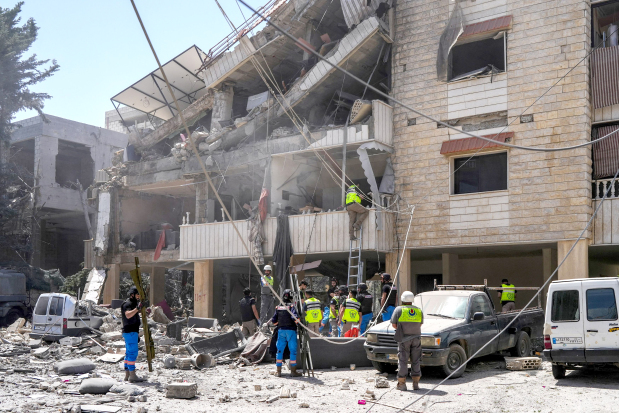
LEBANON’S president has urged the United States to put pressure on Israel to cease fire and stop home demolitions in south Lebanon, the presidency said yesterday, as the death toll from Israeli attacks rose.
Lebanon’s health ministry said 74 people had been killed by Israeli strikes in the last three days despite a truce announced last month in fighting between Hizbollah and the Israeli military, a spokesperson said. Tehran said it had demanded security for Lebanon as part of a proposal for ending the wider war with the US and reopening the Strait of Hormuz. US President Donald Trump has rejected Iran’s proposal.
The Hizbollah-Israel conflict reignited on March 2 when the group opened fire at Israel in support of Tehran.
Hostilities have continued since Trump declared a ceasefire on April 16, mostly in south Lebanon, where Israel is occupying a self-declared security zone, saying it aims to guard against Hizbollah attacks. The Lebanese health ministry spokesperson said the victims since Saturday had been killed in various Israeli strikes, including one that killed at least seven people in the southern town of Saksakiyeh.
It said 2,869 people had been killed since March 2, including 584 medics, women and minors. Its toll does not say how many combatants are among the dead.
Lebanese President Joseph Aoun, in a meeting with US Ambassador to Lebanon Michel Issa, “stressed ... the necessity of pressure on Israel to halt fire and military operations and the destruction and bulldozing of homes”, the presidency said. Israel has been demolishing villages in the south, saying it is acting against Hizbollah militants embedded in civilian areas.
Aoun and Issa also reviewed “developments related” to a third round of talks due in Washington between Lebanese and Israeli government representatives, the presidency said.
Washington last month hosted two rounds of talks between the Israeli and Lebanese ambassadors to Washington, the highest-level contacts between Israel and Lebanon in decades. The US will facilitate the third round on May 14 and 15, the State Department said.
Lebanon’s delegation will be headed by former ambassador to Washington Simon Karam. Aoun, who nominated Karam for the role, gave him his directives during a meeting on Saturday, the presidency said.
Beirut’s decision to hold face-to-face contacts with Israel reflects a deep divide in Lebanon over Hizbollah’s arsenal and the group’s decision to attack Israel. Critics accuse the group of unilaterally dragging Lebanon into war. Hizbollah has demanded the government cancel the talks.
&uuid=(email))