

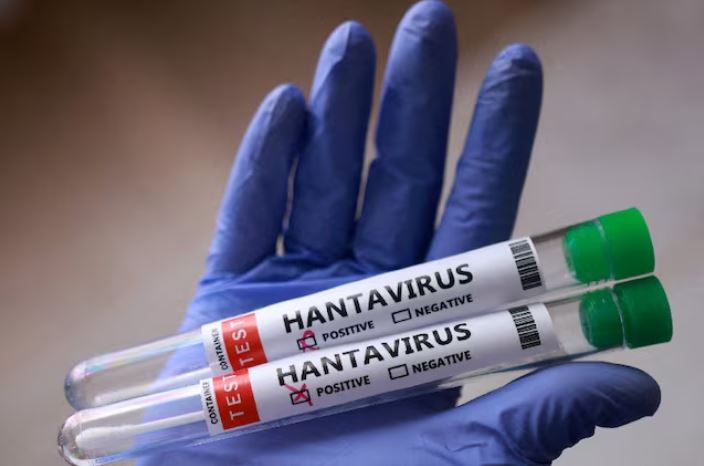
An adult in Colorado has died after a confirmed case of hantavirus that is not linked to a recent outbreak aboard a cruise ship in the Atlantic, Colorado Department of Public Health and Environment officials said in a statement yesterday.
The strain of hantavirus that caused the Colorado death occurs regularly in Colorado at this time of year, the statement said, and US officials are investigating the source of exposure.
Hantavirus is primarily spread by rodents but can be transmitted between people in rare cases and after prolonged, close contact. Incubation can last about six weeks.
The Dutch-flagged MV Hondius cruise docked at Rotterdam yesterday.
It had been carrying around 150 passengers and crew from 23 countries when a cluster of severe respiratory illnesses was first reported to the World Health Organisation on May 2.
Three people on the liner have died.
Including those deaths, there have been eight confirmed and two probable cases on board, according to WHO.
Britain has received supplies of the antiviral drug favipiravir from Japan as part of its ongoing response to hantavirus outbreak, the UK Health Security Agency (UKHSA) said yesterday.
UKHSA said it accepted delivery of the drug, which remains experimental for use to treat hantavirus, over the weekend and that the supplies would bolster treatment stocks, even though the risk of wider transmission in the UK remained very low.
Neither the UKHSA nor Japanese authorities disclosed details about the number of doses supplied to Britain.
In Japan, favipiravir is sold under the brand name Avigan by a Fujifilm unit, Toyama Chemical, to treat seasonal flu.
The drug, which works by blocking a key enzyme that many viruses need to multiply, is not licensed for use in UK.
Use of favipiravir in hantavirus would generally be considered experimental or compassionate rather than standard care, and most likely to treat severe infection early on, said Piet Maes, a virologist at the University of Brussels.
Maes said evidence so far comes only from lab and animal studies, with no strong human trial data showing the drug works against hantavirus.
There is no internationally established clinical protocol recommending its routine use for hantavirus.
&uuid=(email))