

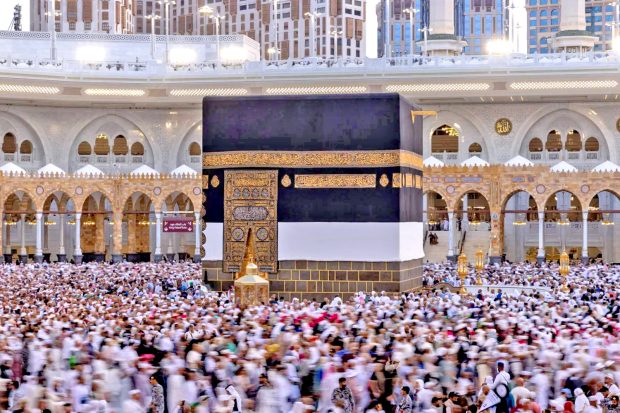
The World Health Organisation (WHO) praised Saudi Arabia for successfully ensuring that the 1447 AH Haj season was free of disease outbreaks and public health threats, the Saudi Press Agency said.
The organisation commended the kingdom’s effective management of one of the world’s largest mass gatherings, highlighting its strong public health preparedness and response capabilities amid ongoing global health challenges and emerging epidemic risks.
WHO Director-General Dr Tedros Adhanom Ghebreyesus congratulated Saudi Arabia on the success of the Haj season and expressed appreciation for healthcare workers whose efforts contributed to a safe and healthy season, reflecting international confidence in the kingdom’s ability to manage the health requirements of major mass gatherings to the highest standards.
WHO Regional Director for the Eastern Mediterranean Dr Hanan Balkhy also congratulated Saudi Arabia on the successful Haj season and praised the advanced health preparedness provided to pilgrims. She highlighted the deployment of modern health technologies, including robots and drones, the provision of healthcare services across various locations, and the continuous monitoring of pilgrims’ health throughout their journey, enabling them to perform their rituals safely and with peace of mind.
The praise coincided with the Health Ministry’s announcement that the 1447 AH Haj season was free of disease outbreaks and public health threats.
The season witnessed the implementation of one of the largest health preparedness operations, encompassing integrated preventive, therapeutic, and emergency services. Efforts also included continuous epidemiological surveillance, health assessments, and risk management measures carried out in co-ordination with various national entities and international health organisations.
Health Minister Fahad Al Jalajel stressed that Haj health security is global health security.
He noted that Haj represents a unique human gathering that brings together millions of pilgrims from around the world before they return to their home countries, making the protection of their health and safety a responsibility whose impact extends to global public health.
He added that the success of the Haj and its freedom from disease outbreaks and public health threats were the result of an integrated health ecosystem that begins before pilgrims arrive, including vaccination and immunisation requirements and the enforcement of health fitness criteria to protect pilgrims and enable them to perform their rituals safely.
&uuid=(email))