

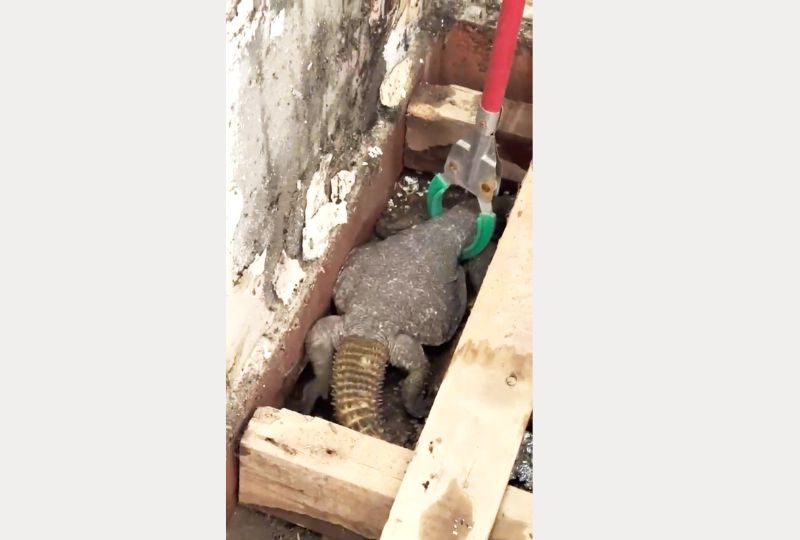
A LUCKY spiny-tailed lizard was recently rescued from a house in Riffa and returned to its natural habitat thanks to the efforts of Bahraini environmentalist Jawaher Bunajma, who shared the experience online to raise awareness about wildlife conservation.
The video, posted on her Instagram account, has attracted more than 215,000 views and highlights the importance of treating wild animals with care and respect.

Ms Bunajma
Ms Bunajma, 28, a senior environmental specialist known in the community for her passion for wildlife, told the GDN that she received a call on Sunday from a friend whose family had discovered a large lizard inside their home.
“The situation proved challenging, as the house was undergoing renovation and the reptile had become trapped in an area with many tiles being laid that was difficult to access,” she said. “We could not reach it ourselves, so we contacted the police, who assisted us in getting the lizard out safely,” she added.
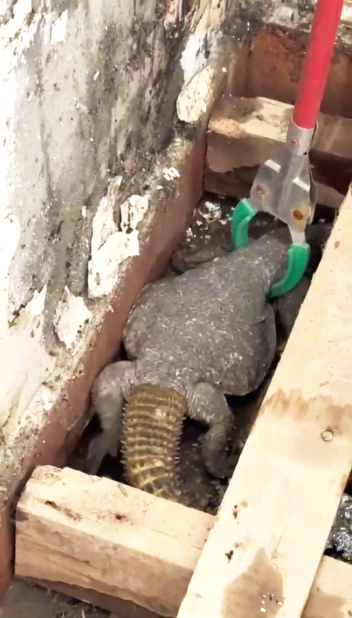
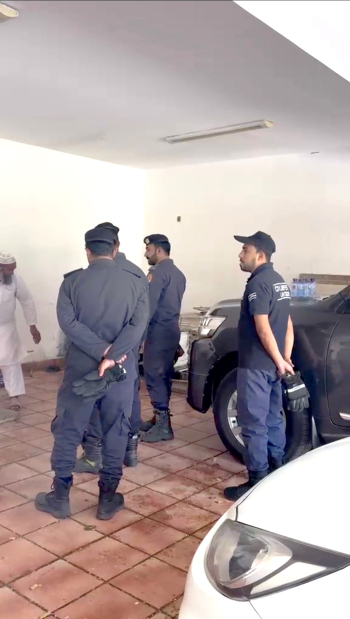
The lizard trapped between the tiles, Police assisting
Once it had been rescued, Ms Bunajma transported it to the Sakhir desert and released the lizard back into its natural habitat. “People often panic when they see a reptile of this size, but they are actually harmless creatures,” she added.
Ms Bunajma said she was more than happy to help when she received the call, adding that her passion for wildlife conservation has always been a driving force in her life. “I have always been very passionate about animals and wildlife, and they should be protected by everyone in Bahrain,” she said, highlighting this particular reptile’s important role in the ecosystem.
The spiny-tailed lizard, also known as the dhub or Uromastyx aegyptia, is native to Bahrain’s arid desert environments.
While it is recognised for its large size and distinctive appearance, the species plays a crucial role in maintaining ecological balance through burrowing, seed dispersal and supporting the desert food web.
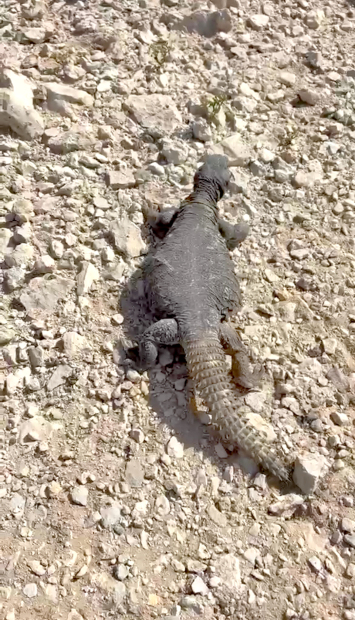
The reptile in the Sakhir forest
Dhubs graze selectively on vegetation, helping to encourage plant regrowth, stabilise soil and restore ground cover. These behaviours contribute to combating desertification, one of the major environmental challenges facing the Arabian Peninsula.
The reptiles also construct extensive burrow systems that can reach depths of up to 1.5 metres and lengths of 30m. These underground shelters provide refuge from extreme temperatures for a variety of species, including insects, spiders, reptiles and birds.
Despite the species’ ecological importance, Ms Bunajma said many people remain unaware of its protected status. She was surprised by some of the reactions to the video, with several viewers expressing shock that she released the reptile back into the wild rather than keeping it as a pet.
“Others even suggested it could be eaten,” she said. “Capturing and keeping these animals is prohibited because they are protected in Bahrain. There needs to be more awareness so people know how to properly respond when they encounter wildlife.”
According to the International Union for Conservation of Nature Red List of Threatened Species, the Egyptian spiny-tailed lizard is classified ‘vulnerable’.
Adult dhubs can grow up to 85cm in length, while their sandy-grey to earthy-yellow colouring helps them blend seamlessly into arid landscapes. Beyond its ecological importance, the reptile remains a powerful symbol in Arab folklore, poetry and oral tradition, reflecting the resilience and ingenuity of life in the desert.
julia@gdnmedia.bh
&uuid=(email))