

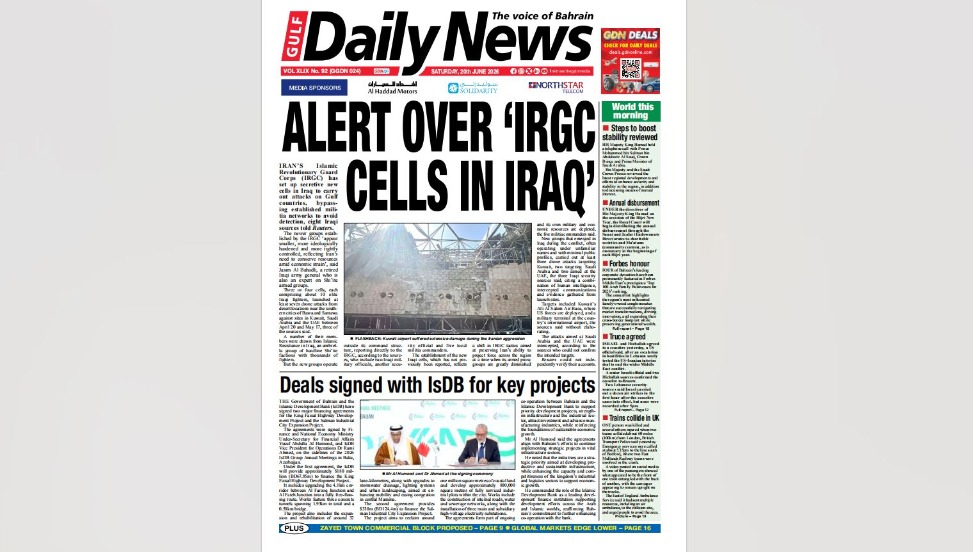
The recent GDN report on Islamic Revolutionary Guard Corps (IRGC) cells operating inside Iraq is a stark reminder of how deeply Iran has embedded itself in the country’s security landscape.
According to the investigation, these cells–linked directly to IRGC command – launched attacks on Kuwait, Saudi Arabia, and the UAE from bases near Basra and Samawa. For an Arab state to become a platform for strikes against fellow Arab nations is a painful development, but not an unexpected one.
This situation is the product of a long trajectory that began well before 2003.
As documented by The New York Times and by former US officials, the United States and Iran engaged in discreet co-ordination in the lead‑up to the Iraq war.
Through back‑channel talks in Geneva and intelligence exchanges, both sides sought to manage the collapse of Saddam Hussein’s regime and shape the post‑invasion landscape. Iranian‑backed militias and political networks then expanded rapidly, filling the vacuum left by the fall of the Iraqi state.
By 2017, The New York Times described Iran’s influence in Iraq as pervasive – visible in markets, media, construction, and, most importantly, in the armed groups operating across the country. The article concluded that Iran had effectively secured the upper hand in shaping Iraq’s direction.
Demographic shifts after 2003 further deepened this transformation, accelerating changes in Iraq’s social and political fabric.
Seen in this broader context, the presence of IRGC‑linked cells on Iraqi soil is not an isolated incident but part of a long, well‑documented pattern of Iranian expansion inside Iraq.
The GDN report highlights the latest expression of that trend – one that now directly affects the security of neighbouring Arab states. Understanding how this situation developed is essential for shaping a responsible and co-ordinated regional response.
John Churchilly
&uuid=(email))