

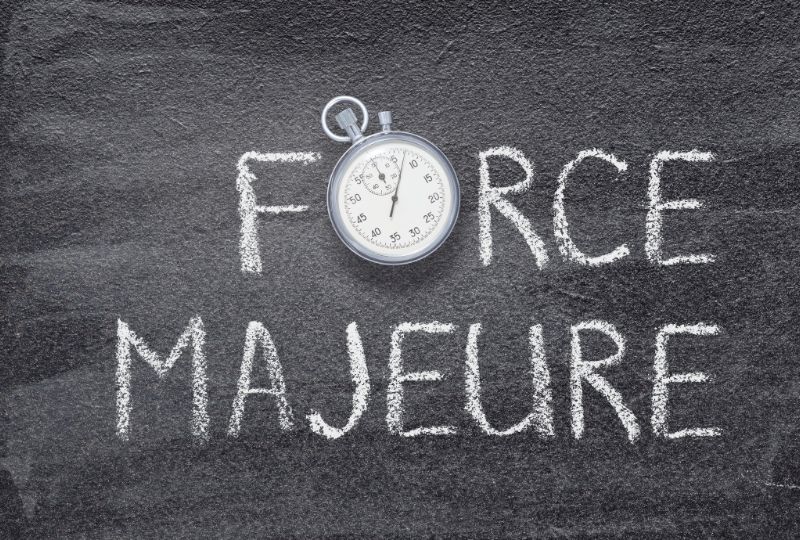
Force majeure, a French term for ‘superior force’, has stomped recently into our colloquial lexicon, and keeps emphasising its importance and relevance with unpredictable frequency.
Typically, it refers to a clause that is buried in the high-stakes agreements to provide temporary relief or completely absolve the affected party from their contractual obligations, ‘just-in-case’ an extraordinary event or government order makes it impossible for them to honour them.
The current Gulf conflict is one such situation.
As a result, innumerable companies across the world were adversely impacted and operationally rendered inactive by the conflict and forced to cancel, or reschedule their deliveries with the hope of getting back to normal business soon.
However, this conflict has followed an erratic and protracted path with no clear end in sight.
So far, we have witnessed gross disregard for the international law, deliberate attacks targeting the innocent and uninvolved, dubious claims and propaganda, proposals and rounds of negotiations with no firm decisions, shifting goalposts and stubborn disagreements, peace talks and threats, shaky ceasefires and their blatant violations, and the blockading of the international waterways as a weapon to choke many economies globally.
Consequently, the direct and indirect, intended and unintended fallouts of this conflict have been shocking and devastating, as they began to surface.
In fact, the damages this conflict has caused, locally, regionally and across the world, are inestimable with the likelihood of them continuing for unspecified period of time, despite the ongoing efforts to work out a permanent solution.
Meanwhile, the agonising suspense is created by randomly throwing hopes and doubts into the media to cause decision paralysis.
However, one thing is amply clear. This conflict has exposed our global interdependency, vulnerability and fragility, and it serves as a valuable lesson for all to heed: We all are in this together!
That is exactly why, instead of waiting and watching and allowing pessimism and fear to claim more and more victims around the world, let us resolve not to allow them to hold our future to ransom.
Let us turn this extraordinary situation into an opportunity, whether as a business entity, institution or individual, to do everything in our power to consciously and proactively promote peace and truth, restore trust and unity, instil hope and confidence, and encourage and help one another to build a glorious future for all.
Let us, the seekers of peace and prosperity for all, unite to defeat the forces that spread lies and false negativity by becoming the harbingers of a brighter future and the messengers of peace and hope and confidence with the power of positive communication!
Businesses: It must be pointed out that every business – irrespective of its type or size – plays a strategic role in society and the economy. By virtue of their role and activities, their decisions and communications, they exert immeasurable influence that is much wider than their own market share. They have several internal and external stakeholders – local, regional and in many parts of the world – and if their operation is affected by the present situation, so are they. It is essential in the larger interest to keep all of them engaged, not just the investors and customers. However, the business-as-usual or peacetime communication approach will not serve the purpose. The current situation demands vastly different components.
What is required is communication that is crafted in such a way that it restores and builds confidence in the country, its leadership, economy and the company itself. It is essential also to shed light on the ability of the management to successfully steer the company into a promising future, not just for their stakeholders, but the country and the economy at large.
In doing so, they would positively impact the socioeconomic fabric that holds the community and society together, reinvigorate the market, and strengthen confidence in the kingdom we live in and our collective future.
Institutions: Similarly, every institution exists to serve a specific and distinct purpose in the country. They wield tremendous influence as they maintain order and quality of life of the people through the work they do, the systems and processes they build, follow and monitor. Which puts them in a very responsible position. They are uniquely positioned to hasten the process of building confidence and unity through their actions and communications.
Individuals: In the same manner, living in the world of the Internet and social media, each of us is connected globally. Unlike the ages past, we have the tools and means that allow us to receive and share information to and from any part of the world. We should be mindful of our roles and responsibilities, and what we consume or transmit. We would greatly serve ourselves, our families, community and the country, if we collectively decide to be the agents of peace, unity and harmony, and use our words and posts to build confidence.
And, what is better than doing it from Bahrain?
Although located in the epicentre of the conflict, Bahrain has never compromised on being ‘an oasis of stability and beacon of peace, a homeland of coexistence, tolerance and security for all its citizens and residents.
This is no exaggeration. We have witnessed it and lived it before and during the war, and with certainty, we will continue to enjoy it as affirmed by His Majesty King Hamad (GDN, June 28, 2016):
He affirmed that, ‘the kingdom will continue, through its civilised model and strong national resolve, to serve as a humanitarian reference point in the practice of religious freedoms and respect for diversity, while remaining a centre that upholds the values of Islam and its principles’.
Let us come together in unity and share the real ‘superior force’ of love, peace and harmony, communicated through words and deeds, and it shall prevail.
Ranjit Gorde
&uuid=(email))