

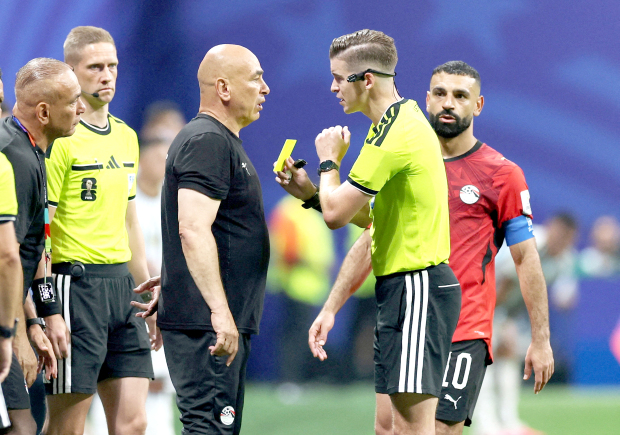
THE blunt accusation levelled by Egypt head coach Hossam Hassan at Fifa following his side’s 3-2 defeat to defending World Cup champions Argentina was only one of dozens of criticisms directed at world football’s governing body after the highly controversial round of 16 clash at Mercedes-Benz Stadium in Atlanta, Georgia.
Egypt’s exit came despite what many described as a heroic performance, overshadowed by what critics called a refereeing ‘massacre’ and decisions that raised serious questions. French referee François Letexier came under intense fire for the clear bias in favour of Lionel Messi and his teammates.
Fifa’s official motto, built on the principles of ‘fair play and respect’, was stained by allegations of corruption and disgrace under the leadership of Gianni Infantino and those around him. A series of decisive refereeing errors left little room for doubt, even among many who have long celebrated Messi as football’s ‘eighth wonder’, despite his team’s victory coming at the expense of justice on the pitch.
Twice Egypt took the lead, but both advantages were wiped out by arbitrary decisions from a ‘directed’ referee. A legitimate goal was ruled out, two penalty appeals were ignored, and several fouls near Argentina’s penalty area went unpunished. As a result, fans, experts and numerous Arab and international analysts argued that Hassan’s men were not only facing the reigning champions but also a gang of thieves and corrupt people within Fifa itself.
Television replays highlighted three pivotal incidents that directly influenced the outcome of the match. The first was the disallowed goal scored by Mostafa Abdel Raouf ‘Ziko’, Egypt’s second of the match, after a foul was awarded against Marwan Attia in midfield. International newspapers and refereeing experts described the intervention as an excessive use of Video Assistant Referee (VAR) that effectively changed the course of the match.
The second mistake involved two penalty claims by Egypt, one of them for Mohamed Salah. The incident immediately preceded Argentina’s winning third goal, yet the referee allowed play to continue without consulting the VAR, prompting widespread criticism that the officiating crew had applied different standards to the two teams.
The third controversial moment came when Argentina defender Nahuel Molina struck Emam Ashour in the face while the ball was elsewhere. Many observers believed the challenge warranted a straight red card, but referee François waved play on, and the incident was not reviewed by VAR either.
Spanish newspaper AS also examined the major refereeing decisions, quoting former international referee Eduardo Iturralde, who argued that VAR had intervened unnecessarily in the disallowed goal. He described Marwan Attia’s challenge on Lisandro Martínez as ‘a very trivial stamp’, suggesting it did not justify overturning the goal.
We think that the main problem lies in the absence of a consistent global standard for applying VAR. Although the laws of the game are the same worldwide, differing interpretations and VAR protocols across competitions have created confusion among players and supporters alike. Argentina, in reality, struggled against Egypt’s disciplined and effective display. Yet, it appeared that those lacking neutrality were determined to keep the ‘Tango’ in the tournament until the very end, disregarding both the laws and the spirit of the game – and forgetting that honour, like dignity, can neither be bought nor sold.
By Jameel Sarhan Head of sports department Akhbar Al Khaleej
&uuid=(email))