

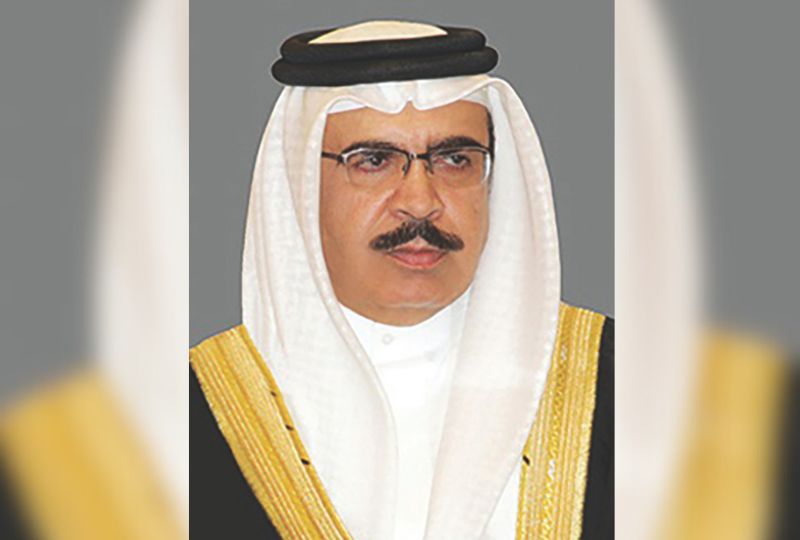
Yesterday, the editors of Bahrain’s newspapers spent more than two hours with Interior Minister General Shaikh Rashid bin Abdulla Al Khalifa, who outlined the latest domestic developments against the backdrop of what he described as Iran’s aggression against the region.
Iran, beyond any doubt, has remained fundamentally the same for centuries, regardless of the changing faces that have ruled it from one era to another. One can almost imagine figures such as Abu Muslim Al Khurasani or Khwaja Nasir Al Din Al Tusi reappearing in modern guise – at times wearing the turban of a Supreme Leader, at others the suit of a president or foreign minister.
A glance at Iran’s modern history – by which I mean the past five centuries – reveals a remarkably consistent pattern, documented by Persian historians themselves. From the rise of the Safavid dynasty around 1500, through its collapse two centuries later, the emergence of Nader Shah, his campaigns into India and Sindh, the establishment of the Zand dynasty, and finally the ascent of the Qajars, successive eras were marked by warfare, bloodshed, plunder and repeated invasions of neighbouring countries.
What Iran is doing today, therefore, is nothing new. What is new is that we have an opportunity – and indeed an obligation – to learn from history, safeguard our homeland, avoid repeating the mistakes of the past, and protect ourselves from the ambitions of a neighbour driven by resentment and expansionist aspirations.
The minister spoke with remarkable openness about the scale of the challenges confronting Bahrain’s national front and the means of addressing them through a comprehensive vision that embraces every segment of society. The objective, he made clear, is to deny destructive ideologies any opportunity to infiltrate the country after years of lying dormant, waiting for the right moment to spread their poison and consume the nation’s achievements.
His remarks were particularly unequivocal when he addressed the need to confront what he described as the project of ‘parallel patriotism’ promoted by advocates of Wilayat Al Faqih, exposing what he characterised as their intentions and subversive plans.
The events of the past five months have deepened the region’s mistrust of the Iranian regime. It is difficult to overlook the fact that, despite possessing greater oil wealth, vast mineral resources and significant agricultural potential than any other country in the region, Iran remains economically worse off than the Arab Gulf states. The reason lies in its repeated failure to establish a state governed by the rule of law or to achieve sound governance under successive administrations, culminating in the current rule of the clerical establishment.
Today, the clerical regime is facing perhaps the gravest crisis in its history. Its true ugly face has been exposed before both the region and the wider world. Consequently, it seeks any symbolic victory that can preserve its standing among its domestic supporters – even if it means resorting to attempts to impose restrictions on maritime navigation that run counter to international law. Leaving the current confrontation empty-handed would amount to an admission of failure in the eyes of its followers. It therefore continues to stall negotiations, evade agreements and prolong tensions, thriving on instability while relying on its proxies in Yemen and Iraq to inflame regional conflicts in service of Tehran’s objectives.
Throughout the meeting, it was evident that the Minister sought to reassure both citizens and residents that Bahrain is stronger today than it was at the outset of the conflict. Security, public confidence and peace, he stressed, remain the state’s foremost priorities. Bahrain does not want to see fear reflected in the eyes of its children, nor does it want fear to shape their dreams or aspirations. Having never faced circumstances of this magnitude before, the country’s responsibility is to provide security, stability and hope – not to drag its people into reckless adventures. That has long been the hallmark of governance in Bahrain, based on wisdom, coexistence and peace.
Everyone recognises Bahrain’s commitment to upholding the highest standards of justice and humanity. The Kingdom has introduced successive initiatives to strengthen human rights, most notably its Alternative Sentencing Programme and Open Prisons initiative. These measures are designed to give offenders a genuine second chance to reform themselves and return as productive members of society.
These humanitarian initiatives have earned widespread regional and international recognition.
Among the Minister’s observations that I see deserve particular attention was his assertion that Bahrain’s values and philosophy of life are fundamentally different from those espoused by the Iranian leadership. We believe in investing in people, while they invest in wars and destruction. We believe in justice, not in Wilayat Al Faqih, a project that seeks to appropriate the Shi’ite community, which has always been an authentic and integral component of Bahraini society long before the emergence of Iran’s clerical regime.
Addressing the editors directly, the Minister argued that the time has come for the Gulf Co-operation Council to move beyond co-operation and co-ordination to full security integration. Recent events, he said, have demonstrated beyond doubt that the Gulf States share a common destiny, and that their collective security must be equally united in confronting shared threats.
From this frank and candid discussion, I came away with the clear impression that the Minister sees the Press – in all its forms, whether print or digital – as bearing a profound national responsibility. Journalists, editors and media professionals stand among the nation’s first line of defence, equipped not with conventional weapons but with truth, accuracy and vigilance against misinformation, rumours and false narratives. Modern warfare is no longer fought solely with missiles, aircraft and drones; but rather words, fabricated stories and disinformation have themselves become formidable weapons targeting the security and cohesion of societies. Protecting social cohesion, therefore, is indispensable to preserving national unity, security and stability.
Everyone should recognise that the path to dignity and national honour is never an easy one. It demands the full mobilisation of our intellectual and moral resources, unwavering determination, and steadfast adherence to Bahrain’s national identity and enduring values. Such commitment has always been the hallmark of nations determined to safeguard their homelands, shape their own future and defend the achievements they have built.
&uuid=(email))