

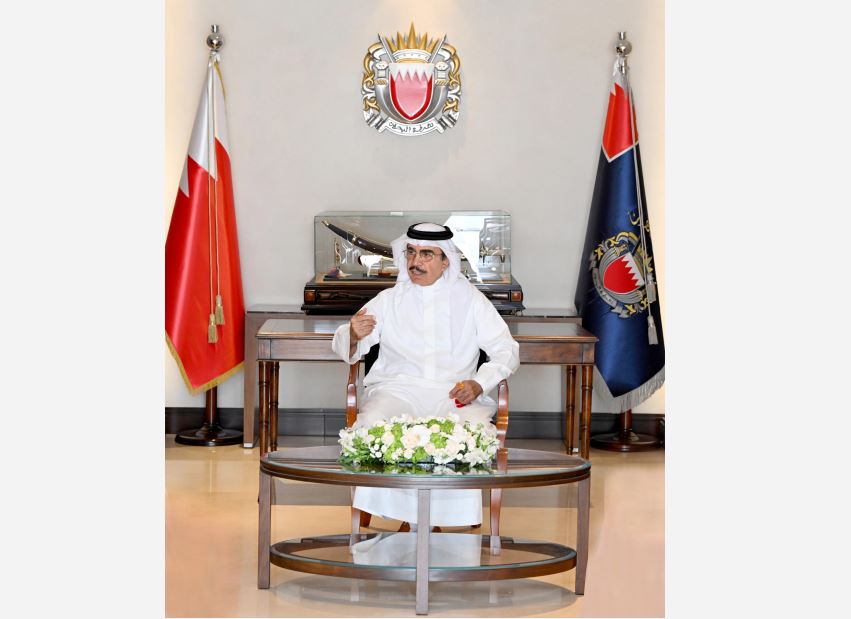
Interior Minister General Shaikh Rashid bin Abdulla Al Khalifa met the editors-in-chief of local newspapers, during which he discussed a number of security and national issues, including the dangers posed by the ideology of Wilayat Al Faqih, the repercussions of Iranian attempts to undermine Bahrain’s stability, and the ministry’s efforts to promote national awareness and strengthen community security.
The minister praised the leadership and wisdom of His Majesty King Hamad, describing them as the national framework around which people from all walks of life unite.
He stressed that the security, sovereignty and stability of the homeland are non-negotiable.
He emphasised that Iranian aggression is not a border war but rather covers all of Bahrain. He added that there is no place for ‘parallel patriotism’ in a nation founded on authenticity, loyalty, and a strong sense of national belonging and that it is countered through the regulation of religious discourse, intellectual fortification and greater integration among families, schools, religious institutions and the media.
The minister also highlighted the dangers of the Wilayat Al Faqih project, describing it as a transnational political agenda. He explained that the ministry’s strategy is based on monitoring extremist ideologies, cutting off their sources of funding, and protecting society from their influence.
He affirmed that Bahrain’s Shi’ite community is an integral part of the national fabric, predating these organisations historically and far too broad to be reduced to them.
He revealed that all necessary legal measures are being taken to thwart the plans of those promoting the Wilayat Al Faqih, apprehend its members, and arrest agents working for the Iranian Revolutionary Guards Corps. He stressed that these measures are the result of sustained efforts that began long before the recent targeting attempts and were not merely a reaction to them.
He also addressed the legal prohibitions on promoting the Wilayat Al Faqih ideology or co-operating with groups affiliated with the Revolutionary Guards, as well as proposals to increase penalties for crimes related to treason and espionage.
He stressed that the exceptional circumstances, heinous attacks and security challenges facing the region require the GCC states to move beyond co-operation and co-ordination towards deeper security integration.
&uuid=(email))