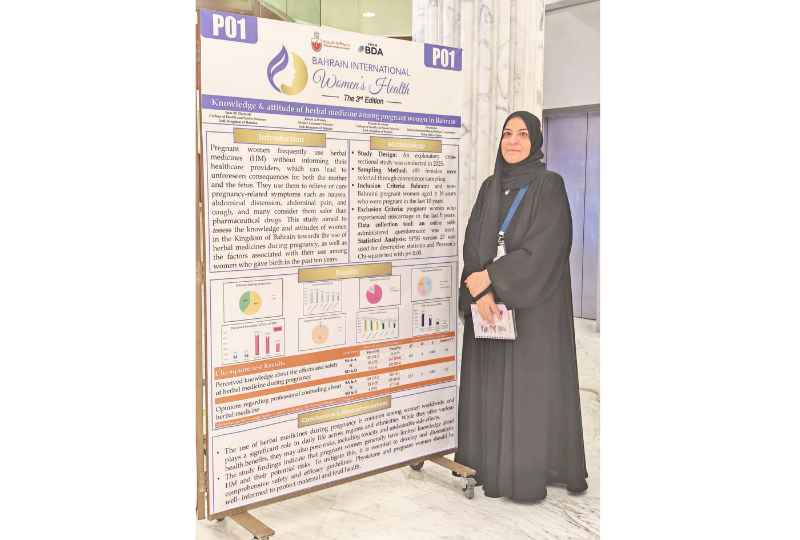
Pregnant women in the kingdom should consult their healthcare providers before using herbal medicines, a new study has warned after finding that most users lacked knowledge about their effects and safety during pregnancy.
The cross-sectional study by Bahraini molecular medicine researcher Dr Rabab Wahab examined the use of herbal medicines among women in Bahrain, as well as their knowledge and attitudes towards the safety, effectiveness and potential risks of these products.
Herbal medicines have been used for generations to manage common health complaints and remain popular for conditions including indigestion, colds and coughs, stress and anxiety, and headaches.
Dr Wahab said pregnancy can lead women to turn to herbal remedies to manage symptoms such as nausea and digestive discomfort, but warned that their natural origins do not necessarily make them safe.
“Since these products are ‘natural’ they are often perceived as safer than conventional medicines. However, natural does not mean harmless, particularly during pregnancy, when the health of both the mother and the developing baby must be considered.”
The study, which was recently presented at a major women’s health conference, involved 493 women in Bahrain, aged between 18 and 50 who were either pregnant at the time of the study or had been pregnant within the previous 10 years.
It found that 38.9 per cent of participants had used herbal medicines during pregnancy, indicating that their use is relatively common in Bahrain.
“However, only 31.2pc of participants agreed or strongly agreed that they were very knowledgeable about the effects and safety of herbal medicines during pregnancy,” Dr Wahab said.
“This gap between use and perceived knowledge is important because decisions about herbal products may sometimes be made without sufficient information about their safety.”
The study also found associations between herbal medicine use and women’s perceptions of the safety and effectiveness of these products, their awareness of potential risks, whether they had delayed seeking medical care, whether they had used herbal remedies alongside conventional medicines, and whether they had received recommendations from doctors, herbalists or family members.
“The findings should be interpreted carefully, and the association between herbal medicine use and pregnancy complications does not mean that herbal medicines caused those complications,” Dr Wahab said.
“However, the findings highlight the importance of open communication between pregnant women and healthcare professionals.”
She emphasised that women should be encouraged to inform their doctors, pharmacists or other healthcare providers about any herbal products or supplements they are using.
“Some herbal products may interact with conventional medicines, while adequate scientific evidence about the safety of others during pregnancy may be limited,” she said, stressing that this does not mean that all herbal medicines must be avoided during pregnancy, but that their use should be approached with caution and based on reliable evidence.
“Improving health education and encouraging open discussions with healthcare professionals can help women make informed decisions and contribute to protecting both maternal and foetal health,” Dr Wahab added.
julia@gdnmedia.bh