

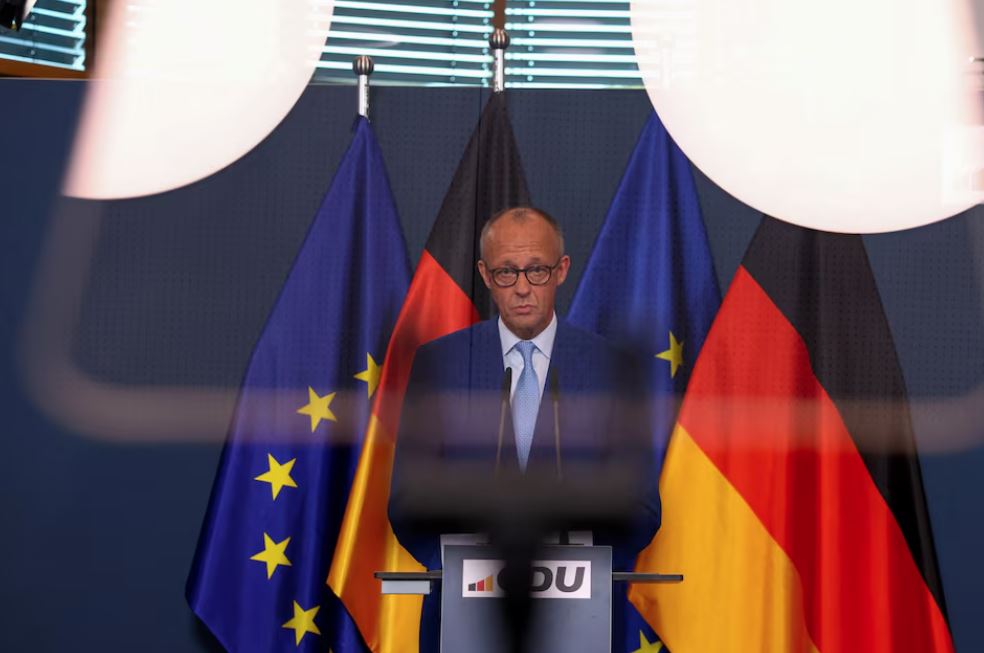
Chancellor Friedrich Merz was clinging to power on Monday after his conservative party tumbled to its worst regional election defeat in postwar Germany and members of his coalition clashed over his unpopular reform agenda.
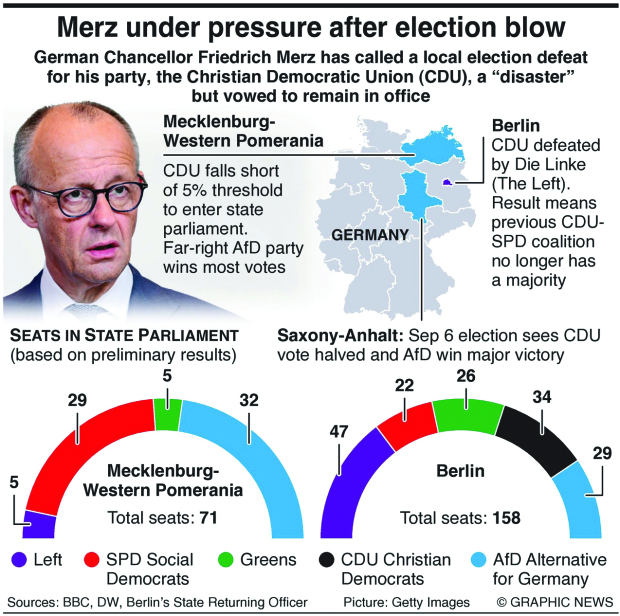
Merz himself described Sunday’s loss in the northeastern state of Mecklenburg-Western Pomerania as a “disaster” after his Christian Democrats (CDU) missed the minimum threshold to enter the regional parliament.
The far-right Alternative for Germany (AfD) took first place. While it fell well short of a majority, it was the second time it had topped a state election within a month and sees its regional wins as building momentum towards national power.
Merz’s party also bled votes in a second election in the state of Berlin, which could see the far-left Die Linke party, the descendants of the Communist Party that once ran East Germany, take power in a coalition after winning most seats.
Sunday’s results may not prove a knock-out blow for Merz, but his low approval ratings and the AfD’s surge have left his future hanging in the balance.
Several conservative state premiers met on Sunday to take stock after publicly backing Merz in an open letter last week.
“The meeting was not about a revolt or a plot against Chancellor Merz,” one of the participants of the meeting told Reuters.
“However, there was agreement that the chancellor needs to deliver more following the CDU’s difficult results in the state elections.”
On Monday Merz repeated apledge to press on with his reform agenda, which he says is vital to revive sluggish growth in Europe’s largest economy.
“... but we know that we also owe it to people to provide answers to their concerns and fears,” he added. Merz said there had been no discussion about his position.
Sunday’s elections have brought tensions with some members of Merz’s centre-left Social Democrat (SPD) coalition partners to the surface, with calls to pull back on some aspects of the reform programme, including pensions.
“We can’t just carry on like this,” said SPD co-party leader Baerbel Bas.
Germany’s economy has been struggling since the pandemic to regain momentum, with competition from China as well as higher energy prices challenging its export-driven economic model.
Some business leaders urged Merz to stay the course.
“Economic strength is not built by waiting but by actively shaping the future. We cannot afford to lose momentum now,” said Jochen Hanebeck, the CEO of chipmaker Infineon, in a LinkedIn post.
&uuid=(email))