

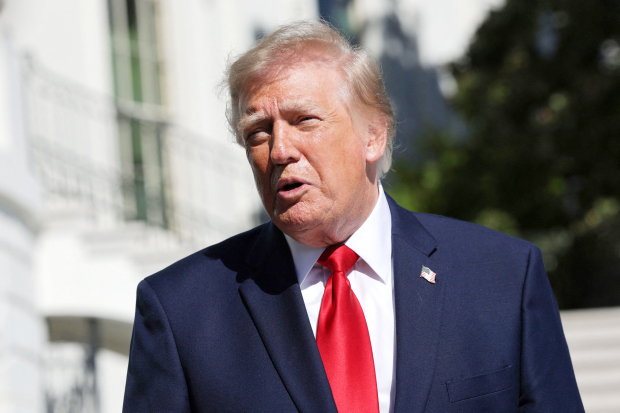
US President Donald Trump yesterday, asked if the lab worker death in Russia was the result of a bioweapon, told reporters ‘we don’t think so.’
Russia’s health regulator said yesterday there were no risks of an epidemic breaking out in Siberia after a plague institute worker there died, as the World Health Organisation pressed Moscow for more information about her cause of death.
Russian authorities say the 28-year-old laboratory worker died last Friday from pneumonia of an as-yet unestablished origin, in a case that has prompted international concern, including from Trump. Around 200 people were initially placed in quarantine.
Asked yesterday whether the death was caused by a bioweapon, Trump told reporters: “Well, we don’t think so. We’re going to find out soon enough, but we don’t think so.”
He said Russia was not saying much about the situation but ‘they do say they have it very much under control,’ adding he had set up a call with Russian President Vladimir Putin.
“They’re sharing (information) a little bit with our people. We expect them to share it a lot with our people,” said Trump, speaking in the Oval Office.
Global health officials – as well as the world’s media – have been particularly alert to pneumonia cases of undetermined cause since the Covid-19 pandemic, which began with a cluster of fast-spreading fatal respiratory illness in China.
However, the cause of individual pneumonia cases can often not be determined.
US Centres for Disease Control and Prevention Director Erica Schwartz said at an event the agency was prepared to monitor and screen travelers although the risk to the US was extremely low.
The WHO initially said it estimated the risk of the Russia case to the public as low, based on what had been made known, but told a Press conference yesterday it could not make a fuller risk assessment due to insufficient information from the Russian authorities.
Rospotrebnadzor, Russia’s health watchdog, said yesterday it was winding down precautionary measures it had put in place after concluding there was no risk of an epidemic and that it had shared its latest information with the WHO.
No cases of plague had been detected among anyone who had come into contact with the deceased worker, Darya Shipilova, it said, and 90 per cent of those placed in quarantine had been released after nearly 5,000 lab tests had failed to detect any dangerous pathogens.
It said Shipilova had been vaccinated and had therefore been ‘immune to the dangerous infections with which she worked’. Tedros Adhanom Ghebreyesus, the director-general of the WHO said his organisation needed more information from Russia to understand what had happened.
&uuid=(email))