

A LOOPHOLE in Bahraini law, which allowed companies and individuals to declare bankruptcy to avoid paying debts, has been closed.
The Shura Council yesterday approved a 195-article Bankruptcy Law, which will require those who go bankrupt to repay outstanding commitments.
It sets out new guidelines designed to help such individuals or firms recover, replacing existing legislation from 1987.
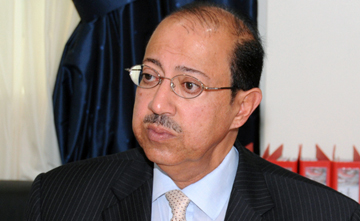
Shura Council financial and economic affairs committee chairman Khalid Al Maskati said the current law penalised both those who declared bankruptcy and anyone who owed them money.
“Many who lent money were never repaid and therefore incurred losses,” he said. “Those who declared bankruptcy were blacklisted from the market, without being able to come back again.”
The new law will bring bankrupt companies or individuals under the supervision of a judicial commission, which will include debtors.
Members of the commission will present options designed to help those who declare bankruptcy get back on their feet – with a view to settling their debts as soon as they are able.
“There is no article (in the existing law) obliging those declared bankrupt to make repayments, since they don’t have the money to do so,” said Mr Al Maskati.
“But the new law gives a commission dominated by judges the power to assess their improvement and ability to repay, with debtors represented on it.
“The new law injects trust into Bahrain’s market as it protects the rights of all parties and ensures that their money is not lost or stolen.”
He said in some cases people declared bankruptcy to avoid financial commitments, even emptying their bank accounts, transferring or selling properties or obtaining court orders stating they are insolvent.
The law covers private individuals and businesses, but cases relating to financial institutions and insurance companies will be overseen by the Central Bank of Bahrain (CBB).
It was unanimously approved by the Shura Council after less than three hours of debate, following parliament’s green light two weeks ago, and will be ratified by His Majesty King Hamad – taking effect from the day it is published in the Official Gazette.
Once enacted bankruptcy cases will appear before the High Civil Court, but can be settled by a judicial commission that will be assembled by the Justice, Islamic Affairs and Endowments Minister.
It includes tough penalties for those who fraudulently file for bankruptcy to avoid paying debts.
Those who deliberately hide money to commence bankruptcy proceedings, exaggerate debts, deliberately exclude debtors from bankruptcy documents presented to courts or provide false information will face up to two years in jail and a fine up to BD100,000.
Others who reach secret deals with those seeking bankruptcy status, or provide false information about a debtor, will face the same punishment.
Meanwhile, a board chairman or executive whose negligence or dishonest behaviour results in bankruptcy will be fined up to BD100,000.
The government-drafted bill was presented to the National Assembly as an urgent matter, giving both chambers just 15 days to vote on it. Justice, Islamic Affairs and Endowments Minister Shaikh Khalid bin Ali Al Khalifa explained a decision was needed before the National Assembly’s term ends this summer.
“If Bahrain failed to pass this law urgently and left it to the end of the year when the new National Assembly comes in, our credit and monetary status would have been jeopardised,” he said.
“That is because there are guarantees of payment from individuals who borrow money or commit funds for investment.
“The CBB will handle the financial and insurance sector and, through this law, we (the ministry) will be handling bankruptcy cases involving individuals and companies.
“The law is a step forward in justice and stabilising the market in the event of a crash.”
Mohammed@gdn.com.bh
&uuid=(email))