

A WARNING has been issued over antibody tests which could mislead people into believing that they have immunity against Covid-19.
Higher numbers could give ‘a false sense of confidence’, leading people to drop their guard against the coronavirus, National Taskforce Monitoring Committee head Lieutenant Colonel Dr Manaf Al Qahtani said.
“Incidents of the kind have been reported in Bahrain, which contributed to the spike in Covid-19 infections,” the senior medic added.
Unreliable
Antibodies are proteins created by the immune system soon after a person is infected or vaccinated. It helps the body fight against infections and protects it from contracting the illness a second time.
However, according to medical journals, the protection span depends on the disease and may vary from one individual to the other.
“Presence of antibodies does not mean full protection against infection,” Dr Al Qahtani said.
He highlighted regulations announced by the US Centres for Disease Control and Prevention (CDC), which said that antibody tests were unnecessary and unreliable, and should not be used to determine how much protection someone gains from the vaccines or the infection.
“The CDC recently announced that it is not advisable to conduct antibody tests. People may think they have high immunity against Covid-19 and turn negligent and reckless,” said Dr Al Qahtani, an Infectious Diseases Consultant and Microbiologist at the BDF Hospital.
“This is exactly what happened in our society in Bahrain.
“Having antibodies doesn’t mean you are 100 per cent protected.
“That is why the global recommendation that even those who took the vaccines should continue precautionary measures against Covid-19.”
Dr Al Qahtani further explained that antibody tests were generally done on people who take certain medications that could affect their immunity levels.
The CDC, in its February guideline, said that antibody or serology tests look for antibodies in the blood to determine if the person had a past infection with the virus that causes Covid-19.
Studies
“Antibody tests should not be used to diagnose a current infection with the virus that causes Covid-19, except in instances in which viral testing is delayed,” said the guideline.
It also added that the test may not reflect a current infection as it can take one to three weeks for the body to create antibodies.
The World Health Organisation (WHO) last year said that a number of studies were underway globally to better understand antibody response following Covid-19 infection.
“Several studies to date show that most people who have been infected with SARS-CoV-2 (Covid-19) develop antibodies specific to this virus.
“However, the levels can vary between those who have severe disease (higher levels of antibodies) and those with milder disease or asymptomatic infection (lower levels of antibodies).
“Many studies are underway to better understand the levels of antibodies that are needed for protection, and how long these antibodies last.”
Meanwhile, private healthcare facilities in the country offer antibody tests for BD10 and above, while it remains unclear if there are any regulations that limit the tests for medical reasons.
However, they put out a disclaimer – that the results are neither a guarantee of protection against Covid-19, nor a confirmation of the infection.
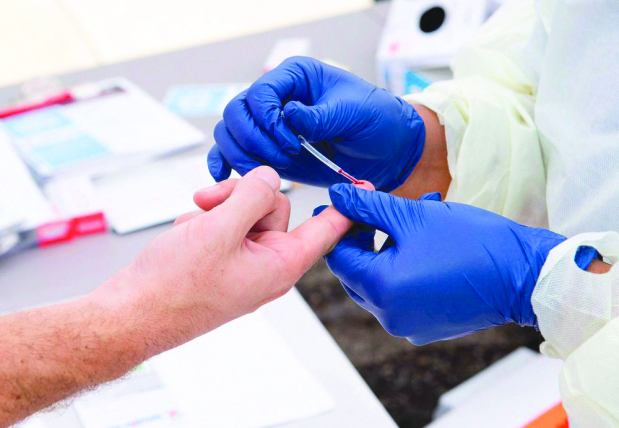
An antibody test is done using a blood sample, usually by a finger prick or by drawing blood from a vein in the arm, which is tested in a lab for the results.
raji@gdn.com.bh
&uuid=(email))