SOARING costs of relocating pets abroad has led to many being dumped further aggravating the stray animal crisis in the kingdom.
Invoices obtained exclusively by the GDN have revealed that costs can range from a few hundred dinars to edging close to BD2,000, with the price of the flight taking the lion’s share of the bill.
In one example, the sum of relocating two cats from Bahrain to South Africa added up to around BD1,800 for pre-departure export services and flights only – excluding permits and arrival clearance processes.
“I’ve been living in Bahrain for the past 14 years and over the years I have noticed an increase in the number of pets simply left behind as owners don’t want to spend the money or can’t afford the cost of taking their pets with them,” said Chantal Willers, 43, from South Africa.
“Pets are a long-time commitment and it’s your obligation to take your pet with you when you relocate back home or move elsewhere. However, I feel like there is a lack of awareness of how much it will all cost.”
Social media platforms such as Pet Forum Bahrain have emerged offering advice on safe and cost-effective methods to relocate pets, although there appear to be no ‘cheap options’ available.
As a result animal shelters in Bahrain are bursting at the seams as they try to accommodate growing numbers of strays and dumped pets.
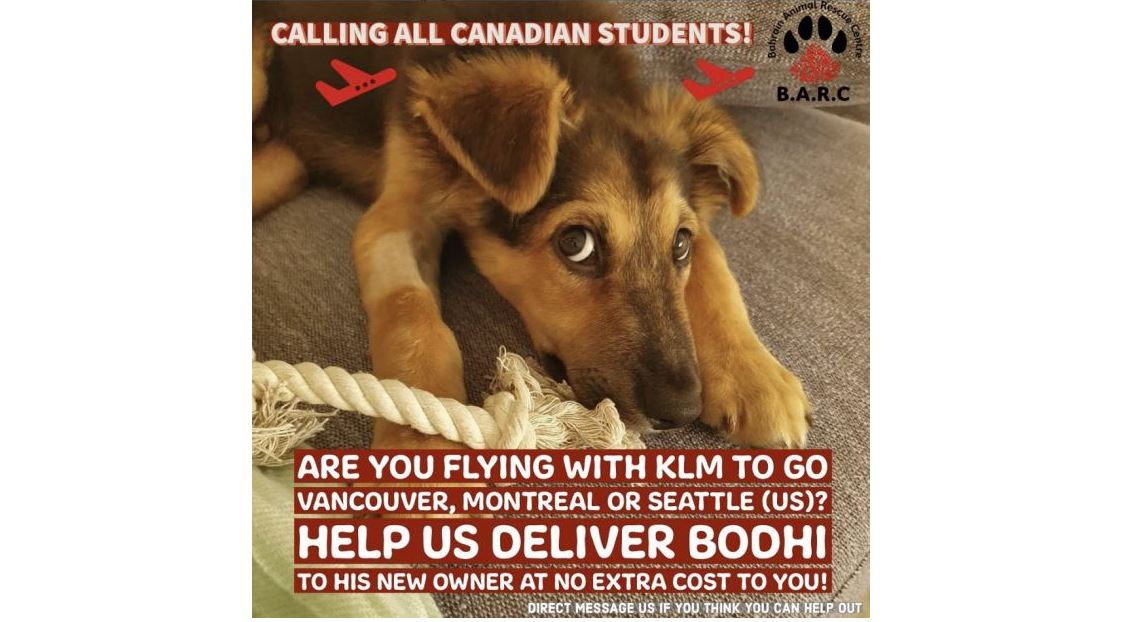
According to a representative from the Bahrain Animal Rescue Centre (Barc) the surge in pet relocation costs first became apparent during the height of the pandemic because a scarcity of flights led to increased fares.
Although travel to many destinations has increased, costs for the service remain high.
“Previously, it was easy and financially reasonable to add a pet to a traveller’s ticket – so essentially the pet became a flight buddy,” said the representative on the condition of anonymity.
“The other option was unaccompanied cargo where the pet would fly in an especially equipped holding area on the plane and the cost of this option has always been high to all destinations.
“When we welcome a pet into our family it is a life-long commitment and people, especially those with known relocation plans, must consider the charges so that they don’t abandon their pets due to costs associated with flying them out.
“We urge people to treat their pets as family – otherwise don’t get them in the first place.”
There has been a recent surge in abandoned huskies, golden retrievers and Persian cats taken into the shelter as they aren’t equipped to live on the streets. With summer approaching, the heat becomes a leading factor in their suffering, sickness and death.
“Pet relocation costs are relative and are directly proportional to destination requirements with the cost depending entirely on third-party fees covering a wide range of sequential processes,” added a representative of Delmon Kennels. “These include vet certification, serological certification and government certification, such as customs.”
According to the experts, the cargo cost for exports usually absorbs around 75 to 80 per cent of pre-VAT charges.
Meanwhile, Jet Pet Global International’s pet happiness manager Inge Michiels told the GDN that pet relocation charges remain expensive due to a number of different factors involved such as biosecurity, travel options and restrictions, and customs.
“All countries and airlines require different things and while some combinations will allow you to travel with your pet in a pet bag in the cabin others will only accept them in cargo, or not at all, and the difference in cost is huge.
“When you think about it – if you have your pet on your lap not only have you spent less money but you are also doing all the carrying and caring yourself.
“When your pet goes in cargo it takes a ‘whole village’ and by the time you pick up your pet at arrivals it will have been seen by security offices, forklift drivers, loadmasters, pet van drivers, transit carers, government veterinaries, relocation agents and even more people in the background making sure your pet is taken care of.”
She added that if a pet was placed in cargo, taxes also have to be paid on the declared value of the pet at customs, in addition to administration fees, which at some destinations are around 60pc of the cargo fare extra to customs.
Measures to ensure appropriate and safe relocation include measuring pets to make sure they fly in the correct-sized crate with all the right documentation to avoid mistakes or additional costs.
reem@gdn.com.bh