

Bahrain is amongst the first countries in the Eastern Mediterranean region to work towards a climate-resilient healthcare system.
The kingdom is working with the World Health Organisation’s Bahrain office to develop a Health National Adaptation Plan, which is part of its COP26 commitments to tackle climate change.
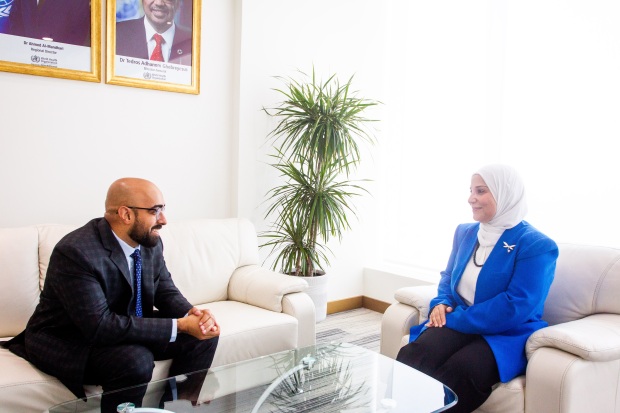
“As part of our ongoing efforts to build climate-resilient health systems in Bahrain, we are organising the National Workshop on Developing Health National Adaptation Plan (HNAP),” WHO Bahrain country head and representative Dr Tasnim Atatrah told the GDN during an interview.
“This workshop will serve as the initiation phase for developing the HNAP in Bahrain – a plan developed by the Health Ministry to diagnose health system vulnerabilities to climate change, and to outline actions to build climate-resilient health systems.
“The HNAP’s development is among the significant commitments made in COP26, and Bahrain is among the first countries in the WHO Eastern Mediterranean region to translate this commitment by taking practical steps to direct the planning of this national workshop.”
Details about when and where the workshop will take place have not been revealed yet and will be confirmed in the coming weeks.
This month, the WHO is also organising the national workshop for the second round of the Joint External Evaluation (JEE) of International Health Regulations (IHR) 2005 Core Capacities.
The first JEE was conducted in September 2016, as part of a “voluntary, multi-sectoral process to assess the country’s capacity to prevent, detect, and respond to public health risks.”
The WHO is working with the government in the second round to identify needs and opportunities in the aftermath of Bahrain’s Covid-19 response, in order to strengthen health emergency prevention, preparedness and response.
Meanwhile, the WHO will also be organising a public nutrition exhibition to promote the consumption of a healthy, nutritionally diverse and adequate diet.
“It will provide the visitors with an interactive learning experience of the food-based dietary guidelines for Bahrain, which were developed in consultation with the Ministry of Health to enhance understanding of nutrition-based healthy lifestyle choices and to provide guidance on best practice solutions to address obesity and non-communicable diseases, using local context,” Dr Atatrah added.
The WHO Country Office in Bahrain, which was opened in July 2021 as the 152nd country office and the 20th in the WHO Eastern Mediterranean Region, has been leveraging its global, regional and national reach in order to achieve its objectives and highlight key learnings from Bahrain’s public health system.
“These efforts are aimed towards championing national efforts to achieve better health and well-being for all; engaging partners effectively; shaping the health research agenda and stimulating the documentation and dissemination of Bahrain’s best practices; providing evidence-based policy options; and finally strengthening the monitoring of the health situation and assessing health trends,” Dr Atatrah added.
naman@gdnmedia.bh
&uuid=(email))