

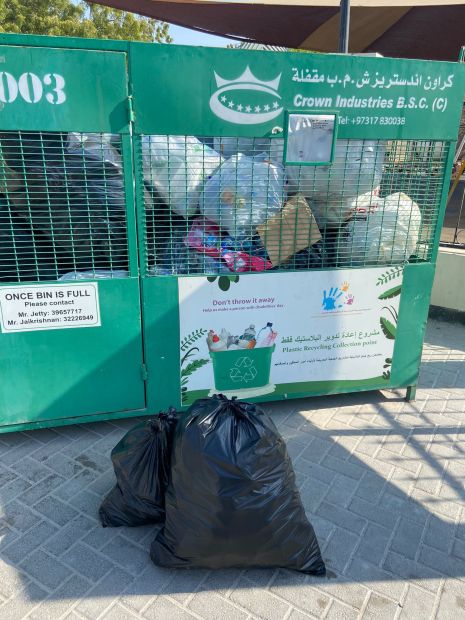
A special map that highlights locations of bins where plastic bottles can be dropped off across the four governorates will be unveiled at a workshop next month, to encourage people to recycle waste and preserve the environment.
The initiative will be launched by Budaiya Hub as part of the second phase of its Plastic-Free July project, which resulted in the collection of more than 11,000 plastic bottles earlier this year, surpassing its original target of 2,000.
The workshop, to be held at the Bahrain Science Centre for SDGs in Isa Town, will bring together around 25 people, aged 18 to 35, to educate them on types of materials that can be recycled and to encourage them to make environmentally conscious decisions.
It will be organised in collaboration with CleanUp Bahrain, Budaiya Hub, Youth Affairs Ministry, Bahrain Science Centre for SDGs and Bahrain Association for Parents and Friends of Disabled. The date of the event is yet to be announced.
“The map aims to make it easier for people to pinpoint the closest bins to them so that they can drop off their plastic bottles,” Ayesa environmental consultant and Budaiya Hub shaper Rahma Aleskafi told the GDN.
“It will be available online via a link and users will be able to click on a location to open it in Google Maps, providing instant directions to the place. This will hopefully encourage people to collect their water bottles and drop them off at the allocated spot.”
Some of the locations include Saar Mall, Askar Walkway, Isa Town Walkway, Tubli Walkway, Budaiya Beach, Enma Mall, Hidd, and Arad Fort. The bins for the project belong to the Bahrain Association for Parents and Friends of Disabled, who will sell the plastic bottles to recycling companies across Bahrain. The money collected will be used to purchase wheelchairs, specially designed to meet the needs of children with disabilities who often cannot afford specialist equipment owing to its high cost. Ms Aleskafi, who has a bachelor’s degree in biology from Bahrain University, said the workshop will increase participants’ awareness on the kinds of plastic that can be recycled.
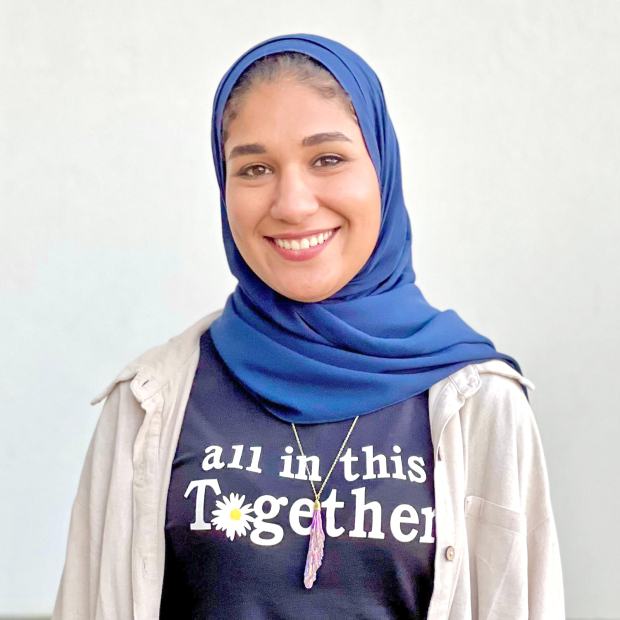
Ms Aleskafi
“People believe that only plastic water bottles can be recycled, which is incorrect,” she said, adding that participants will also be educated on the four R’s - reduce, reuse, repurpose and recycle.
“Although people should recycle as much as possible, we also want to teach them to avoid purchasing single-use plastics and instead, opt for a lasting item.”
She gave an example of excessive use of plastic supermarket bags and suggested that individuals get in the habit of bringing their own reusable bags.
“People struggle with remembering to bring their reusable bag. However, I believe we all do in the beginning. The crucial point is that once you’ve done it a few times, it becomes a habit, and you cannot imagine going to the store without the bags,” she added.
She also called on young people in the kingdom to take responsibility and make environmentally friendly decisions.
Nestled in the coastal town of Budaiya, Budaiya Hub has been a catalyst for youth-led change since its official launch in July 2022.
The GDN earlier reported that last year, a staggering 1.4 million tonnes of domestic and commercial waste was dumped at the Askar landfill. This was revealed during a key forum on sustainability in Bahrain in March.
Domestic waste which includes food waste, paper, glass, plastics, and metals constituted around 501,548 tonnes (41 per cent of the total rubbish) at the landfill.
julia@gdnmedia.bh
&uuid=(email))