

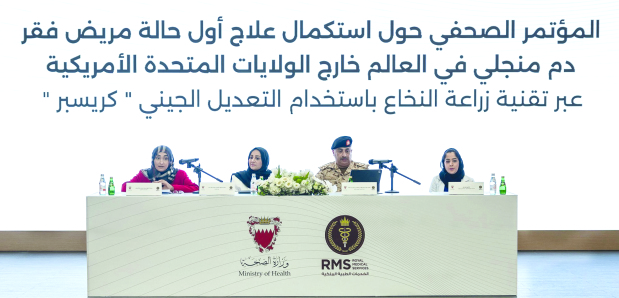
Bahrain is set to open its doors to patients worldwide seeking Casgevy treatment for multiple genetic diseases, Health Minister Dr Jalila Al Sayyed has said.
This follows the remarkable recovery of a Bahraini sickle cell disease (SCD) patient, who underwent the CRISPR-based gene-editing therapy using bone marrow transplantation technology at the Royal Medical Services-Bahrain Oncology Centre.
Amjad Al Mahari, 24, became the world’s first SCD patient outside the US to successfully complete the treatment with Casgevy, as reported in the GDN on Monday.
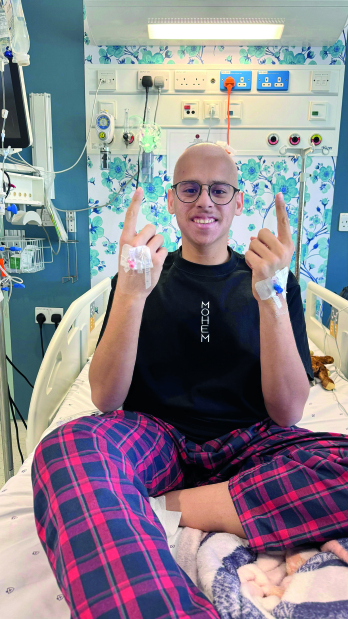
Mr Al Mahari
Dr Al Sayyed revealed that steps were underway to select the second local sickle cell patient for the procedure.
“Bahrain is strongly developed in genetic treatment, not just for sickle cell, but also for thalassaemia and other illnesses,” said Dr Al Sayyed at a Press conference held at the Crown Prince Centre for Training and Medical Research yesterday.
“The cost of the new treatment is high, but with time and further availability and practice, it will drop,” she added.
“When we took up the challenge, we didn’t look into the cost, and the result was the first successful case of a young man.
“The process to select the second patient is on and not all sickle cell anaemia patients are eligible – there are conditions and tests that match the technology.”
She added that necessary funding was being secured to further develop the Royal Medical Services – Bahrain Oncology Centre.
“The door is open to patients with genetic illnesses globally and we are working to secure more funding to develop the centre through hi-tech equipment and qualified manpower,” the minister said.
“Bahrain is currently a hub for medical tourism and we are seeking to further build on that through long-term strategies.”
The National Health Regulatory Authority (NHRA) approved ‘Casgevy (Exa-cel)’ for patients with sickle cell anaemia and beta-thalassaemia, following a comprehensive evaluation of clinical trials and submitted data.
Bahrain is the first country in the region and the second globally to approve the use of this technology.
Meanwhile, Brigadier General Dr Shaikh Fahad bin Khalifa Al Khalifa, Commander of the Royal Medical Services, said Bahrain was at the forefront of ‘medical creativity’ through continuous support from the leadership.
“This achievement is a motivation for more in the medical field and what we are doing here is advanced, precise and effective,” he said.
“The 24-year-old sickle cell anaemia patient is safely back home after we successfully administered a breakthrough treatment,” he added.
“It is the beginning for more success stories at the local and international level as we open the door for others to benefit. Bahrain Oncology Centre will expand its operations and preparations are underway following directives from the leadership.”
He noted that Casgevy treatment time ranged between six to nine months.
Shura Council services committee chairwoman Dr Jameela Al Salman, a renowned genetic expert, said genetic diseases could be conquered as more breakthrough and safe treatment techniques are explored.
“We dealt with a complex situation and we cannot wait to help more people, whether by replacing damaged blood, administering the treatment and following up the case until recovery,” Dr Al Salman said.
She added that the treatment would be mostly successful for those aged 20 to 35 that have had two sickle seizures within two years. “We have a list and the second patient will be shortly finalised,” she said.
“Successful treatments don’t require quarantine and people can lead their lives normally, but should stay away from others who are sick, eat healthy and follow hygiene practices.
“The bone marrow, the white blood cells and defence system are new and need time to adapt.”
Operation team member Dr Noora Buti said the patient went through six treatment steps – medical tests, psychological preparation, clinical assessment, bone marrow rehabilitation, selecting healthy cells and replacing the bone marrow.
“Side effects were noticed such as mouth ulcer, stomachache and diarrhoea that were treated immediately. We will be monitoring the patient for any other possible side-effects in the short or long run, and are ready to intervene, if necessary.”
mohammed@gdnmedia.bh
Top stories for today:
Europeans talk up more defence spending as Ukraine plan divides
212 traders pledge to keep Ramadan prices stable
Medical team congratulated on landmark success
&uuid=(email))