

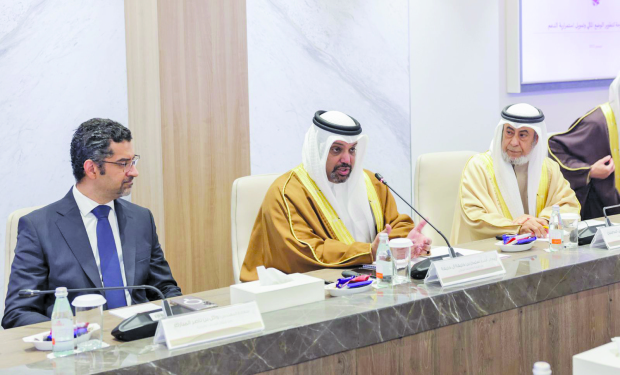
The legislative and executive branches discussed and agreed on several initiatives aimed at strengthening Bahrain’s financial position, while continuing to serve citizens’ interests and enhance their welfare.
At a meeting held yesterday at the National Assembly Complex in Gudaibiya, a consensus was reached on several key economic and employment measures. These include imposing a tax on corporate profits, increasing the price of natural gas for factories and companies, and introducing wastewater fees while exempting citizens’ primary residences.
The meeting also agreed to continue launching employment programmes for citizens and to gradually increase work permit fees for foreign labour – excluding domestic workers – in order to improve job opportunities for nationals.
The legislative and executive teams agreed to increase excise taxes on carbonated beverages, impose fees on undeveloped investment land with access to infrastructure services, and launch initiatives aimed at further reducing government administrative expenditures to strengthen fiscal sustainability. They also committed to increasing contributions from government-owned companies to the state’s general budget and streamlining government procedures to incentivise investment and strengthen the role of the private sector.
The meeting was chaired on behalf of Parliament by its Speaker Ahmed Al Musallam, on behalf of the Shura Council by its Chairman Ali Saleh Al Saleh, and on behalf of the government by Finance and National Economy Minister Shaikh Salman bin Khalifa Al Khalifa.
It aligns with the royal visions of His Majesty King Hamad and the directives of His Royal Highness Prince Salman bin Hamad Al Khalifa, Crown Prince and Prime Minister, to promote citizens’ welfare and dedicate all national resources to achieving this goal.
Mr Al Musallam praised the royal directives to place Bahraini citizens at the core of sustainable development to improve their living standards, ensure optimal utilisation of national resources, and promote constructive co-operation between the government and the legislature.
He also commended the directives of HRH Prince Salman to continue subsidising electricity and water for citizens’ first homes, strengthening programmes tailored for low-income groups and protecting the middle-class and its entitlements.
The Shura Council chairman praisedco-operation between the legislative and executive authorities, describing their joint meetings as a model of national institutional partnership and shared commitment to serving the supreme interests of the nation and its citizens.
The Finance and National Economy Minister reaffirmed the government’s commitment to maintaining co-operation with the legislature to serve the public interest and improve public finances. He emphasised the ongoing efforts to develop social services, strengthen supporting programmes, dedicate all national resources to citizens’ welfare, and prioritise Bahrainis in services and entitlements.
The meeting also highlighted the importance of safeguarding public funds, enhancing spending efficiency and ensuring that subsidies reach those who are truly eligible.
&uuid=(email))