

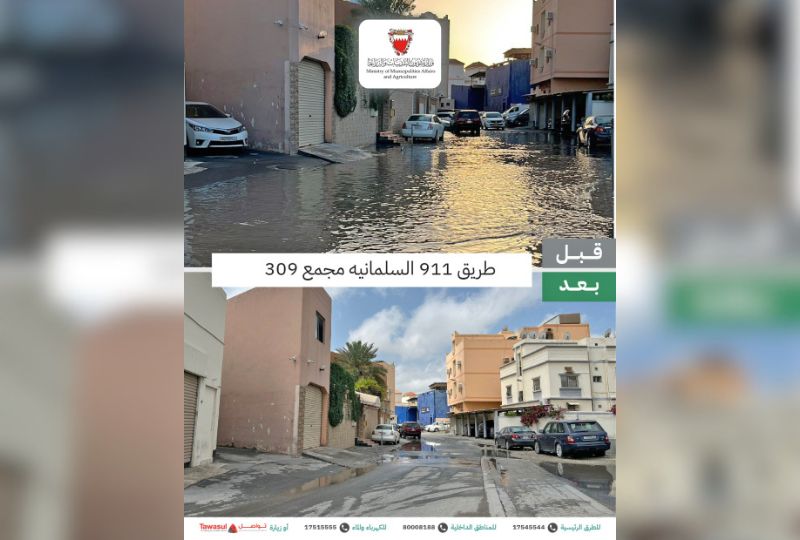
Municipal emergency teams across Bahrain have dealt with 1,290 reports of rainwater pooling and removed 6,411 tanker loads of accumulated water following the recent wave of thunder storms and torrential showers that swept the kingdom this month.
The intensive response was carried out by the Capital Trustees Authority and the three governorate municipalities – Muharraq Municipality, Northern Municipality, and Southern Municipality – between March 4 and 26, as teams worked around the clock to clear soggy depths of despair from internal roads and residential neighbourhoods.
Municipalities Affairs and Agriculture Minister Wael Al Mubarak said the figures reflect the scale and speed of the field response from the first moments of rainfall.
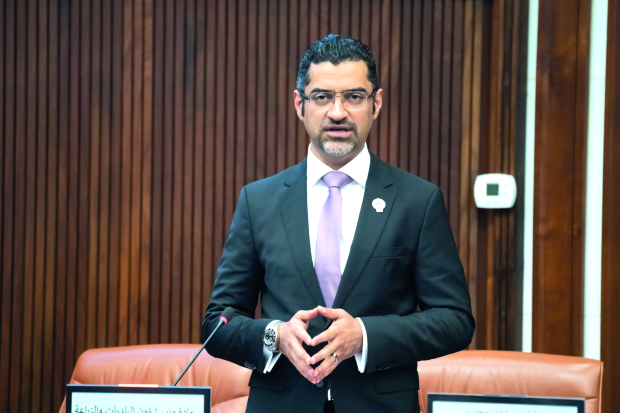
Mr Al Mubarak
“Emergency rain teams were mobilised immediately to suction pooled water, secure movement within residential areas and ensure traffic flow on internal roads,” he said. “Our field plan prioritised rapid response to reports, public safety and maintaining smooth mobility for residents.”
As part of the response plan, four dedicated field teams were formed – one for each municipality – to assess priorities, handle cases on the ground and coordinate works according to urgency.
The breakdown of operations shows significant variations in workload across the governorates:
n Capital Trustees Authority handled 162 reports and removed 1,231 tanker loads of water.
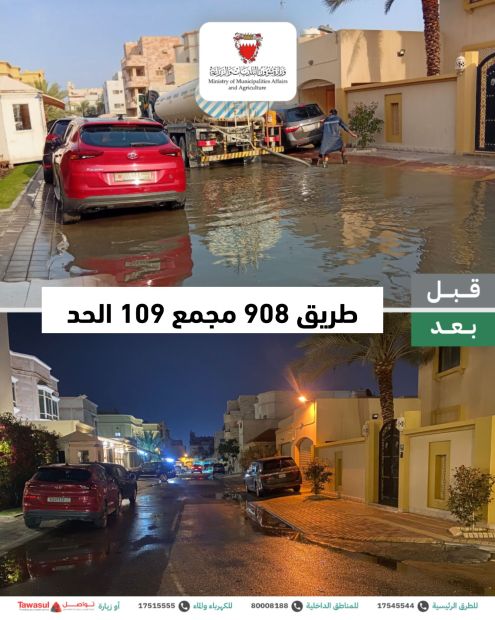
Before and after Hidd Block 109
n Muharraq Municipality received 407 reports and cleared 733 tanker loads.
n Northern Municipality recorded the highest number of reports at 527, removing 2,097 tanker loads.
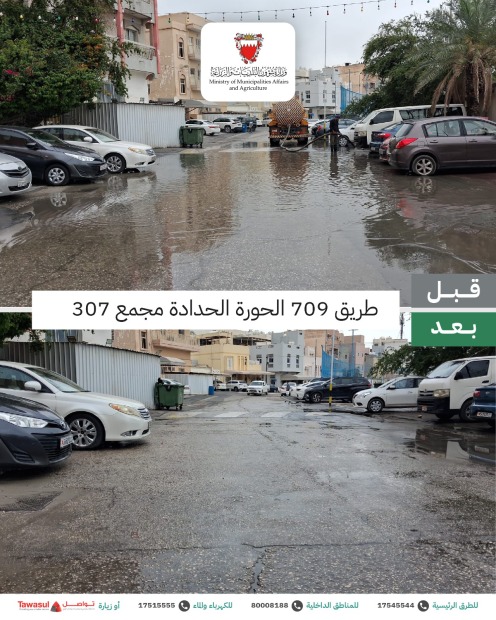
Before and after Hoora Block 307
n Southern Municipality dealt with 194 reports and removed the largest volume, 2,350 tanker loads.
“These numbers demonstrate the continuous efforts made by our emergency teams since the start of the rainfall,” the minister said.
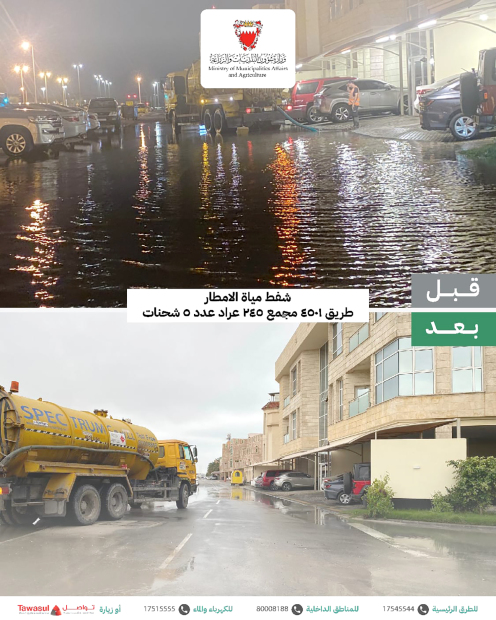
Before and after Arad Block 245
All reported cases of water pooling within residential areas and internal roads have been addressed, according to the ministry, while work continues in some open areas where water accumulation takes longer to dissipate.
Teams remain on full standby to respond to any new developments as the rainy season continues later than usual.
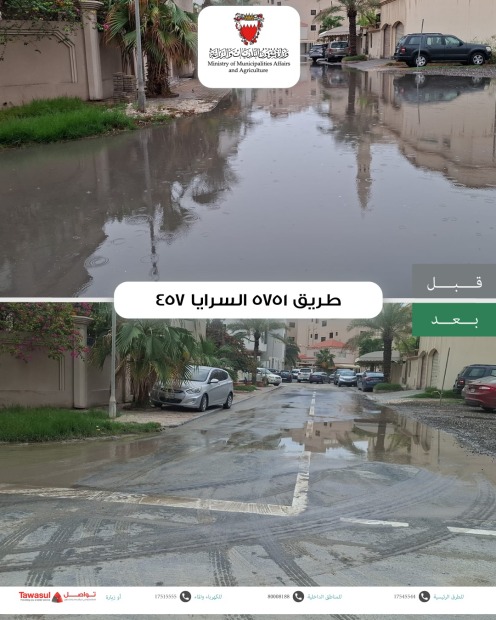
Before and after Saraya Block 457
Mr Al Mubarak highlighted the role of co-operation between executive municipal teams and the Capital Trustees Board and municipal councils, which have been following up on reports in the field and helping accelerate response times.
“This co-ordination has enhanced the efficiency of dealing with emergency cases and contributed to safeguarding citizens and residents,” he said.
The ministry has also activated a dedicated hotline for the public to report rainwater pooling on internal roads by calling 80008188.
“We urge residents to use the hotline to ensure rapid intervention wherever needed,” Mr Al Mubarak added.
The latest response comes as Bahrain continues to experience intermittent rainfall during the rainy season, testing drainage capacity in older neighbourhoods and low-lying areas, and highlighting the importance of rapid municipal intervention to keep streets safe and passable.
mohammed@gdnmedia.bh
&uuid=(email))