

A Bahraini academic is calling for a shift in how countries approach development, arguing in his debut book that strong, reliable institutions – not culture – are key to building trust and driving economic and social success.
Dr Saqer Al Khalifa’s book The Trust Trap: Escaping the Systems Keeping Countries Poor, draws on his doctoral research conducted while pursuing a PhD in Political Science in 2009 – as well as case studies from Bahrain, Rwanda, Finland, Estonia, Japan and the US.
Blending academic insight with personal experiences and stories, the book reflects on both the challenges and lessons observed across different systems.
It argues that trust is not rooted in culture, but can be measured and strengthened through well-designed and effective institutions.
According to him, the book ‘serves as a framework for policymakers, reformers and institutional leaders seeking to break cycles of superficial change and instead take actionable steps towards building lasting institutional trust’.
“Every day interactions with institutions – such as banks and police services – shape economic behaviour and society,” Dr Al Khalifa, an adjunct professor at the American University of Bahrain, told the GDN.
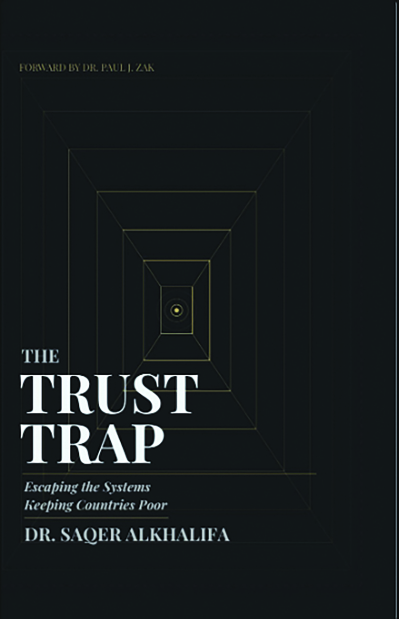
The cover of his book
Drawing on personal experience he recalled an incident in the US where his bank card was fraudulently used.
“This process was very simple,” he said, noting that after submitting a brief report, authorities swiftly handled the case, recovered the funds and prosecuted the offender.
“I did not even need to visit the station, as officers carried the necessary forms in their patrol vehicles.
Such experiences, he explained, reinforce public confidence in institutions, creating a sense that systems are designed to protect and serve. In turn, this encourages individuals to spend, invest and build their lives within a stable and trusted environment.
He also referred to personal experiences in Bahrain that he felt pointed to areas for improving responsiveness and public trust. In one case, he said he reported a littering incident to the police but was asked to file the complaint in person, and the issue, it appeared, was not pursued further.
He cited another example involving an overgrown tree along a pavement that forced pedestrians onto the road. “I wanted to ensure the safety of others, so I contacted the municipality; however, the situation was never addressed,” he claimed.
Pointing to a powerful example of institutional rebuilding, Dr Al Khalifa highlighted Rwanda as a case how trust can be restored at a national level.
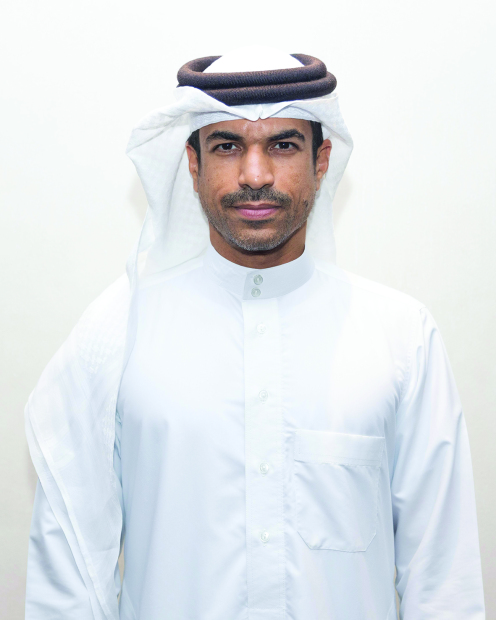
Dr Al Khalifa
Following the genocide, the country implemented restorative justice mechanisms and community-based initiatives to strengthen social cohesion. Among them was the Gacaca court system, introduced in 2002, which handled more than 1.2 million cases.
“These systems enabled truth-telling, allowed victims to learn the fate of their loved ones, encouraged confessions and supported community reintegration,” he said. “While no system is perfect, it created a foundation for greater transparency and helped set the country on a new path. It also reinforces the idea that trust is not based on culture; but it is engineered.”
He emphasised that the stronger and more trustworthy institutions become, the more societies and economies are able to thrive.
“When institutions are built with memory, fairness and feedback, trust follows,” he said, adding that without these foundations, no level of leadership charisma or perceived cultural virtue can make up the difference.
Dr Al Khalifa presented his book to His Majesty King Hamad’s representative for humanitarian work and youth affairs and National Security Adviser Shaikh Nasser bin Hamad Al Khalifa recently.
The Trust Trap: Escaping the Systems Keeping Countries Poor is now available on Amazon UK and US.
julia@gdnmedia.bh
&uuid=(email))