

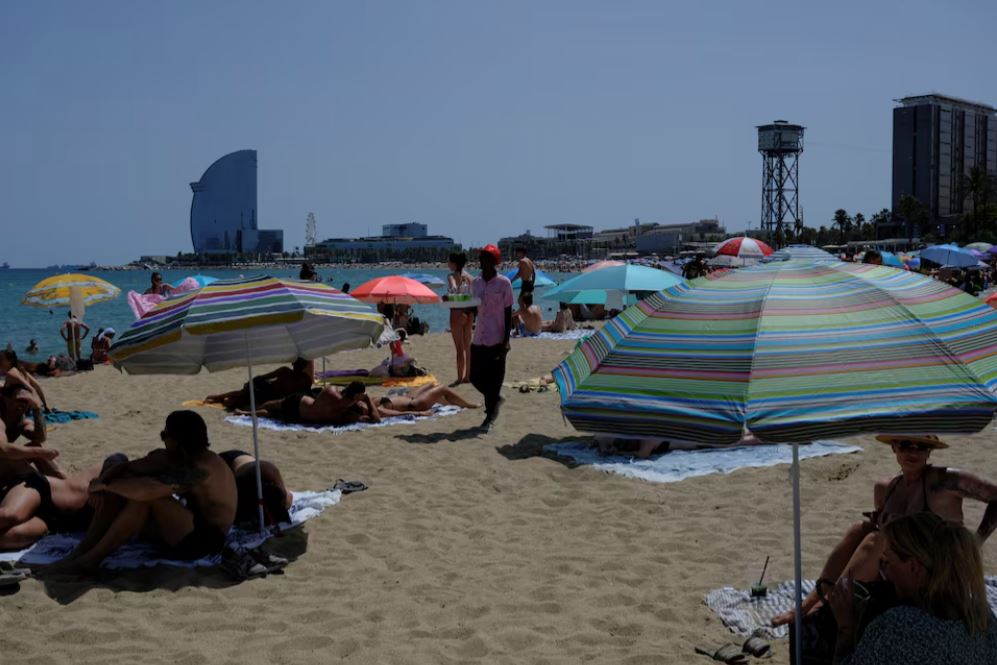
A severe heatwave gripped much of Europe yesterday, with temperatures nearing 40C, prompting nationwide warnings, transport disruption and signs of strain on wildlife and at tourist hotspots.
The heat surge on yesterday, the summer solstice in the northern hemisphere and typically the start of the three hottest months of the year, raised concerns of an early and persistent onset of extreme conditions.
After several days of temperatures above 35C, Italian authorities issued a red alert for June 21 in eight cities, including Bologna, Florence, Milan, and Turin.
In Rome, pilgrims in St Peter’s Square used parasols and umbrellas to shield themselves from the blazing sun as the Pope led a traditional Sunday prayer from a window of the Apostolic Palace.
The spike in temperatures is being driven by a mass of hot air moving north from the Sahara, fuelled by a strong high-pressure system known as the “African anticyclone.”
Meteorologists say the system is creating a so-called ‘heat dome,’ trapping hot air over western and central Europe and allowing temperatures to build day after day. Madrid residents and tourists used fans and drank plenty of cold drinks as they browsed the city’s famous El Rastro flea market.
“I’m dressed all in white because it’s so hot, and I’m carrying my little electric fan everywhere I go,” said Haily San Cesario, a 22-year-old engineer from Miami.
Spain’s AEMET weather agency issued red and orange alerts across several regions, warning of temperatures exceeding 39 to 40 C across large parts of the Iberian Peninsula and Mallorca, and said the heatwave would last at least until midweek.
The extreme heat has begun to disrupt infrastructure.
Speaking from Paris’ Gare Montparnasse station, SNCF chief Jean Castex said the rail network was “strongly impacted” by high temperatures that risk damaging overhead power lines and expanding tracks.
&uuid=(email))