

Israel and Lebanon signed a framework agreement in Washington yesterday following several days of talks to secure an end to fighting between Israel and Iran-backed Hizbollah fighters.
Lebanese Ambassador Nada Moawad and her Israeli counterpart Yechiel Leiter signed the trilateral document with the US at the State Department in Washington.
“Today we’ve taken the first step in what will be a difficult journey, without a doubt, but an important and an essential and a necessary one,” US Secretary of State Marco Rubio said before the agreement was inked.
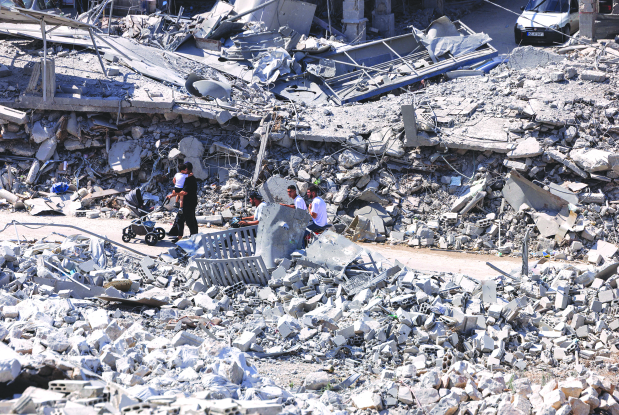
The conflict between Israel and Hizbollah broke out when the armed group fired at Israel on March 2, days after the US and Israel attacked Iran. The Hizbollah attacks triggered Israeli air and ground attacks that have killed more than 4,000 people in Lebanon and displaced more than a million.
The officials did not provide details of the framework deal and did not say how its terms would differ from those included in an April 16 ceasefire deal that preceded several rounds of US-brokered Israel-Lebanon talks.
“The trilateral framework we signed is a first step on the road to restoring Lebanese sovereignty and territorial integrity, securing a permanent and final cessation of hostilities, enabling our people to go back to their land, and allowing all Lebanese to live in peace, security, and prosperity,” Moawad said.
Leiter praised Moawad for negotiating like a “lioness.”
“In this performance-based trilateral framework agreement, Iran is out, Hizbollah is out, and the road to peace between Israel and Lebanon is in,” he said.
They did not take questions from reporters.
Israel’s death toll from this round of hostilities with Hizbollah includes at least 32 soldiers and four Israeli civilians. Hizbollah does not release figures on its war dead. Reuters reported on May 4 that several thousand Hizbollah fighters had been killed in the war.
The talks in Washington have included discussions on a proposal for Israeli forces to hand some of the territory they occupied in southern Lebanon to Lebanon’s military.
A State Department official told Reuters that Israel had agreed to pull back from some of that territory, something Israeli and Lebanese officials denied.
Before the talks resumed this week, Israel and Hizbollah agreed to halt fire even as Israel kept troops in occupied southern Lebanon – territory it describes as a “buffer zone” aimed at thwarting Hizbollah attacks on northern Israel.
Violence has persisted since the ceasefire, with Israel saying yesterday its troops had struck and killed what the military described as seven Hizbollah members who were operating near the territory it is occupying. Reuters could not confirm this.
Israeli forces dropped leaflets over the southern Lebanese town of Mansouri yesterday ordering residents to leave, Lebanese state media reported, the first such order issued since the latest ceasefire between Israel and Hizbollah took effect.
A senior Lebanese military official said Israel had recently added Mansouri to its occupation zone. The official said Lebanese farmers had continued to enter and leave the town, but had not been living there.
An Israeli military spokesperson said the military issued what it described as a “reminder” to the civilian population that “the area is within the security zone in which (Israeli) soldiers operate. It’s a reminder not to be in the area so they won’t be harmed.”
Lebanese officials say Israeli troops are enforcing the zone’s northern boundary by firing at anyone approaching it, including civilians and Lebanese soldiers.
&uuid=(email))