

The summer break is ongoing, making it the perfect time to take a step back and ponder the impact of bullying on mental wellbeing, as we await the new school term.
While it is important to protect our children from bullies, it is equally important to ensure that our young ones are not the oppressors.
Mental health professionals and teachers in the kingdom, who have dealt with this issue closely, have come forward and highlighted some reasons why bullies behave the way they do. Additionally, they have shared tips on how we – at home, at school and in the community – can help them navigate their emotions and make better choices.
“Bullies are often dominating by nature and will humiliate or make fun of their victim while downplaying their own actions,” French International School of Bahrain teacher Odile M told GulfWeekly.
“They may multiply the channels of harassment, often doing it at school and online at the same time,” noted the educator, who heads the school’s anti-bullying ambassadors club – Ambassadeurs Contre le Harcèlement.
The student-led initiative trains young minds to advocate for a safe campus environment and mentor their peers. It stages programmes, including peer mediation, awareness campaigns and creative workshops.
According to the UNESCO Institute for Statistics’ latest report, almost one in three teenagers worldwide has experienced bullying. Furthermore, 36 per cent of learners experience a physical fight with their peers and almost one in three has been physically attacked at least once in a year.
In the digital age, cyberbullying has emerged as a growing problem, affecting as many as one in ten children worldwide. It is no surprise, considering how accessible social media platforms have become. Bullies often tend to be meaner online, reports suggest, as they are ‘protected’ by a screen and enjoy anonymity.
Bahrain has staged numerous programmes to tackle the issue of bullying and Internet safety specifically for children and teenagers. Platforms like Safe Surf that advocate online safety and legislative initiatives calling for strict punishment for offenders on the Internet, as well as events like anti-bullying conferences are steps in the right direction.
While it is important to teach victims how to defend themselves, it is equally important to teach bullies ac-countability and address the root cause of this behaviour.
Studies show that bullies are often insecure and tend to oppress people to make themselves feel superior to the detriment of others. By attacking others, the aggressor displaces negative feelings and experiences a sense of power. In some cases, they may want to make people feel as bad as they do.
“We often observe a lack of empathy in bullies. It can be the result of personality disorders or lack of emo-tional maturity, commonly observed in teens,” Bahrain-based psychologist Dr Anne-Laure Renard noted.
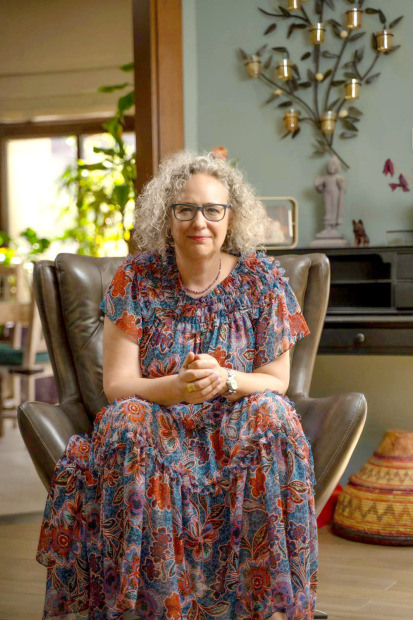
PSYCHOLOGIST: Dr Anne
“This inability to understand or share the victim’s feelings allows them to inflict harm without moral dis-tress,” she added.
Peer pressure is another usual cause. People are willing to do the same things as their friends to ‘fit in’ and maintain their ‘social status’. Dr Anne explained this is more common among female groups where there is a ‘leader’ and ‘followers’ who are willing to do anything to be part of the group.
“Boys bully in a more direct and physical way, unlike girls who would act verbally most of the time,” she added.
The expert noted that childhood experiences can deeply influence personality, deciding whether an individ-ual becomes a bully or a victim. Children mimic their parents instead of listening to what they say, which is why a toxic environment at home widely can also lead to bullying behaviour in children. When children wit-nesses someone bullying others repeatedly, they may grow up thinking it is the norm – either to bully or be bullied.
Dr Anne further revealed that young oppressors tend to choose victims who are ‘different’ in terms of their personality or traits, underpinning the importance of accountability and professional intervention.
Echoing her views, Odile highlighted that physical looks, personality, any perceived weakness, or behaviour that seems different often leads to bullying. She reinforced the important role that school’s play in such situ-ations, encouraging authorities to act fast.
“Inform the parents and meet them while continuing to monitoring the situation and protect the identity of those involved,” Odile advised.
The author interned with GulfWeekly and GDNOnline and is a student member of Ambassadeurs Contre le Harcèlement.
PANEL
Effective strategies for improved emotional regulation:
•Teach accountability: Warn your child about the consequences of his/her behaviour in a safe environment.
•Professional help: If the behaviour persists, it is best to see a specialist.
•Model empathy: Model good behaviour. Other ways include role-playing and open conversations placing bullies in the victim’s shoes.
•Anger management: Simple exercises like pausing before reacting, taking deep breaths or counting to 10 help.
•Identify the root cause : Anger is often rooted in deeper issues so discover the underlying issue.
•Provide creative outlets : Pent up energy or frustration can be channeled through positive activities like sport or art
PANEL
Hotlines to report cybercrimes or cyberbullying:
• General Directorate of Anti-Corruption and Economic and Electronic Security hotline – 992
• Cyber Protection and Child Care Unit (CPCU) via WhatsApp at +973 17108108 or by email at cpcu@interior.gov.bh
• The national Child Helpline – 998
&uuid=(email))