

While mashrabiya is finding its rightful place in modern architecture, the lattice woodwork was originally intended as a natural cooling system to battle brutal Middle Eastern summers.
Today, air conditioners make life easy but back then, people depended on vernacular architectural elements, like the badgir or wind tower, mashrabiya or oriel windows, sikka or narrow alleyways and baraha or courtyards for ventilation.
These designs were made to respond directly to environmental conditions and social values, offering functionality and cultural appeal. Mashrabiya, which features intricate wood latticework, filtered harsh sunlight. The intricate patterns provided privacy, honouring the modest aesthetic of traditional homes.
Derived from the Arabic root word ‘sharaba’, which means ‘to drink’, the design tells the tale of how people placed porous clay jars directly behind their windows. Evaporation then helped cool the water in the pots as well as the living area.
Some historians trace mashrabiya’s origins to Coptic churches and ancient Egyptian wood carving techniques. However, the design gained prominence in the Islamic world around the 12th century.
In Islamic art, geometric patterns with repeating motifs symbolise the infinite nature of the universe and divine harmony. Architects in the Arab world commonly employ the concept in their designs.
Bahrain is home to iconic structures that exhibit mashrabiya, including mosques and traditional houses especially those on the Pearling Path in Muharraq.
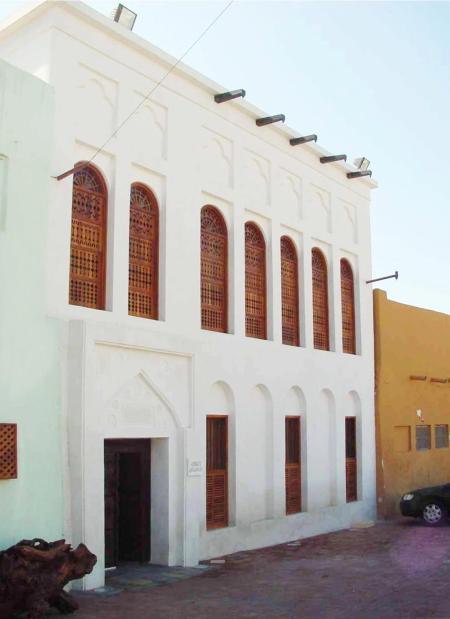
Cultural: An old house reflecting mashrabiya elements
“At its core, Arab architecture is about creating spaces that are comfortable, connected and responsive to both people and their environment,” Bahraini interior designer Haleema Almulla told GulfWeekly.
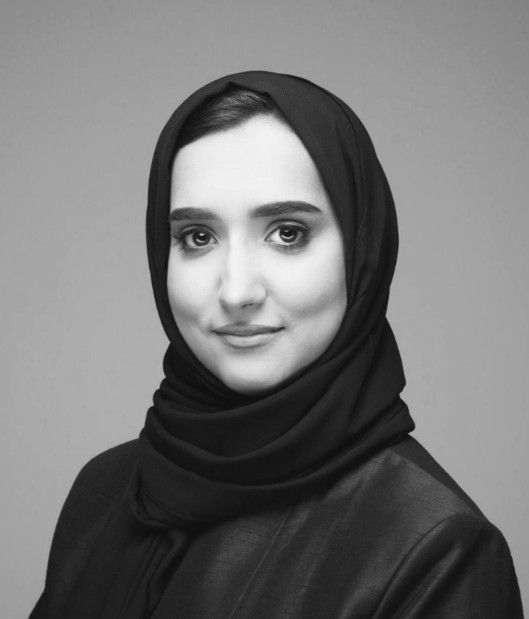
Creative: Haleema
The Galali resident recently staged a mashrabiya workshop at Maison Jamsheer in Muharraq, in collaboration with Bahrain-based Egyptian creative Salma ElShamy. The event was organised by Art Concept – a specialised art consultancy and gallery in the kingdom.

Talent: Salma
“Our workshop celebrated the beauty of traditional Bahraini houses through mood boards inspired by Muharraq’s rich architectural heritage. What made the workshop special was how every participant blended their own childhood memories and personal experiences with this heritage, resulting in mood boards that felt authentic, emotional and uniquely their own,” added Ms Almulla, whose work combines cultural heritage with contemporary design.
Talking about the distinct patterns that are unique to each country, Ms ElShamy from Zinj revealed that every Arab region tells its own story.
“Egyptian designs are often highly intricate and decorative, while Bahraini and Gulf versions tend to be simpler, reflecting the local climate and way of life. It is a beautiful reminder of how architecture is shaped by culture,” said the interior and 3D designer, who has been living in the kingdom for 22 years but has extensive experience straddling both countries.
While modern spaces employ advanced architectural designs to help with cooling and lighting, many architects continue to draw inspiration from the traditional style. In the kingdom, Al Dana Amphitheatre in Sakhir is fitted with aluminium frames cut out to resemble the geometric patterns. Bahrain National Museum in Manama also features the style, creating striking patterns of filtered sunlight in the foyer.
“Arab architecture has had a profound influence on global design. In Bahrain, this balance of tradition and innovation is reflected in projects like the RAK Art Foundation (in Riffa) and Burj AlSaya (residential towers in Muharraq),” Ms Almulla noted.
Other popular modern structures with mashrabiya influences are Louvre Abu Dhabi, Institut du Monde Arabe in France and Doha Tower in Qatar.
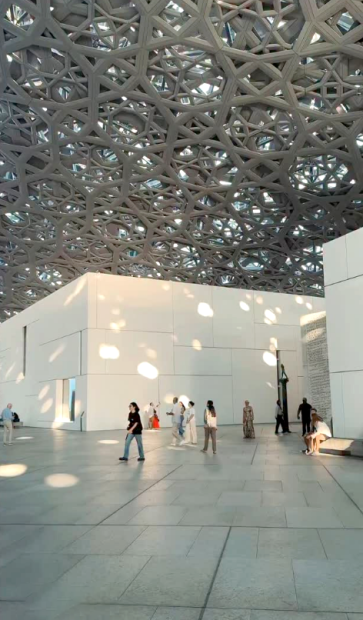
&uuid=(email))