

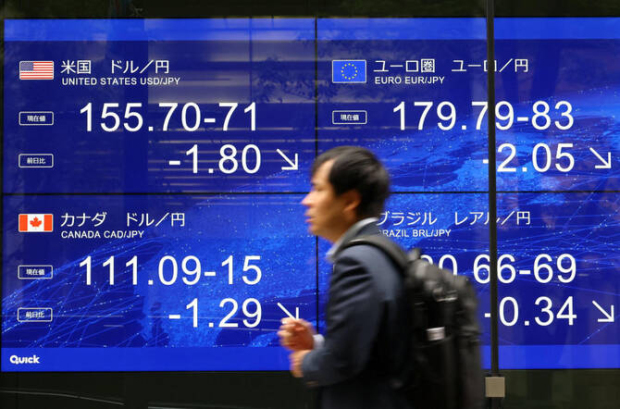
The yen rose for a third straight session against the euro and the dollar yesterday, keeping traders on alert for further intervention after Tokyo and Washington stepped into the foreign exchange market last week to support Japan’s currency.
Meanwhile, oil prices sank but the greenback held steady before key US jobs data.
Japan and the US conducted co-ordinated yen-buying intervention and will not hesitate to take further action, Japan’s finance ministry said yesterday.
The yen also advanced against other currencies like the euro and sterling, stirring speculation Japanese authorities could be in the market again.
“Dollar/yen 1.5-2 standard deviations above the long-term trend have been a useful guide for identifying when intervention risk enters the danger zone,” said Stephen Spratt, APAC developed markets rates strategist at Societe Generale.
“Currently this (level) is 162.72-164.96 area,” he added.
The Japanese currency rose 1p per cent in the Asian morning to a high of 155.20 per dollar, its strongest level in about three months, before paring some gains.
The 200-day moving average close to 158 is likely to act as resistance, according to Rabobank senior forex strategist Jane Foley.
The yen rose 0.40pc to 180.70 versus the euro, after hitting 179.435, the highest since mid-November 2025. Bank of Japan data showed Tokyo may have bought as much as $58.97 billion worth of yen on Thursday. The yen has been under pressure for years, undermined by the BOJ’s gradual approach to monetary policy tightening, which has kept yield differentials wide between Japan and the rest of the world.
Barclays analysts argued that even if the yen were to strengthen further in the near term, longer-term downward pressures remain in place.
The dollar index was little changed at 99.82, having slid more than 1.5pc last week.
&uuid=(email))