

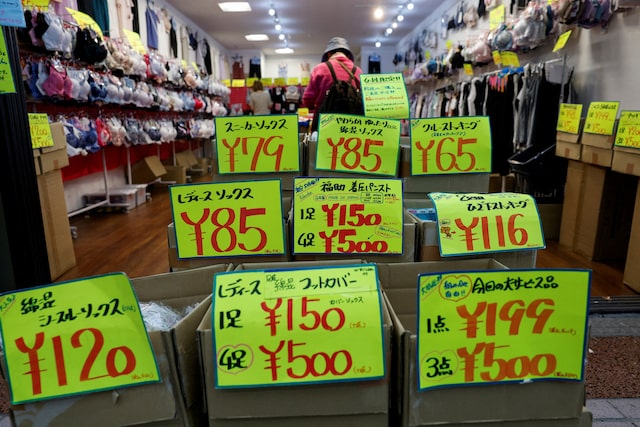
Taku Ueno buys beef from America, olive oil from Spain and tomatoes from Italy to stock his supermarkets south of Tokyo, imports that have more recently become costlier almost by the day as the yen falls relentlessly.
The yen has weakened despite currency intervention in 2022, 2024 and 2026, and the exchange rate is still under pressure, even after rare joint US-Japan buying in August and July.
Ueno, chief executive of Takara MC, which operates 43 supermarkets, and his counterparts across Japan are losing patience and looking for ways to insure against further weakness.
He has pushed for direct and longer-term contracts with his overseas suppliers, which lock in prices and exchange rates at up to a year at a time, and help him avoid raising prices too quickly, which risks losing his customers.
Others, bankers say, are turning to futures, forwards and options, to hedge against further yen weakness as authorities struggle to come up with fresh ways to steady or turn the currency.
While smaller firms have historically avoided using such instruments, choosing instead to absorb modest import price hikes, cost pressures are now too great not to take action.
“For US beef, we used to negotiate every month, but the exchange rate is changing so quickly we now negotiate every three months,” said Ueno.
“This means we don’t have to raise prices for three months at least,” he said.
Not that it’s easy to strike deals in a market where the yen is far and away the worst-performing G10 currency, having lost more than 30 per cent on the dollar over the past five years.
“Japan is completely losing its buying power,” said Ueno, who finds himself routinely outbid on beef deals lately by buyers from China or Thailand. “You have to go to suppliers in person and bow your head to make a purchase.”
&uuid=(email))