

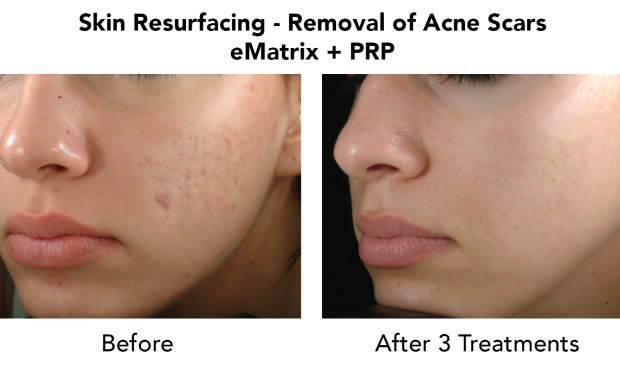
Acne scars are created by the wound healing process occurring after the acute process of inflammation, follicular rupture and perifollicular abscess formation.
The resulting acne scars may be atrophic or hypertrophic.
Approximately 80 per cent of the scars are atrophic associated with a net loss of collagen during the matrix remodelling process; a minority of the scars are hypertrophic or have keloid formation.
Post-inflammatory hyperpigmentation may also occur. This is the dark or red spots that are left after acne lesions heal and are more common in darker skinned individuals and can last for months or even years in some cases.
Various treatment options are available for acne scars depending on the severity and type.
Microdermabrasion works best for certain types of depressed acne scars, which cause shallow pits in the skin. It removes some of the skin’s top layer, which encourages growth of new skin cells.
This evens out the skin’s texture, making the scars less visible. The CO2 laser is one of the most effective laser treatments.
It is an ablative laser, which means that it vaporises skin on the surface, effectively removing the top-most layers, stimulating the production of collagen and bringing out smoother and younger looking skin. The recovery period is typically no longer than two weeks.
Ematrix is a ‘fractional’ skin treatment that uses radio frequency energy instead of laser energy to help rejuvenate the skin.
Unlike ablative fractional lasers, Ematrix is considered a ‘sublative’ treatment as it focuses on deeper skin rather than the surface.
In doing so, sublative energy targets collagen production to help improve fine lines, wrinkles, stretch marks and acne scars.
The non-laser approach is excellent for patients who desire less downtime or who have undergone unsuccessful laser treatments. Most importantly, unlike laser resurfacing, Ematrix is suitable for all skin colours and skin types.
The Dermapen Micro-needling treatment triggers collagen production. It can be used to improve acne scars, keloid scars and post acne hyperpigmentation. It is an effective way of performing needle dermabrasion with the adjustable needles that penetrate a controlled depth into the dermis.
The dermis develops multiple micro-bruises, which start a cascade of growth factor release and collagen production.
Chemical Peels improve texture and colour of the skin by removing the outer layers which may be damaged by severe acne, sun, scarring or pigmentation problems.
There are different types of peels: mild peels and TCA peels (medium) meant to remove darker sun spots/freckles, age spots and reduce melasma pigmentation.
Patients should avoid direct sun exposure after the chemical peels and should moisturise the skin daily. This treatment is suitable for mild to moderate acne scars.
Dermal fillers can be used to improve the appearance of depressed acne scars, but the results are temporary.
Platelet Rich Plasma (PRP) therapy utilises the body’s blood platelets to heal or treat common occurring conditions and injuries that affect the soft tissues.
PRP helps to regenerate and rejuvenate tissues as well as stimulate wound healing and is an effective way to treat acne marks and scars because of the growth factors found in platelets. It also helps create new capillaries and blood vessels which improve the vitality and texture of the skin.
For booking and information, schedule an appointment at German Medical Centre with Italian consultant dermatologist Dr Carmen Casciello. Call 17313555.
&uuid=(email))