

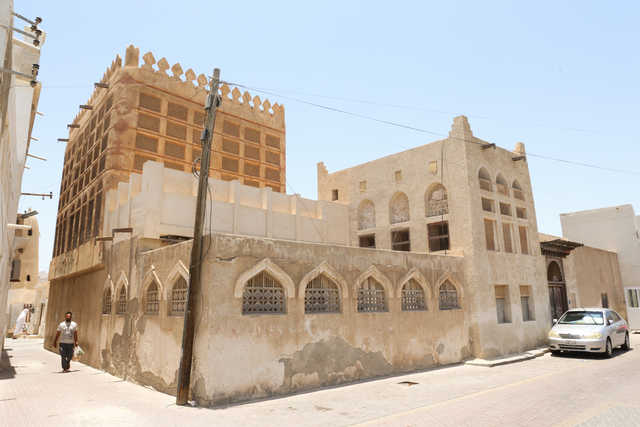
HUNDREDS of historic buildings surrounding the 3.5km Pearling Path in Muharraq will undergo a façade upgrade.
Nearly 700 buildings surrounding the route, which was inscribed on the World Heritage List in 2012, are being revamped as part of restoration efforts spearheaded by the Bahrain Authority for Culture and Antiquities (Baca).
The Pearling Path consists of three vast oyster beds located in the Northern territorial waters of Bahrain, one seashore site at the southern tip of Muharraq, and nine clusters of historic buildings consisting of 17 architectural structures.
World Heritage Sites have a core zone that consists of the main buildings listed for protection and restoration, but are surrounded by other buildings known as a buffer zone that also warrants protection.
The importance of restoring buffer zones was highlighted by Dr Lucia Gomez-Robles, who is the director of restoration projects in the south section of Muharraq under Baca, on the sidelines of the 42nd World Heritage Committee session, which will conclude in Bahrain tomorrow.
“It is not only a matter of protecting the houses that are inside the World Heritage Site, but everything that is happening around it,” she said.
“You need the people to understand that it is not only protecting those houses but also the environment, you have a vast buffer zone that is also important and if you’re isolating the houses and you don’t take into account the rest of the context at the end you lose the whole thing.”
She explained that first phase of the project involved removing all the outdoor cables, window air conditioners and other elements added to the houses throughout the years that have contributed to hiding the rich history of the area.
“Nowadays if you go through Muharraq it is very complicated, the history is there but it is very complicated to see because you have all these layers from the 1970s, 1980s and 1990s and this century that are covering the historic buildings,” she said.
“The project is quite complex because it is not only the restoration of the buildings, it is the upgrade of the façade, the public spaces and the parking. We are still in the previous step to the restoration so you can’t visit the buildings yet, they are still also covered with the late additions that we need to remove.
“It’s going to be easier in a couple of years when everything will actually be visible – if you don’t see it how can you appreciate it?”
The Pearling Path, also called ‘Pearling, Testimony of an Island Economy’, is the second site to be inscribed on the United Nations Educational, Scientific and Cultural Organisation (Unesco) World Heritage List after Bahrain Fort in 2005.
reem@gdn.com.bh
&uuid=(email))