

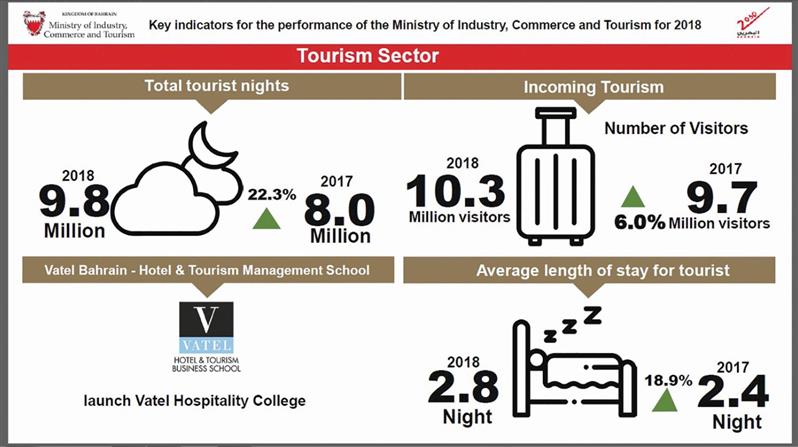
BAHRAIN has posted a six per cent increase in the number of tourists visiting the country this year, compared with 2017.
The total number of inbound tourists reached 10.3 million, up from 9.7m the previous year, revealed Industry, Commerce and Tourism Minister Zayed Alzayani.
There has also been a 22.3pc increase in the number of tourism nights spent in Bahrain to 9.8m, compared with 8m in 2017.
The average length of stay per tourist increased by 18.9pc, from 2.4 nights in 2017 to 2.8 this year.
That is almost double the average of 1.7 nights four years ago. Most tourists came from Saudi Arabia and other GCC countries.
The minister said when full-year numbers are in, he expects tourism to achieve a target set by the Bahrain Tourism and Exhibitions Authority (BTEA) – reaching 6.6pc of GDP for 2018.
“Our aim is to take to double-digits over the next four to five years by increasing the number of visitors, converting visitors into tourists and extending the average tourist’s length of stay,” Mr Alzayani told the media during an annual briefing yesterday. “We are offering more attractions and more attractive packages.”
He said the country was targeting $1 billion in tourism and hospitality revenue by 2020.
According to BTEA statistics, a daily average spend of BD76 per visitor was recorded during the first half of this year.
Hotel occupancy during the six months averaged 48pc for five-star properties and 50pc for four-star hotels. The minister expects a new hospitality management college, Vatel, officially opened on September 27, would expand the Bahraini talent pool in the sector.
“The launch of Vatel Bahrain represents a cornerstone in the development of the kingdom’s hospitality sector,” he added.
“The BTEA, in collaboration with Vatel Group, aims to train the national workforce in accordance with international standards, as well as provide students with the qualifications required to obtain job opportunities.” Bahrain’s tourism strategy focuses on the themes of innovation, digital transformation, entrepreneurship, education and employment, as well as social, cultural and environmental sustainability.
“This will lead to the creation of new job and business opportunities, an increase of investments in tourism and enhanced competitiveness and sustainability within the sector,” said Mr Alzayani.
avinash@gdn.com.bh
&uuid=(email))